



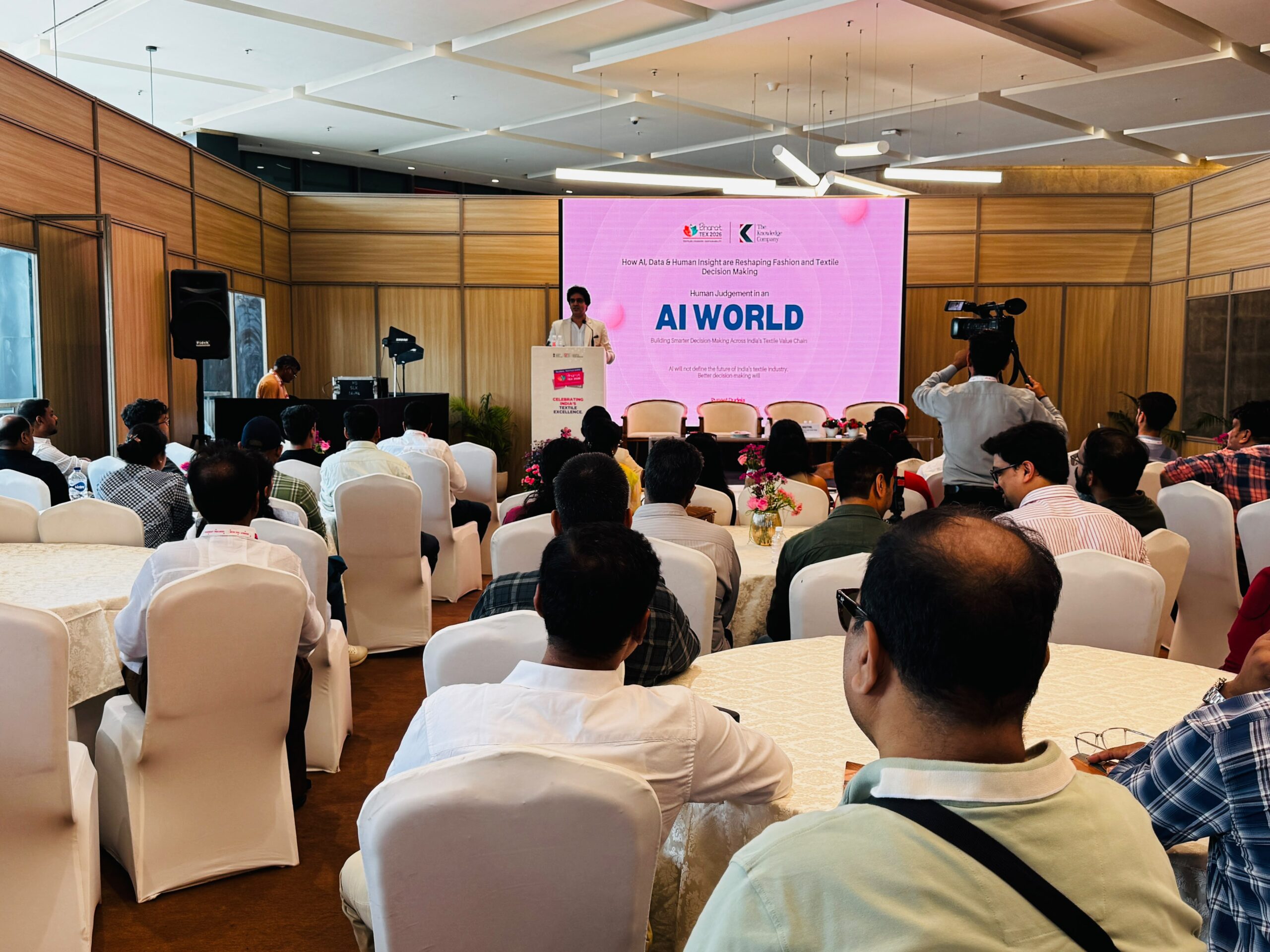
“AI will not define the future of India’s textile industry. Better decision-making will.”
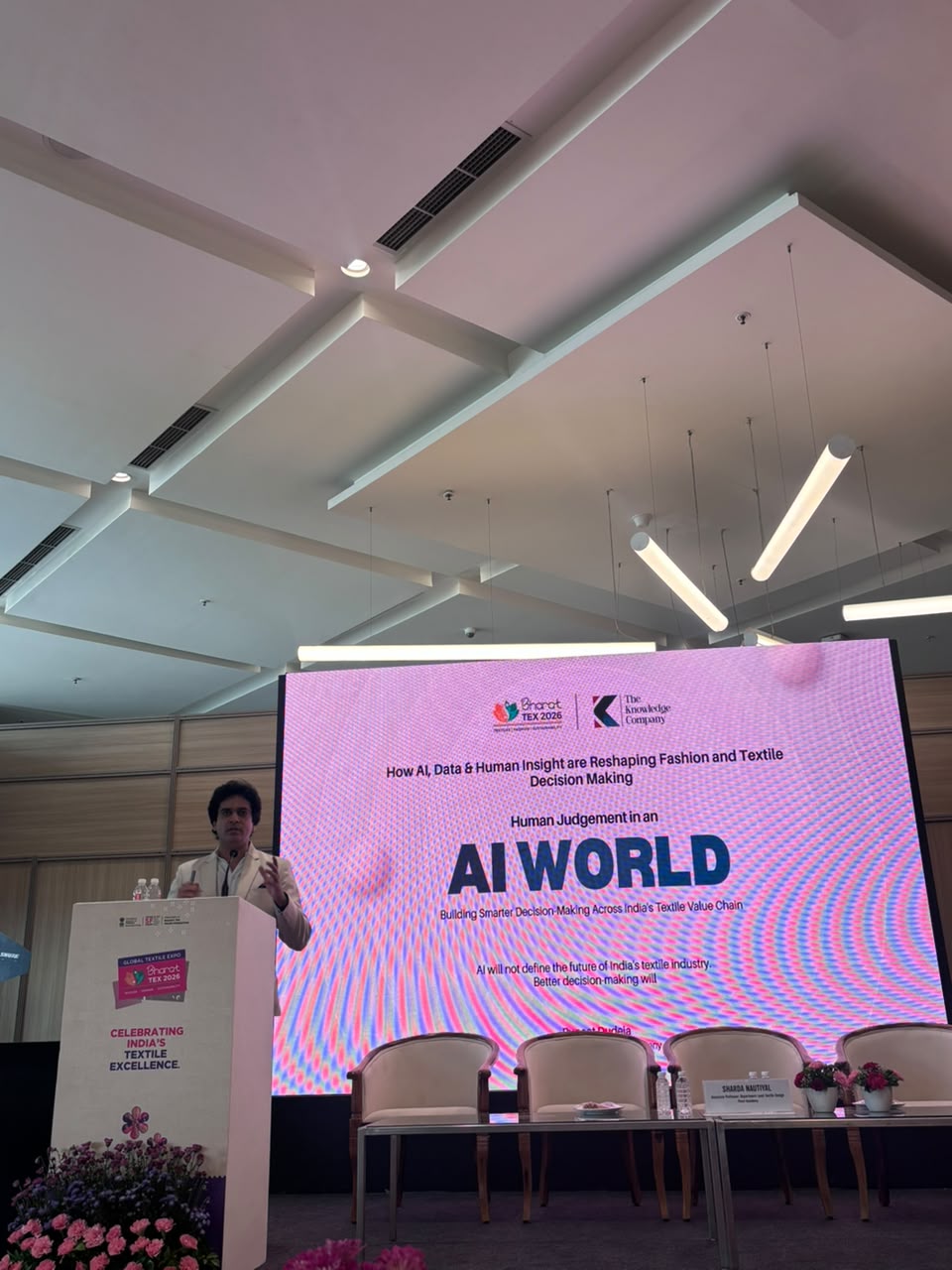
This was the central thesis presented by Puneet Dudeja, Partner at The Knowledge Company (TKC), during his masterclass at Bharat Tex 2026, held at Bharat Mandapam, New Delhi.
Presented in the wider context of the Ministry of Textiles, Government of India, the focused session examined how textile and apparel businesses can integrate artificial intelligence into their operations without losing the commercial judgement, institutional knowledge and human accountability required for strategic decision-making.
Puneet’s masterclass moved the conversation beyond the capabilities of individual AI tools. Instead, it addressed a more important leadership question: which decisions should AI own, which should it inform and which must remain with people?
India’s textile and apparel industry has traditionally built its competitiveness around manufacturing capacity, workforce capabilities, sourcing networks and cost.
These strengths remain essential. However, future competitiveness will also depend on how quickly and accurately organisations make decisions across demand forecasting, inventory, production, pricing, allocation and innovation.
In an increasingly volatile market, leadership teams must respond to:
AI can help businesses analyse information, recognise patterns and evaluate possible outcomes at greater speed. But analytical speed is not the same as strategic clarity.
The central challenge is to ensure that technology improves decisions rather than adding another layer of complexity.
The organisations creating meaningful value from AI are not treating it as a substitute for human intuition. They are building hybrid models in which machine intelligence and human judgement perform different but complementary roles.
AI is particularly effective when decisions involve:
Human judgement remains essential when decisions involve:
The objective is therefore not to choose between technology and people. It is to define the correct role for each.
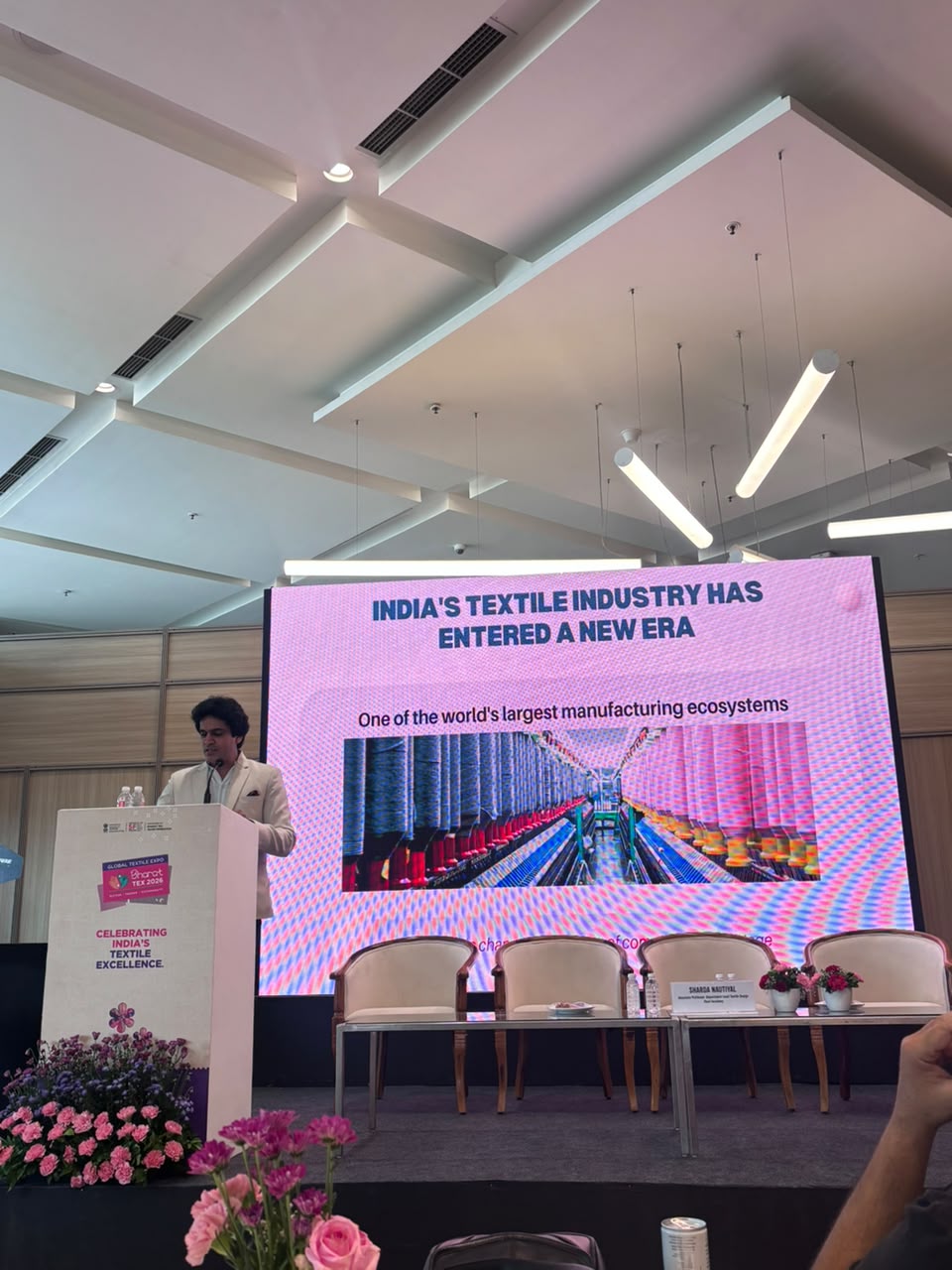
During the masterclass, Puneet presented the Human Judgement Framework, a practical model for textile and apparel leaders integrating AI into decision-making.
The framework comprises three levels.
AI can take greater ownership of operational decisions where speed, scale, consistency and pattern recognition are the principal requirements.
Potential applications include:
These decisions frequently involve large data sets and repeatable processes. When supported by reliable information and appropriate controls, AI can improve both speed and consistency.
Human oversight remains necessary, particularly when data quality is limited or circumstances change. However, much of the operational process can be automated.
Commercial decisions require a combination of analytical evidence and business context.
Potential applications include:
AI can model possible outcomes, identify relationships and provide predictive confidence. But commercial leaders still need to interpret the recommendations.
A pricing decision, for example, cannot be based solely on short-term sales probability. It may also affect brand perception, channel relationships, competitive positioning and customer trust.
At this level, AI informs the decision while people retain responsibility for context and trade-offs.
Strategic decisions should remain human-owned because they determine the organisation’s purpose, identity and long-term direction.
These include:
AI may provide inputs, scenarios and supporting evidence. It cannot own the underlying intent or accept responsibility for the outcome.
As Puneet emphasised during the session, trust cannot simply be generated by an algorithm.
One of the risks of technology adoption is the assumption that faster decisions are automatically better decisions.
Technology amplifies the system into which it is introduced. If an organisation has unclear objectives, fragmented data or weak decision processes, AI may simply enable it to make poor decisions more quickly and at greater scale.
Puneet summarised this leadership challenge:
“Good AI paired with poor leadership simply leads to faster mistakes, whereas good AI paired with strong leadership creates a sustainable advantage.”
Before implementing an AI solution, leadership teams therefore need to examine:
These questions move AI implementation away from technology experimentation and towards measurable business transformation.
The effectiveness of AI depends partly on the quality of the underlying technology. It depends equally on whether the organisation is prepared to change how it operates.
AI integration may require businesses to redesign:
A forecasting system cannot create value if commercial teams do not trust it. An inventory optimisation platform cannot improve performance if buying, planning and production functions continue to work with different assumptions.
Leadership must therefore create the conditions in which intelligence can be translated into action.
The future of work in the textile and apparel sector should not be reduced to a competition between people and machines.
The more relevant competitive distinction will be between organisations whose teams are supported by high-quality intelligence and those whose teams continue to work with fragmented data, delayed reporting and intuition alone.
AI can increase the capacity of employees to:
People remain responsible for framing the question, interpreting the context and accepting accountability for the decision.
The future operating model is therefore not human versus AI. It is human judgement strengthened by AI.
The masterclass highlighted several priorities for businesses beginning or accelerating their AI journey.
Identify where poor, delayed or inconsistent decisions are creating measurable commercial problems.
Operational decisions may be automated, while commercial and strategic decisions require different levels of human involvement.
AI recommendations are only as useful as the information on which they are based. Data quality, consistency and governance are foundational requirements.
Every AI-supported decision must have a defined human owner responsible for its application and consequences.
The value of AI should be evaluated through commercial and operational results, not the number of tools deployed.
Technology adoption requires new capabilities, workflows and behaviours. Change management must be designed into the programme from the beginning.
The masterclass provided TKC with an important platform to engage textile and apparel leaders on one of the industry’s most consequential questions: how to adopt AI without losing the judgement, experience and accountability that drive sustainable business performance.
TKC thanks everyone who joined the session at Bharat Mandapam and contributed to this critical conversation about the future of India’s textile and apparel sector.
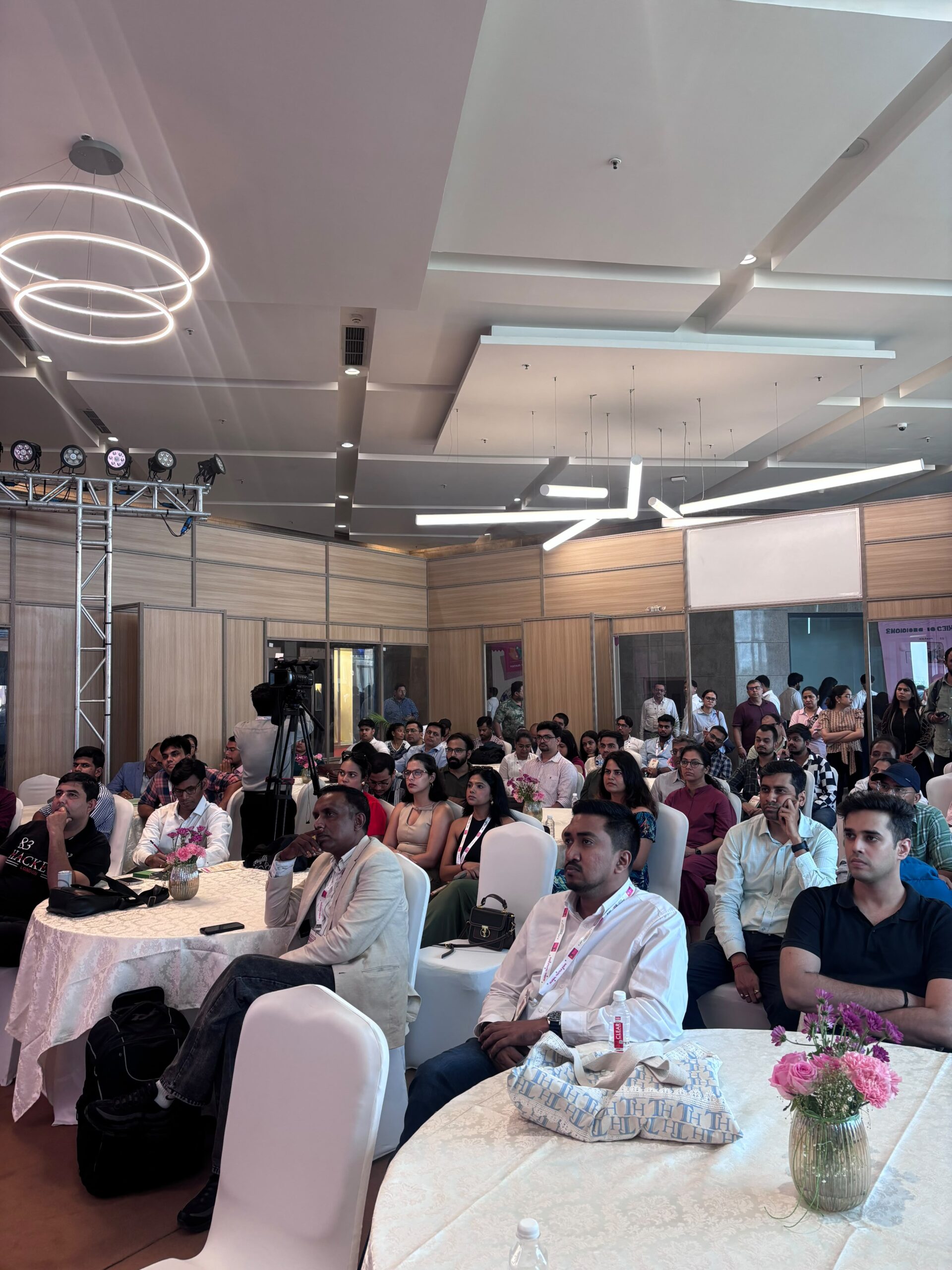
The strong participation reinforced the industry’s growing interest in moving beyond theoretical discussions about AI and towards practical frameworks for integration, leadership and execution.
Navigating an AI-enabled manufacturing environment requires more than software. It requires a clear business case, an effective operating model and alignment among leadership, people, processes and technology.
TKC works with textile manufacturers, apparel companies, fashion brands and retail groups across areas including:
Identifying high-value applications, ensuring that technology investments address defined strategic and operational priorities.
Clarifying where AI should automate, where it should inform and where human judgement and accountability must remain central.
Developing data-led processes for forecasting, replenishment, allocation and production planning.
Designing more responsive operating models across sourcing, manufacturing, distribution and inventory management.
Supporting organisations as they redesign workflows, capabilities, governance and performance measures around new technology.
Connecting changing market and consumer signals to product, assortment, pricing and production decisions.
AI will become increasingly important across India’s textile and apparel value chain. But technology adoption alone will not determine which organisations succeed.
The durable advantage will belong to companies that know where automation adds value, where human context remains indispensable and how the two can work together within a disciplined operating model.
Good AI can improve speed. Strong leadership ensures that speed is directed towards the right outcome.
Is your textile, apparel or retail organisation prepared to integrate AI into its decision-making model?
Connect with TKC’s Textile, Fashion and Retail Advisory team at vidya@tkc.in to explore how AI strategy, consumer intelligence and operating-model transformation can support smarter and more sustainable growth.
Get the strategy behind the retail headlines. Subscribe to TKC’s free newsletter:
https://tkc.us13.list-manage.com/subscribe?u=cf7c5e6f30dd40e71ad5a1f00&id=76b5a492e2