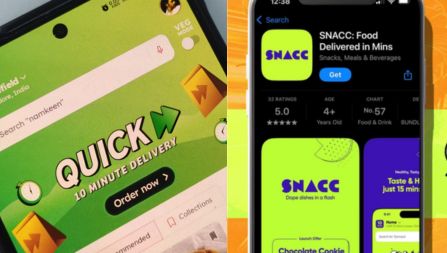
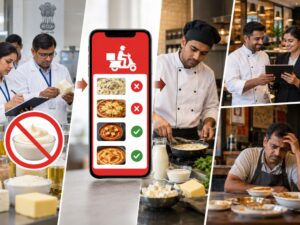
What was once the hottest trend in Indian food tech is now facing a harsh winter. Over the past year, highly publicized 10-minute food delivery pilots have quietly shut their doors. Swiggy shut down Snacc just a year after launch, Zomato pulled the plug on Zomato Quick within four months, and smaller startups like Zing ceased operations entirely.
In a recent deep-dive published by The Morning Context, Ravindra Yadav, Partner at The Knowledge Company (TKC), dissects the fundamental structural and economic flaws holding the sector back.
Read the complete analysis at: https://themorningcontext.com/internet/why-swiggy-zomato-zepto-cant-deliver-food-in-10-minutes
An “Uncalled For” Market
The primary issue isn’t just operational; it is behavioral. Platforms are attempting to force a highly complex supply chain onto a consumer base that may not actually need it.
“The biggest pressure point is the promise of a 10-minute delivery. It is uncalled for because the market these companies want to cater to has to be created,” says Ravindra Yadav.
While consumers eagerly adopted 10-minute grocery deliveries, pushing them to buy main courses on quick-delivery apps has proven difficult. Currently, snacks and all-day fillers account for 90-95% of total orders, severely limiting ticket sizes and the overall use case.
The Massive Capex of Speed
Preparing hot food in under seven minutes leaves zero room for error. Companies must choose between constantly training staff in a high-churn industry or investing heavily in standardized, specialized commercial kitchen equipment.
Ravindra highlights the sheer scale of investment required to make this work:
“An individual McDonald’s store spends Rs 2-3 crore just on kitchen equipment. That is the kind of investment that goes into setting up the back kitchen that is standardized for taste and optimized for speed.”
Furthermore, unit economics are crippled by logistics. Unlike grocery quick commerce, food delivery platforms cannot batch multiple orders together to save costs, as any delay ruins the temperature and customer experience of the food.
The “Quick-Commerce” Blueprint
Despite the widespread closures, some players like Swish are still attempting to crack the code. If a brand is to survive, Ravindra advises abandoning the aggregator model and fully adopting the dark-store methodology.
“The ideal way to build a 10-minute food delivery business is to do it the quick-commerce way. This means creating a smart menu with high reorder rate and end-to-end control over all the processes (from production to supply of food) and using multiple small dark kitchens to supply food in 10 minutes.”
However, scaling this model is fraught with risk. It requires absolute precision in demand and supply planning to avoid massive food wastage. As Ravindra concludes, “Success is not guaranteed… The moment it starts to scale this to other regions, we will know better.”
Supporting Food Service & Retail Transformation
The Knowledge Company’s strategic advisory practice helps F&B brands and aggregators navigate the fragile balance between hyper-growth, unit economics, and operational reality.
- Commercial Strategy & Feasibility: We help brands stress-test the unit economics of new delivery models before massive capital deployment.
- Supply Chain & Dark Kitchen Optimization: Advising on network planning, equipment standardization, and menu engineering to maximize throughput.
- Consumer Insight Mapping: Analyzing the shift between impulse snack purchases and planned meal consumption to refine market positioning.
Are your operational models aligned with actual consumer demand? Connect with TKC to build a profitable and scalable food service strategy.