



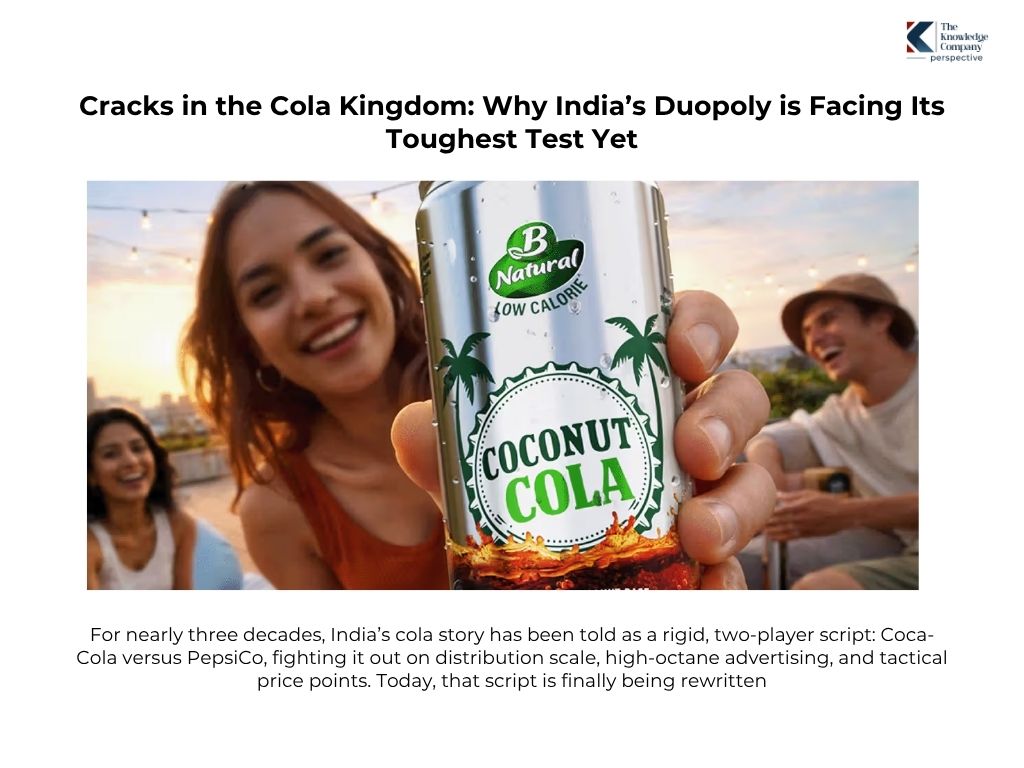
For nearly three decades, India’s cola story has been told as a rigid, two-player script: Coca-Cola versus PepsiCo, fighting it out on distribution scale, high-octane advertising, and tactical price points. Today, that script is finally being rewritten.
A structural shift is currently sweeping the market. Reliance’s revival of Campa, ITC’s launch of Coconut Cola, and a rapidly growing bench of regional Indian challengers are collectively reshaping how growth, value, and “cool” are defined in India’s soft drinks market.
For consumer businesses, this is not just a localized battle for market share; it is a live case study in how deeply entrenched category power can fragment when price disruption, health consciousness, premiumization, and local flavours all collide.
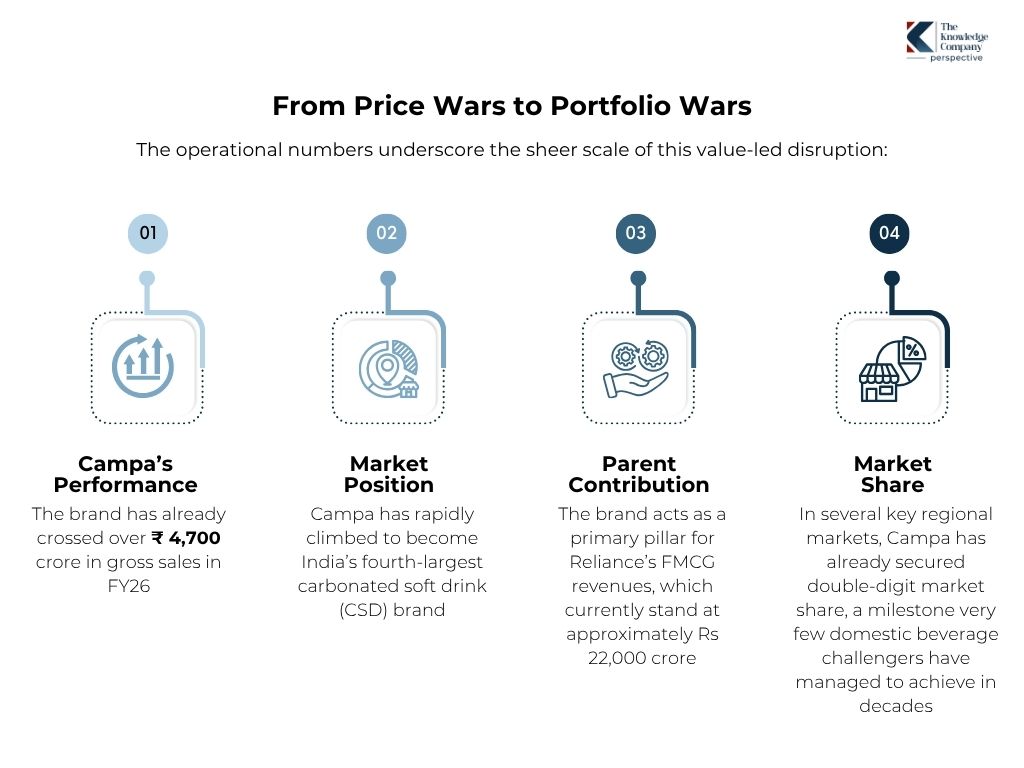
From Price Wars to Portfolio Wars
The first major crack in the long-standing cola duopoly appeared when Reliance revived the legacy brand Campa and completely dismantled the traditional industry price architecture.
By introducing a highly aggressive Rs 10 price point for its 200-ml PET bottle, Campa forced multinational incumbents to immediately protect their turf with lower pack prices and intensified retail promotions.
The margin squeeze did not stop at colas, it rapidly spilled over into juices and other ready-to-drink beverage categories.
The operational numbers underscore the sheer scale of this value-led disruption:
This represents classic category disruption: a value-led insurgent resets the floor price, pulls vast consumer cohorts into its franchise, and forces market leaders to defend their share with defensive, tactical responses. However, this value play is only the first act.
A far more complex second act is now unfolding at the ultra-premium end of the spectrum.
ITC’s Coconut Cola: A Different Kind of Challenge
While Reliance chose to launch a direct attack from below on price, ITC is entering the cola landscape from a radically different angle.
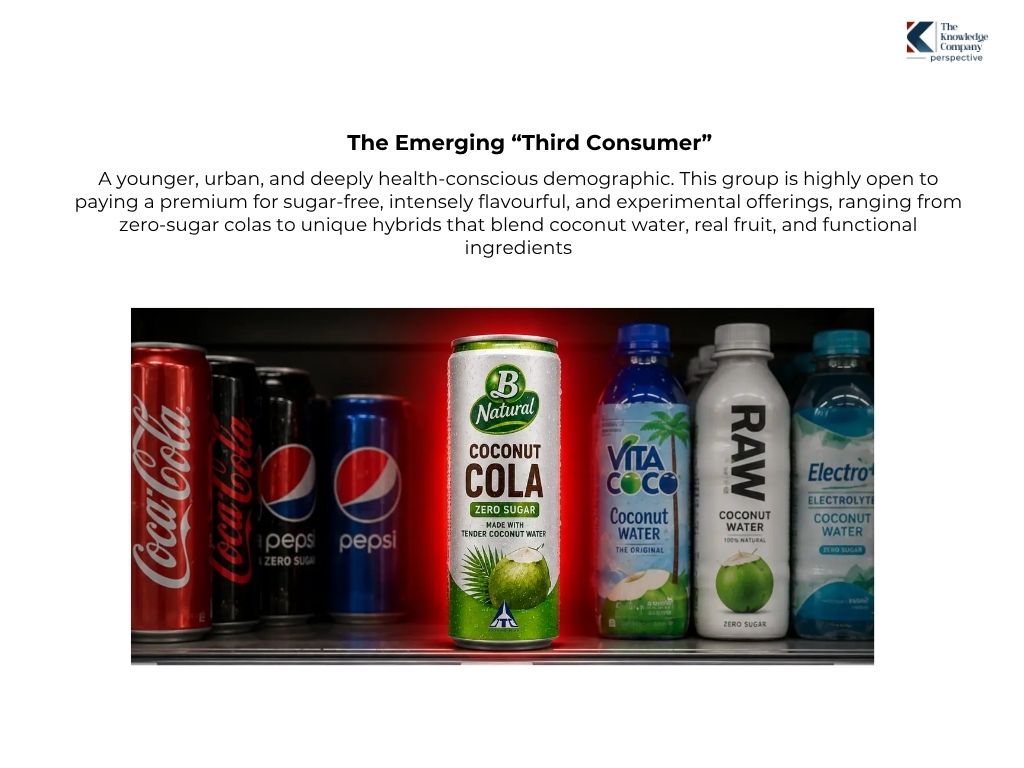
Its new offering, Coconut Cola, launched under the established B Natural beverage portfolio, is a zero-sugar carbonated drink engineered with real tender coconut water.
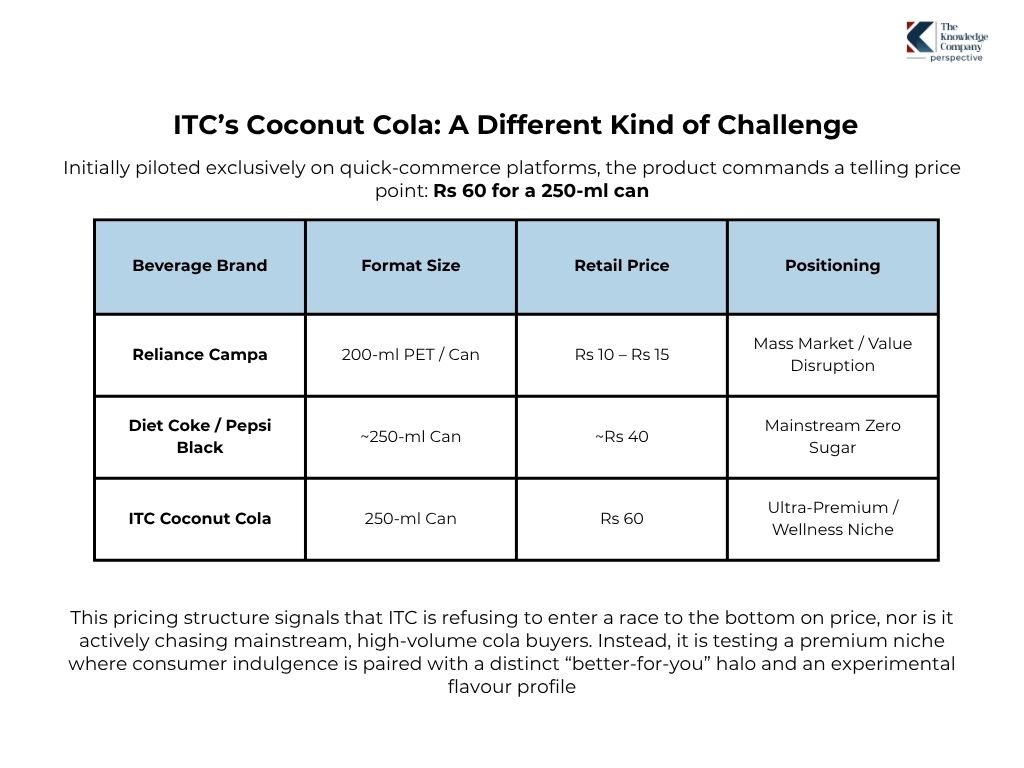
Initially piloted exclusively on quick-commerce platforms, the product commands a telling price point: Rs 60 for a 250-ml can.
|
Beverage Brand |
Format Size |
Retail Price |
Positioning |
|
Reliance Campa |
200-ml PET / Can |
Rs 10 – Rs 15 |
Mass Market / Value Disruption |
|
Diet Coke / Pepsi Black |
~250-ml Can |
~Rs 40 |
Mainstream Zero Sugar |
|
ITC Coconut Cola |
250-ml Can |
Rs 60 |
Ultra-Premium / Wellness Niche |
This pricing structure signals that ITC is refusing to enter a race to the bottom on price, nor is it actively chasing mainstream, high-volume cola buyers. Instead, it is testing a premium niche where consumer indulgence is paired with a distinct “better-for-you” halo and an experimental flavour profile.
This strategy aligns perfectly with broader macroeconomic shifts in consumer wellness. Across the wider beverage ecosystem, sugar-free and low-sugar alternatives are emerging as the fastest-growing sub-segments.
For context, Varun Beverages, PepsiCo’s largest bottling partner in India, recently reported that low- and no-sugar beverages now account for around 63% of its consolidated sales volumes. This shift highlights just how rapidly urban consumer preferences are migrating away from traditional, high-sugar formulations.
ITC is capitalizing on this trend by transforming B Natural into a comprehensive beverage platform, systematically adding no-added-sugar fruit drinks, expanding its pure coconut water line, and extending its Sunfeast brand into high-protein smoothies. Coconut Cola fits seamlessly into this broader, wellness-oriented portfolio design.
Health, Flavour, and the Rise of the “Third Consumer”
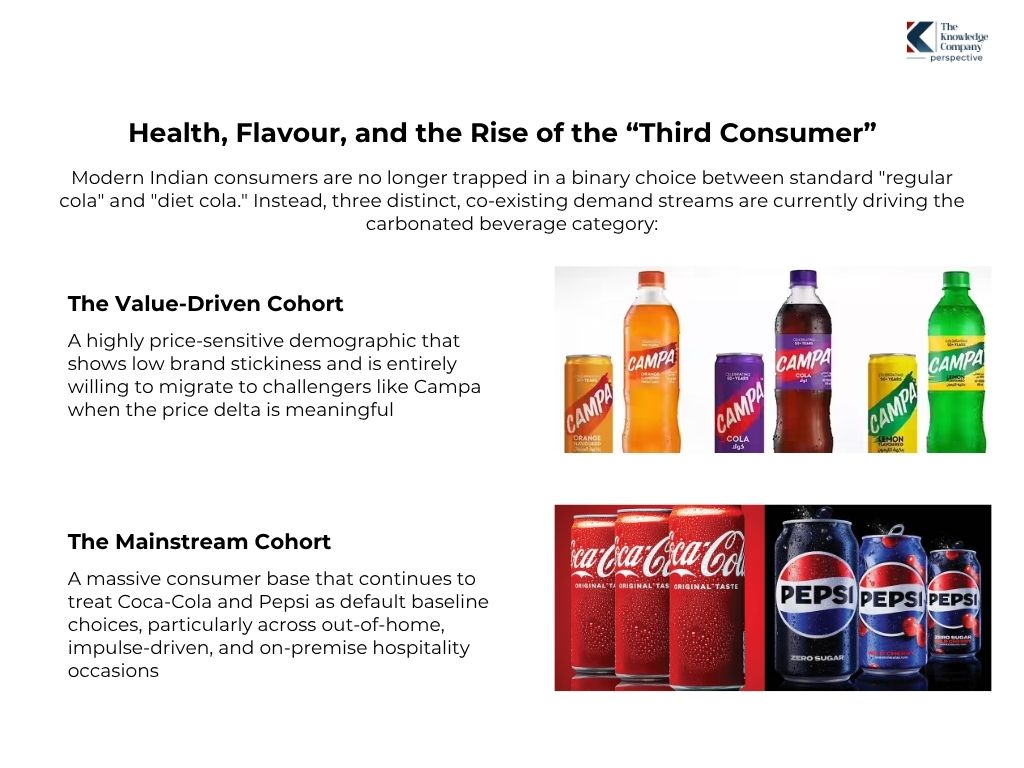
Modern Indian consumers are no longer trapped in a binary choice between standard “regular cola” and “diet cola.” Instead, three distinct, co-existing demand streams are currently driving the carbonated beverage category:
It is this highly profitable third segment that ITC’s Coconut Cola is built to capture.
By marrying traditional cola taste profiles with functional tender coconut water in a zero-sugar formulation, ITC is betting on a lucrative sweet spot nestled between mainstream diet sodas and purely functional, plain coconut water.
Furthermore, the decision to pilot this product specifically via quick-commerce channels emphasizes that this is a agile “test-and-learn” play aimed directly at digitally native, highly experimental urban buyers.
A More Crowded, More Complex Challenger Bench
Beyond the corporate might of Reliance and ITC, the carbonated drinks ecosystem is witnessing the rise of a dense, localized challenger bench. Independent brands like Lahori Zeera and various regional, flavour-focused operators are successfully carving out defensive micro-niches.
They achieve this by combining ethnic flavor profiles, local nostalgia, and highly differentiated brand positioning.
While these regional players remain significantly smaller than legacy multinational giants or new-age conglomerates, their market presence proves that the Indian cola market is no longer a monolith moving in a single direction.
Instead, consumer behavior is fragmenting simultaneously: some consumers are trading down to value, others are trading across to regional nostalgia, and an affluent segment is trading up to premiumized wellness.
The “cola market” has effectively broken apart into a complex portfolio of overlapping sub-categories.
What This Means for Coca-Cola and PepsiCo
The immediate risk for Coca-Cola and PepsiCo is not that these new challengers will suddenly dismantle their staggering advantages in distribution scale and manufacturing infrastructure.
The incumbents still firmly dominate global volumes, and India remains one of the world’s most attractive long-term beverage growth markets, with the carbonated soft drinks segment projected to expand steadily over the next decade.
The real threat is the slow, systemic erosion of category control.
When market pricing is aggressively disrupted from below by Campa, premium wellness propositions test the limits from above, and regional flavour brands nibble away at localized nodes, the category’s center of gravity inevitably shifts.
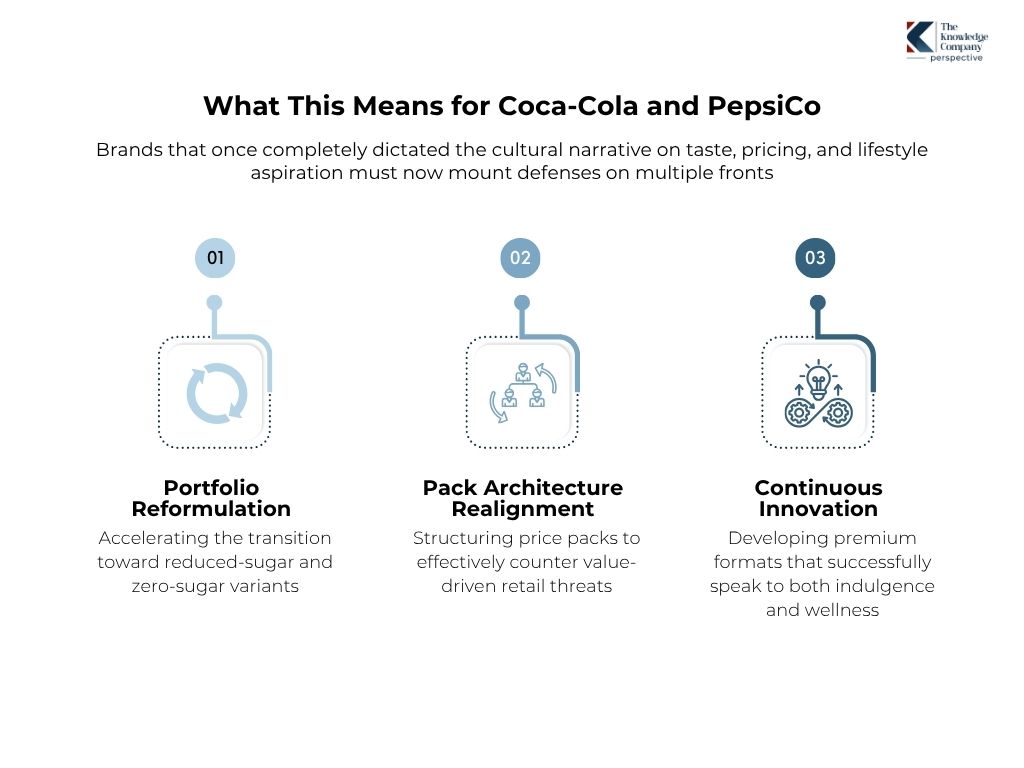
Brands that once completely dictated the cultural narrative on taste, pricing, and lifestyle aspiration must now mount defenses on multiple fronts:

The TKC Perspective: From Cola Wars to Category Design
From a strategic consulting perspective, the core narrative extends far beyond who gains or loses a percentage of market share in the next summer season.
The real transformation lies in how the foundational rules of category design in Indian consumer goods are being rewritten.
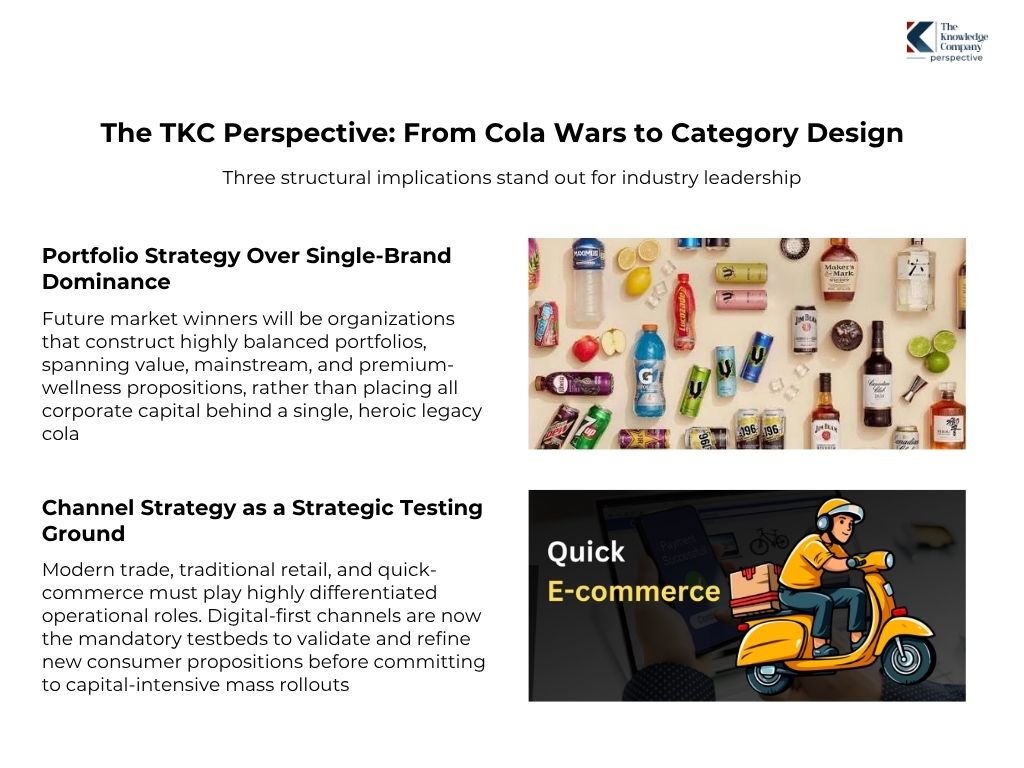
Three structural implications stand out for industry leadership:
For FMCG and beverage executives, the question is no longer “How do we win the traditional cola wars?” The mandate now is: “How do we design a resilient beverage portfolio capable of monetizing simultaneous shocks across price, health consciousness, and flavour fragmentation?”
At The Knowledge Company (TKC), we collaborate closely with consumer brands and retail leadership teams to solve these exact structural challenges, mapping complex demand shifts, stress-testing legacy category strategies, and engineering growth playbooks that maximize value across channels.
If your organization is navigating similar inflection points in beverages or the wider FMCG ecosystem, now is the time to audit your portfolio and go-to-market execution.
To align your portfolio strategy with India’s new consumer realities, connect at vidya@tkc.in.