A decade ago, FreshMenu was celebrated as the ultimate pioneer of India’s food-tech revolution. By building a full-stack, delivery-first model, the brand promised to disrupt traditional dining economics through kitchen efficiency, rapid menu innovation, and digital accessibility.
Today, as highlighted in a recent feature by The Morning Context titled “Comeback to collapse: how FreshMenu came undone,” the pioneer is fighting a difficult battle for survival.
FreshMenu’s trajectory is far more than an isolated story of corporate fatigue; it serves as a live, industry-wide case study exposing the deep structural pitfalls inherent in the pure-play cloud kitchen business model.
The Cost of Invisibility: The Core Strategic Failure
In a pure-play cloud kitchen model, the absence of physical real estate is initially treated as a massive financial advantage, saving on high street rents, front-of-house staff, and interior capital expenditure. However, over a long-term operational horizon, that apparent cost savings transforms into a severe customer acquisition liability.
Articulating the core structural vulnerabilities of this digital-only ecosystem, Ravindra Yadav, Partner at The Knowledge Company (TKC), explains why supreme operational efficiency in the kitchen cannot overcome a flawed distribution framework. FreshMenu’s trajectory exposes the fundamental vulnerabilities of the pure-play cloud kitchen model.
Without a physical storefront, an entire brand’s visibility is held hostage by aggregator algorithms and rising customer acquisition costs. What started as a full-stack food-tech pioneer eventually became just another listing fighting for digital real estate.
In the food service business, if a firm lacks organic brand recall and an omnichannel presence, defending your unit economics becomes a nearly impossible battle.”
Three Strategic Pitfalls Facing Delivery-Only Brands
For foodservice operators evaluating dark store expansion, FreshMenu’s journey highlights three critical friction points that regularly undermine long-term profitability:
- The Aggregator Trap
When third-party delivery platforms become the primary interface for consumer discovery, brands lose direct ownership of their customer base. Instead of saving money on physical rent, cloud kitchens end up paying continuous, escalating “digital rent” through platform commissions, sponsored search placements, and algorithm-driven visibility. Over time, this erodes unit-level margins and strips the brand of any real control over how consumers discover or interact with its products.
- The CAC vs. LTV Mismatch
Physical restaurants possess built-in emotional equity; the sensory experience of dining in creates lasting brand memory and organic loyalty. Cloud kitchens, operating in a purely transactional digital environment, inherently suffer from low customer retention. Without a tangible physical presence to forge that emotional connection, delivery-first brands are forced to rely on continuous discounting and performance ads to drive repeat orders, a cycle that inflates Customer Acquisition Cost (CAC) while systematically destroying Customer Lifetime Value (LTV).
- The Omnichannel Imperative
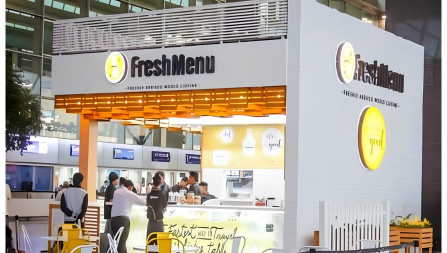
In a mature food delivery ecosystem, treating “cloud-only” as a standalone long-term format is a fragile strategy. Industry leaders increasingly recognize that physical outlets are not just cost centers, they serve as high-impact, permanent billboards that generate organic search, build trust, and drive profitable dine-in margins. Dark kitchens function best as capacity multipliers to handle delivery density for an already established physical brand, rather than as the sole foundation of a restaurant enterprise.
Beyond Kitchen Efficiency: Building Defensible Moats
In today’s food services ecosystem, scaling sustainably requires recognizing that kitchen automation and culinary speed are baseline requirements, not competitive moats.
The foodservice brands built to survive the next decade will be those that balance physical presence with digital reach. By establishing hybrid footprints, diversification across channels, and building direct consumer recall that exists independently of an aggregator’s search bar, operators can protect their margins against shifting platform dynattmics.
Optimize Your Foodservice Operating Model with TKC
The Knowledge Company’s Food Services Advisory practice partners alongside leading quick-service restaurant (QSR) chains, casual dining brands, and food-tech platforms to navigate complex market shifts, stress-test delivery unit economics, and engineer sustainable omnichannel expansion playbooks.
Are your delivery economics and format strategy built to withstand market volatility?
To evaluate your operational model, channel mix, or route-to-market strategy with TKC’s Food Services Advisory team, connect with us at vidya@tkc.in.