



The future of apparel manufacturing will not be determined by factory speed alone. It will depend on how quickly and accurately businesses can translate changing consumer demand into decisions across design, merchandising, sourcing, production and inventory.
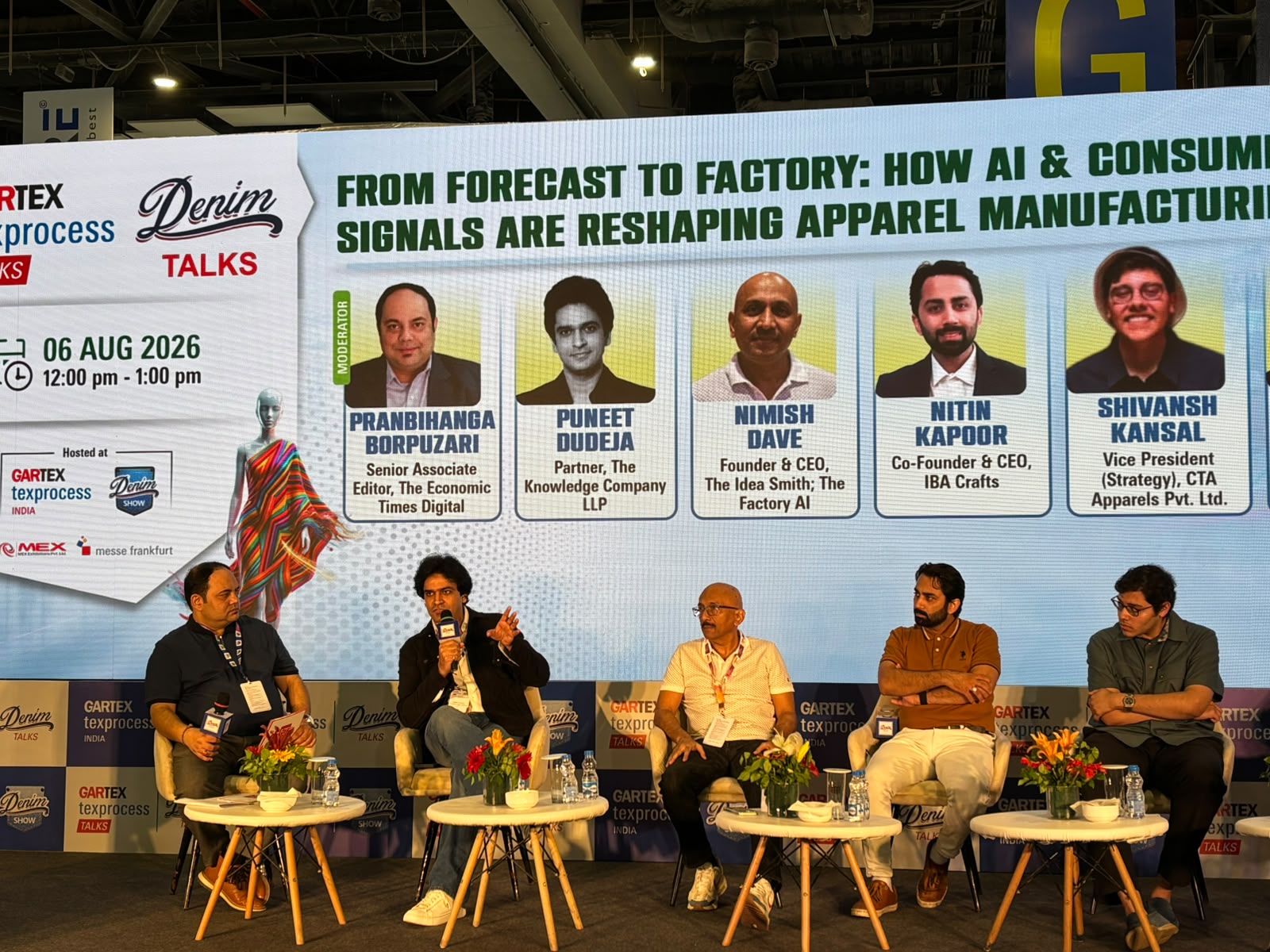
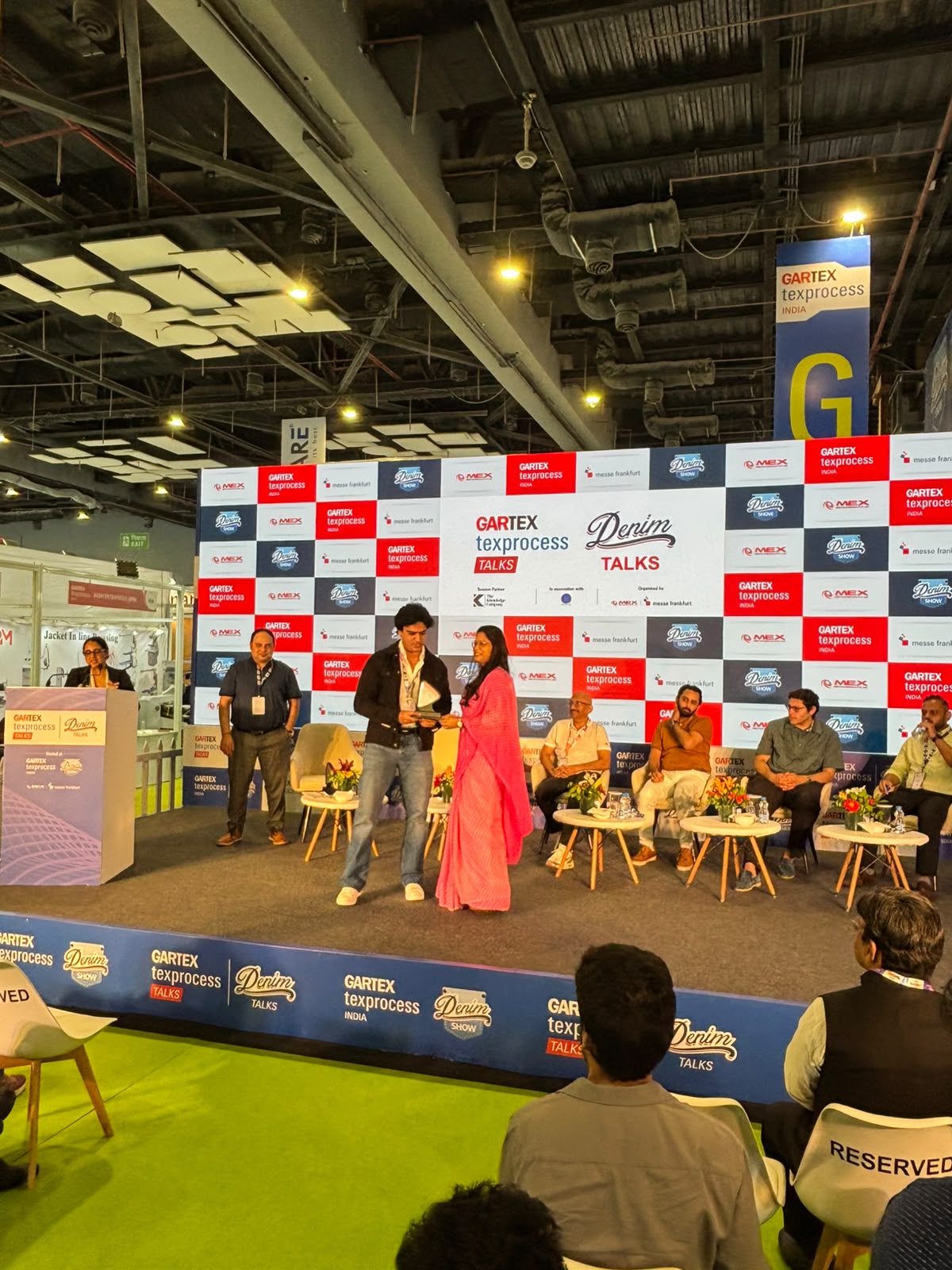
This shift from production-led efficiency to predictive, consumer-centric agility took centre stage at Denim Talks, held as part of the Denim Show at Gartex Texprocess India 2026, at Bharat Mandapam, New Delhi.
As session partners, The Knowledge Company (TKC), represented by Partner, Puneet Dudeja, helped shape an insightful industry discussion that brought together leaders from fashion, technology, manufacturing and retail.
During the panel, “From Forecast to Factory: How AI & Consumer Signals Are Reshaping Apparel Manufacturing,” Puneet examined how AI-driven trend forecasting can connect emerging consumer preferences more directly with decisions on the factory floor.
The discussion addressed a central strategic question for the industry: can fashion and apparel businesses move from reacting to demand after it becomes visible to anticipating it before major production commitments are made?
For years, competitiveness in apparel manufacturing was largely defined by cost, capacity, quality and speed. These capabilities remain essential, but they are no longer sufficient.
Fashion demand has become increasingly fragmented and difficult to predict. Social media, creators, regional preferences and rapidly changing cultural influences can accelerate or weaken a trend within weeks. Conventional product-development and sourcing cycles, however, may continue for several months.
This creates a structural mismatch. By the time a business identifies a consumer shift, finalises a design, sources materials and begins production, the original demand signal may already have changed.
AI and consumer intelligence can help narrow this gap. However, technology creates value only when it improves the quality of decisions made across the organisation.
As Puneet observed during the session:
“AI won’t replace instinct. It will replace uninformed instinct.”
The objective is not to remove human judgement from fashion. It is to give decision-makers stronger evidence, earlier warning signals and a clearer understanding of where demand may be moving.
India’s textile and apparel sector has traditionally benefited from its manufacturing base, skilled workforce and cost competitiveness. As global supply chains become more technology-enabled, the next phase of advantage will increasingly depend on responsiveness and decision quality.
Puneet captured this transition during the discussion:
“The next competitive advantage isn’t cheaper manufacturing. It’s smarter manufacturing. We must compete on decision quality, not just labour cost.”
Smarter manufacturing begins before production starts. It requires businesses to improve the decisions that determine:
These are not purely technical questions. They combine data, commercial understanding and human judgement.
A predictive operating model connects consumer intelligence with merchandising, planning, sourcing and manufacturing. It enables businesses to act on changing demand without treating every short-lived signal as a scalable trend.
Sustainability discussions in fashion frequently focus on raw materials, production processes, water consumption and recycling. These are critical considerations, but there is another major source of waste: producing merchandise for which there is insufficient consumer demand.
As Puneet explained:
“The biggest waste in fashion isn’t fabric. It’s producing what consumers never wanted.”
Unsold inventory creates consequences across the value chain. It locks up working capital, increases warehousing costs, drives discounting and weakens brand value. Excess merchandise may eventually enter liquidation channels or become physical waste.
Better demand intelligence can help companies address this problem earlier. By connecting consumer signals with assortment and production decisions, brands and manufacturers can:
AI does not eliminate forecasting risk. It can, however, help organisations recognise uncertainty sooner and make more informed inventory commitments.
Fashion companies now have access to expanding volumes of information, including sales records, search behaviour, social engagement, customer reviews, competitive pricing and regional demand patterns.
The availability of data does not automatically improve performance.
“The objective isn’t collecting more data. It’s making fewer wrong decisions.”
Organisations frequently invest in dashboards and analytical tools without redesigning the decisions those systems are expected to support.
A more effective approach begins with clearly defined commercial questions:
When data is linked to specific questions, AI becomes a decision-support capability rather than another layer of reporting.
Technology adoption is often treated as an IT implementation. In practice, the more difficult challenge is organisational.
AI-led transformation affects decision rights, workflows, performance indicators and collaboration between teams. Merchandising, design, consumer intelligence, sourcing, manufacturing and technology functions must agree on how signals will be evaluated and who will act on them.
Puneet emphasised that the starting point is not the technology itself:
“Transformation begins with leadership mindset, not technology. Advantage comes from asking better questions, changing decision-making and empowering people.”
Leadership teams therefore need to determine:
Without this clarity, sophisticated technology may simply accelerate existing inefficiencies.
The discussion also examined the effect of AI on the apparel workforce.
The most useful question is not whether machines will replace people. It is how people equipped with better intelligence will outperform teams that continue to depend on fragmented information and slower processes.
As Puneet noted:
“The future isn’t human versus AI. It’s human with AI versus human without AI.”
Human judgement remains central to fashion because products carry cultural, aesthetic and emotional meaning. AI can identify patterns, process information and model possible outcomes. People must interpret context, evaluate brand relevance and determine which opportunities deserve investment.
The strongest operating model is therefore hybrid. Technology contributes analytical speed and consistency, while people contribute imagination, commercial understanding and accountability.
The Denim Talks discussion highlighted five priorities for organisations navigating the next phase of apparel manufacturing.
Trend and consumer insights should not remain isolated within reports or presentations. They must influence product development, sourcing, production planning and allocation.
The success of an AI initiative should be evaluated through commercial improvements such as forecast accuracy, inventory turns, full-price sell-through and lower markdown exposure.
Businesses should resist adopting AI simply because the technology is available. Each investment must be linked to a specific decision bottleneck or performance objective.
AI may produce recommendations, but leadership teams must remain responsible for the commercial and strategic consequences of acting on them.
Faster decisions create value only when supported by relevant signals, defined processes and informed leadership.
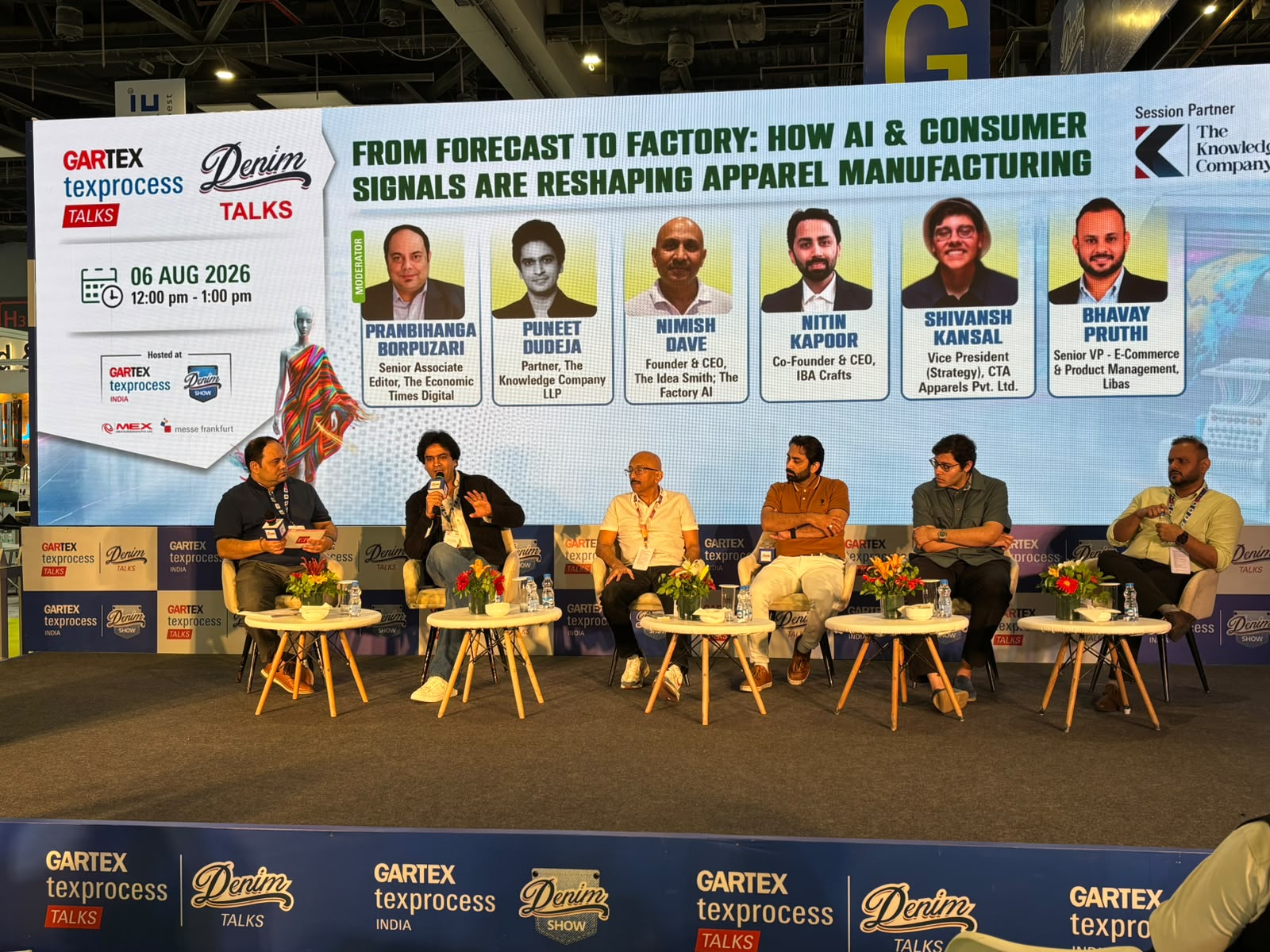
The session was moderated by Pranbihanga Borpuzari, Senior Associate Editor at The Economic Times Digital.
Puneet was joined by:
The panel brought together perspectives from technology, manufacturing, brand strategy and digital commerce, reflecting the cross-functional nature of AI transformation in fashion.
TKC extends its appreciation to Gartex Texprocess India, Denim Show, Messe Frankfurt India and MEX Exhibitions Pvt. Ltd. for bringing apparel, denim, manufacturing and technology leaders together for this timely exchange.
Moving from conventional forecasting to a consumer-responsive operating model requires more than technology adoption. It requires alignment across strategy, consumer intelligence, processes, organisational capabilities and execution.
TKC works with fashion brands, retailers, textile manufacturers and investors across areas including:
Supporting brands and manufacturers in evaluating categories, customer segments, geographies and routes to market
Identifying structural consumer shifts, category signals and emerging demand patterns that can inform product, assortment and market decisions.
Translating consumer intelligence into product architecture, range planning, price ladders and relevant regional assortments.
Developing decision frameworks that improve inventory commitments, replenishment and full-price sell-through.
Connecting market signals with sourcing, manufacturing and distribution to improve responsiveness and reduce avoidable waste.
The next phase of apparel manufacturing will not be defined by a single algorithm or technology platform. It will be defined by an organisation’s ability to connect consumer understanding with commercial judgement and operational execution.
Factories will still need to become faster and more efficient. But the greater strategic advantage will come from determining what deserves to be produced, how much should be produced and when the organisation needs to respond.
That is the real opportunity at the intersection of AI, consumer intelligence and apparel manufacturing: not merely generating more predictions, but enabling fewer wrong decisions.
Is your fashion or apparel business prepared to connect consumer signals more directly with product and manufacturing decisions?
Connect with TKC’s Fashion and Retail Advisory team at vidya@tkc.in to explore how consumer intelligence, AI and operating-model transformation can support more responsive and sustainable growth.
Get the strategy behind the retail headlines. Subscribe to TKC’s free newsletter: https://tkc.us13.list-manage.com/subscribe?u=cf7c5e6f30dd40e71ad5a1f00&id=76b5a492e2