


India’s wedding gifting market is undergoing a significant transformation. Buyers are moving beyond conventional, standardised offerings towards curated experiences, premium craftsmanship, personalization and culturally relevant products.
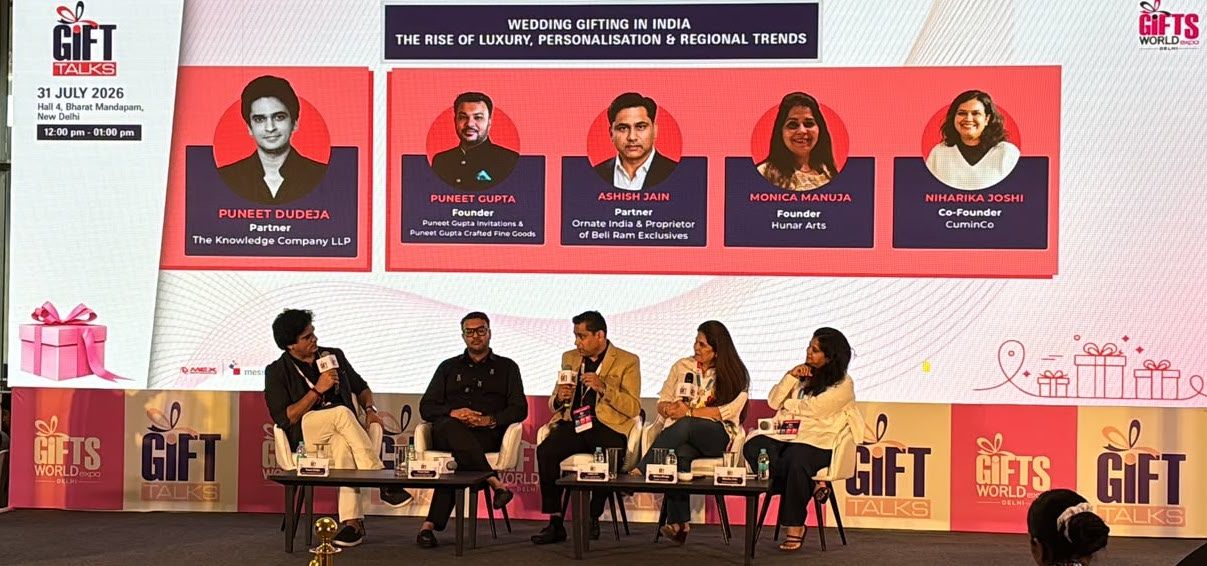
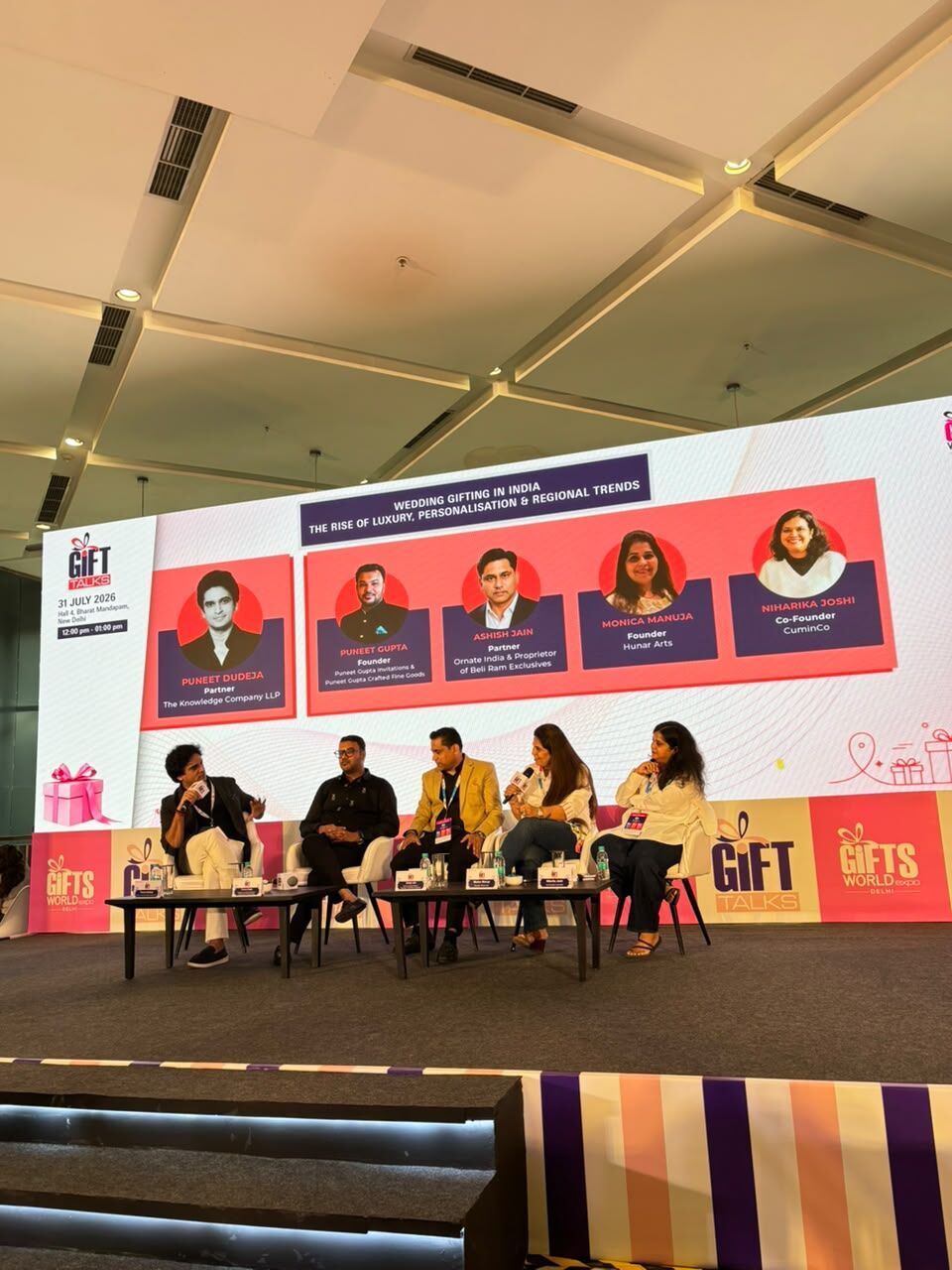
These changing expectations took centre stage at Gift Talks during Gifts World Expo 2026, held at Bharat Mandapam, New Delhi.
Puneet Dudeja, Partner at The Knowledge Company (TKC), joined an engaging panel of industry leaders to decode the consumer shifts and trend signals reshaping how modern Indian buyers approach wedding and celebration gifting.
The session, “Luxury, personalization, and Regional Influences Reshaping India’s Wedding Gifting Landscape,” attracted brand owners, retailers, lifestyle businesses and corporate procurement professionals seeking to understand how emerging preferences can be translated into sustainable commercial growth.
Wedding gifting in India has traditionally been influenced by familiarity, utility and social convention. While these considerations remain relevant, a new set of expectations is beginning to influence the category.
Modern buyers increasingly want gifts that feel considered, distinctive and aligned with the identity of the occasion. This is moving the category away from standardised, commodity-style offerings towards curated collections with stronger emotional and experiential value.
The shift is visible across:
For brands and retailers, this changes the basis of competition. Product availability alone is no longer enough. The perceived value of a gift is increasingly determined by the story, context and experience built around it.
Luxury in gifting does not always mean the highest price point. It can also be expressed through craftsmanship, exclusivity, provenance, presentation and relevance to the recipient.
This creates an opportunity for businesses to develop premium propositions without relying only on established luxury labels. Regional craftsmanship, specialised food products, home and lifestyle accessories, sustainable materials and personalized experiences can all occupy premium positions when thoughtfully curated.
However, premiumization requires more than increasing prices. Brands need to build a coherent value proposition around:
In the absence of these elements, a higher price may not translate into higher perceived value.
Personalization is becoming one of the most important differentiators in wedding and celebration gifting.
Consumers increasingly expect brands to accommodate individual preferences through names, messages, packaging, product combinations, colour palettes or occasion-specific designs. Corporate and institutional buyers may also require gifts to reflect brand identity while still feeling personal to the recipient.
The strategic challenge lies in delivering this flexibility without allowing complexity to undermine margins or fulfilment speed.
Personalization at scale requires coordination across:
Businesses must determine which elements can be standardized and which should remain customizable. A modular proposition can provide meaningful choice while helping the business retain operational control.
India cannot be treated as a single gifting market. Wedding customs, cultural symbols, gifting preferences and aesthetic expectations vary significantly across regions and communities.
A product or presentation style that resonates strongly in one geography may have limited relevance in another. This makes regional intelligence essential for brands seeking to expand beyond their established markets.
Businesses need to examine:
Regionalisation does not necessarily require a completely different product portfolio for every market. It can involve adapting assortment, packaging, communication and curation to reflect local expectations.
Brands that recognise these nuances can build stronger consumer connections while reducing the risk of offering generic products in culturally specific contexts.
Understanding a consumer shift is only the first step. Businesses must translate that insight into product, pricing, sourcing and fulfilment decisions.
The wedding-gifting opportunity is time-sensitive and operationally demanding. Orders may involve large quantities, tight delivery windows, custom specifications and high expectations for quality.
Building a defensible position, therefore, requires both consumer understanding and supply-chain agility.
Retailers and gifting brands need to evaluate:
Businesses that combine consumer insight with disciplined execution will be better positioned to turn occasion-based demand into recurring customer relationships.
The session highlighted four important priorities for businesses operating in India’s evolving gifting market.
Consumers are increasingly looking for coherent gifting stories. Businesses must add value through selection, presentation and context rather than offering a broad but undifferentiated catalogue.
Customization cannot function as an improvised service. Product architecture, sourcing, technology and fulfilment processes must be designed to support it.
Regional preferences should influence assortment, packaging and communication decisions. Cultural relevance can create differentiation that national-level messaging alone cannot provide.
Premium gifting requires consistency across product quality, packaging and delivery. A differentiated proposition can quickly lose value when execution is unreliable.
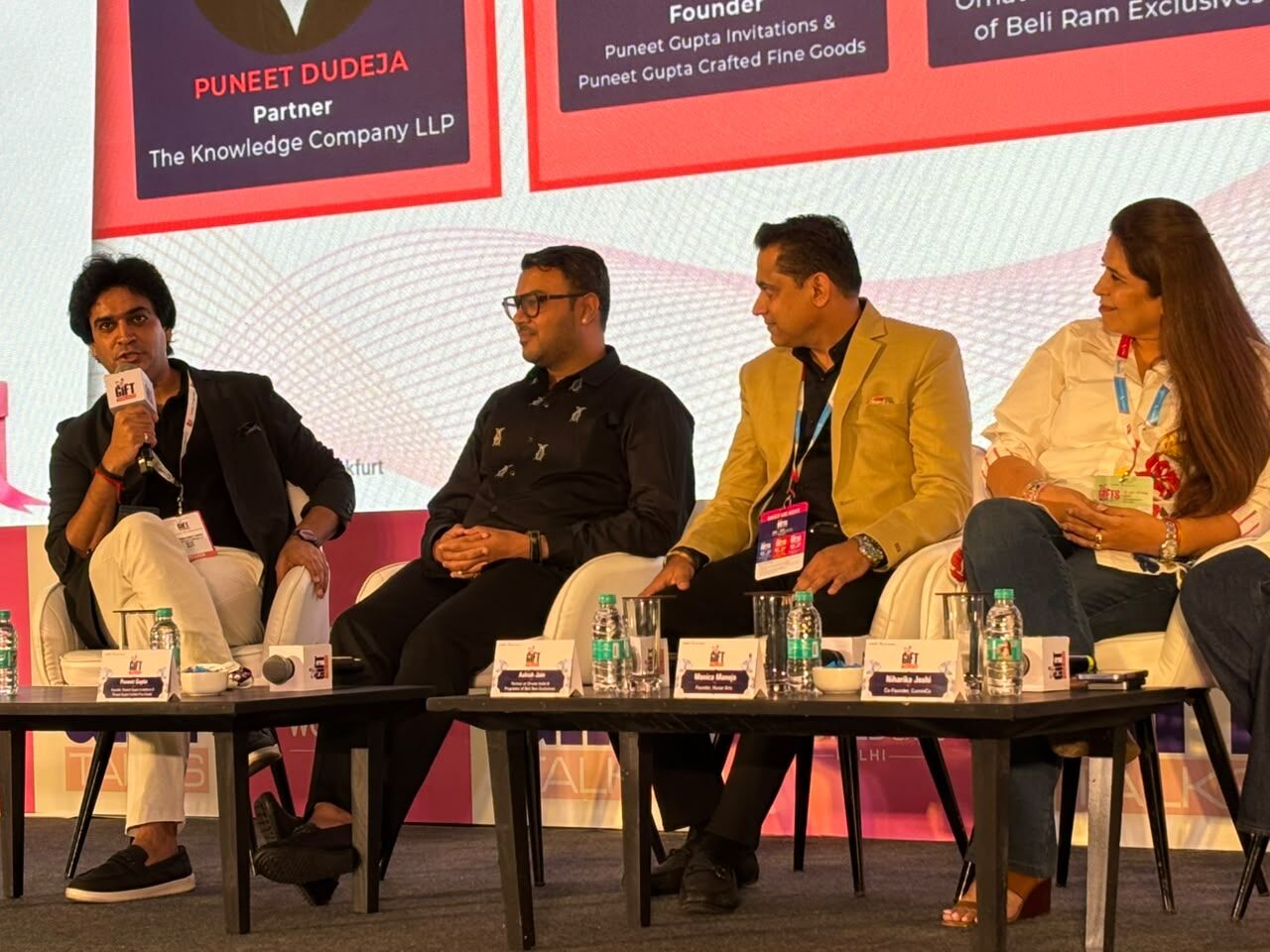
The panel was followed by an interactive question-and-answer session, during which Puneet addressed questions from brand owners, retailers and industry professionals.
The discussion moved beyond identifying emerging gifting preferences to examining how businesses can create commercially viable strategies around luxury, personalization and regional relevance.
TKC extends its appreciation to Gifts World Expo, MEX Exhibitions Pvt. Ltd. and Messe Frankfurt India for creating an engaging platform for the gifting, retail and lifestyle industry.
TKC also thanks the attendees whose questions and perspectives contributed to a vibrant and substantive exchange of ideas.
As consumer expectations shift towards premiumization and personalization, businesses need to reassess their category positioning, assortments, supply chains and customer experiences.
TKC works with retail, lifestyle, gifting and consumer businesses across areas including:
Identifying emerging consumer shifts, occasion-led behaviour and category signals that can inform strategic and commercial decisions.
Building product portfolios, pricing ladders and curation frameworks aligned with specific consumer segments and occasions.
Helping brands move beyond price-led competition by strengthening product propositions, presentation, service and perceived value.
Developing operating models that support customization while protecting quality, delivery speed and unit economics.
Decoding cultural nuances and local purchase behaviour to build more relevant assortments and market-entry plans.
Creating differentiated propositions and consistent brand journeys across physical, digital and institutional channels.
India’s wedding-gifting market is becoming more premium, personal and regionally expressive. But the opportunity will not be captured through product expansion alone.
The strongest gifting businesses will be those that combine consumer intelligence with thoughtful curation and disciplined execution. They will know where standardisation creates efficiency, where personalization creates value and where regional relevance creates trust.
Is your gifting or lifestyle strategy aligned with India’s evolving celebration economy?
Connect with TKC’s Trend Intelligence and Retail Advisory team at vidya@tkc.in to turn emerging consumer signals into differentiated products, agile operating models and sustainable commercial growth.
Get the strategy behind the retail headlines. Subscribe to TKC’s free newsletter:
https://tkc.us13.list-manage.com/subscribe?u=cf7c5e6f30dd40e71ad5a1f00&id=76b5a492e2