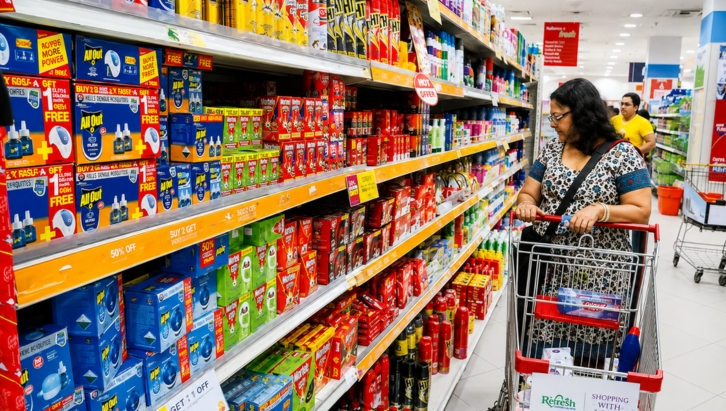
As India prepares for its annual festive shopping surge, major consumer goods companies are gearing up for a second consecutive quarter of price increases. Spanning everyday essentials—from toothpaste, dairy, and salt to paints, kitchen appliances, and tires—brands across sectors are passing on escalating input costs to end consumers.
This price reset comes at a delicate macroeconomic junction. Consumer inflation crossed the Reserve Bank of India’s (RBI) 4% target, while ongoing Middle East geopolitical tensions continue to keep crude-linked derivative costs elevated.
Evaluating this environment in a recent feature by The Economic Times, Arvind Singhal, Chairman of The Knowledge Company (TKC), provides a grounded perspective on why, despite these headwinds, Indian consumer demand remains resilient.
- The Catalysts Behind the Second Wave of Price Hikes
The planned price adjustments are primarily driven by external volatility and persistent input cost pressures:
- Crude & Energy Volatility: Prolonged conflicts in the Middle East have driven up energy costs and crude-derived raw materials, directly impacting home care, packaging, appliances, and paints.
- Agricultural and Food Risks: A uneven monsoon season and climate risks like El Niño threaten crop yields, pushing up food and dairy production costs.
- Erosion of Gross Margins: After absorbing initial cost pressures in previous quarters, major FMCG and consumer durable manufacturers (including HUL, Asian Paints, Tata Consumer Products, and Havells) are turning to calibrated price increases of 5% to 8% to protect their operating margins.
- The “Comfort Zone”: Why Underlying Demand Holds Firm
Despite headline inflation pressures and upcoming price increases, macroeconomic indicators suggest that the Indian consumer base is entering the festive season on stable ground.
“We are in a comfort zone at the moment.”
— Arvind Singhal, Chairman, The Knowledge Company (TKC)
In his analysis for The Economic Times, Arvind Singhal points to several fundamental macroeconomic indicators that demonstrate steady underlying demand:
- Strong Tax Collections: High Goods and Services Tax (GST) collections signal robust commercial activity and sustained transaction volume across both urban and regional markets.
- High Logistics Mobility: Consistent highway toll receipts reflect uninterrupted movement of goods, supply chain activity, and commercial transport.
- Retail Sales Momentum: Industry benchmarks, including the Retailers Association of India (RAI) survey, recorded a 6% year-on-year retail sales growth in June, demonstrating steady consumer movement ahead of the festival calendar.
- The Festive Season: A High-Stakes Balancing Act
The August-to-November festive window—anchored by major celebrations like Diwali—is the single most important quarter for Indian retail, accounting for nearly one-third of total annual sales for many brands.
This seasonal spending surge provides consumer companies with the pricing power needed to pass on higher input costs. However, it also presents a strategic dilemma:
- Passing Costs vs. Protecting Volume: While urban consumers have largely absorbed minor price hikes, rural recovery rarely follows a straight line. Excessive price increases risk dampening volume growth among cost-sensitive cohorts.
- Policy Monitoring: The RBI and the Ministry of Finance are keeping a close watch on whether these price hikes trigger broader, second-round inflation. The central bank’s rate trajectory will largely depend on whether crude prices remain elevated and how the monsoon harvest settles.
- Strategic Takeaways for FMCG & Retail Leaders
To navigate this delicate balance of price increases and demand preservation, consumer brands should focus on three strategic execution priorities:
- Grammage & Price-Point Architecture: Instead of outright price increases on core entry-level SKUs (e.g., ₹5, ₹10, or ₹20 packs), brands should utilize calibrated grammage adjustments (skimpflation) to protect low-income trial rates while managing margins on larger family packs.
- Festive Value Bundling: To justify higher price tags during peak shopping months, combine core products with promotional value-adds or festive packaging to increase Average Order Value (AOV) without alienating budget-conscious shoppers.
- Agile Supply Chain Sourcing: With commodity prices remaining volatile, consumer firms must maintain flexible sourcing agreements and optimized inventory levels to prevent supply disruptions during high-demand festival weeks.
Read the full analysis in The Economic Times:
https://economictimes.indiatimes.com/news/economy/indicators/indian-companies-are-about-to-raise-prices-putting-rbis-inflation-outlook-to-test/articleshow/132781493.cms?from=mdr
Optimize Your Festive & Retail Strategy with TKC
The Knowledge Company’s Retail & Consumer Goods practice works with leading conglomerates, FMCG majors, and regional brands to engineer resilient pricing strategies, optimize supply chains, and capitalize on evolving consumer behavior.
Is your brand’s festive pricing architecture built to protect both margins and market share?
Connect with TKC’s Advisory Team at vidya@tkc.in to bring commercial clarity to your strategic roadmap today.