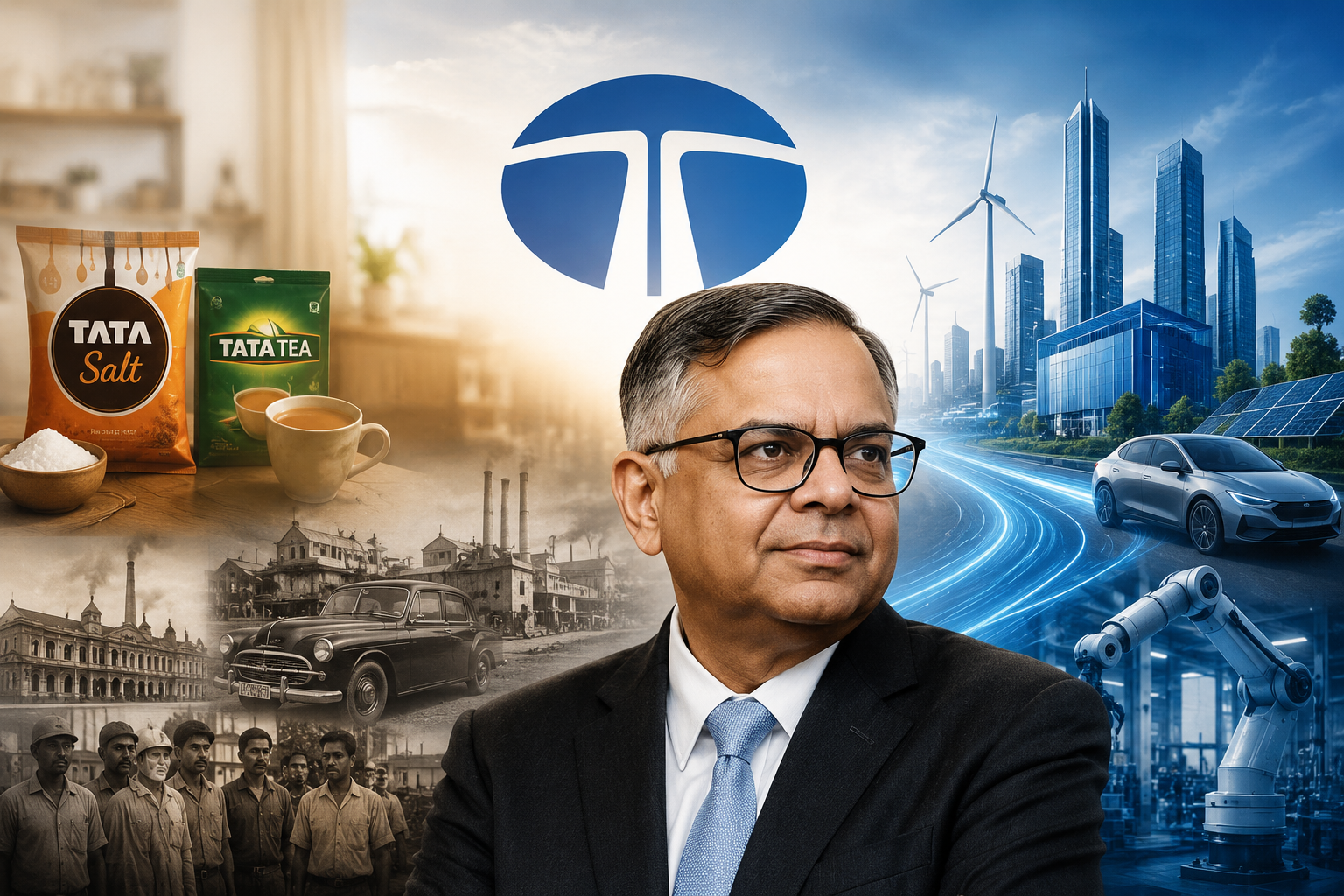
For decades, the Tata Group has been deeply embedded in the daily lives of Indian consumers through legacy brands like Tata Salt and Tata Tea. However, under the leadership of N. Chandrasekaran, the conglomerate accelerated a deliberate shift to evolve from a traditional industrial giant into a highly agile, modern consumer goods powerhouse.
A recent feature in Business Standard chronicles this rapid transformation, highlighting how strategic restructuring and aggressive acquisitions have built a formidable “house of brands” capable of competing with global FMCG leaders.
The Creation of a Unified Consumer Platform
The cornerstone of this consumer pivot was the creation of Tata Consumer Products Ltd (TCPL). Initiated in 2019 and completed in 2020, this strategic move merged Tata Chemicals’ consumer products business with Tata Global Beverages.
By bringing flagship brands under one umbrella, Tata created a larger, more cohesive consumer platform. This restructuring also aligned closely with the group’s broader consumer-facing ecosystem, which includes retail powerhouses like Trent, Titan, Voltas, and Infiniti Retail (Croma).
Aggressive Portfolio Expansion Through M&A
With a unified structure in place, TCPL aggressively expanded its product portfolio to capture India’s growing premiumization and health-conscious trends. Rather than relying solely on organic growth, the company executed highly targeted strategic acquisitions:
- Soulfull (2021): Marking an entry into the healthy snacking and millet-based breakfast category.
- Capital Foods (2024): Bringing immensely popular, high-margin brands like Ching’s Secret (noodles and soups) and Smith & Jones (cooking pastes) into the Tata fold.
- Organic India (2024): Expanding the portfolio into premium, organic wellness, and herbal supplements.
As brand experts have noted, these moves successfully diversified Tata’s offerings, allowing them to capture a larger share of the modern Indian shopper’s wallet.
The Next Challenge: Capital Allocation & Shareholder Returns
While building a massive, diversified portfolio is a critical first step, managing a complex “house of brands” introduces new operational and financial challenges.
Sharing his strategic outlook on this transformation with Business Standard, Arvind Singhal, Chairman at The Knowledge Company (TKC), pointed out that the next imperative for Tata’s consumer businesses must be rigorous financial discipline:
“The consumer businesses need better capital allocations. Some hard decisions need to be taken to give better returns to shareholders.”
As the initial phase of aggressive acquisition settles, the focus must shift toward integration, operational efficiency, and margin expansion. For massive conglomerates, driving long-term value often requires making tough calls on capital deployment—doubling down on high-growth, high-margin categories while potentially divesting or restructuring underperforming segments.
Strategic Transformation: How TKC Empowers FMCG & Consumer Conglomerates
Navigating the transition from legacy operations to a dynamic, multi-brand FMCG portfolio requires both structural foresight and deep market intelligence. The Knowledge Company (TKC) helps retail conglomerates, consumer brands, and investors build robust growth engines through specialized advisory:
- Portfolio & Brand Strategy: Assessing market gaps to identify high-potential acquisition targets and structuring “house of brands” architectures that drive cross-selling and premiumization.
- M&A Integration & Synergy: Designing operational blueprints to seamlessly integrate acquired brands, optimize supply chains, and realize projected cost synergies.
- Capital Allocation & Margin Optimization: Implementing frameworks to evaluate brand-level profitability, ensuring resources are deployed toward categories that maximize shareholder returns.
- Consumer Trend Forecasting: Leveraging data to align product development and investment strategies with emerging shifts in health, wellness, and convenience.
Is your FMCG portfolio optimized for the next decade of consumer growth?
To discuss M&A strategy and capital allocation with TKC’s advisory team, connect with us at vidya@tkc.in.
Get the strategy behind the retail headlines. Subscribe to our free newsletter: https://lnkd.in/eh-_58pf