


India’s premium grocery market is attracting renewed interest.
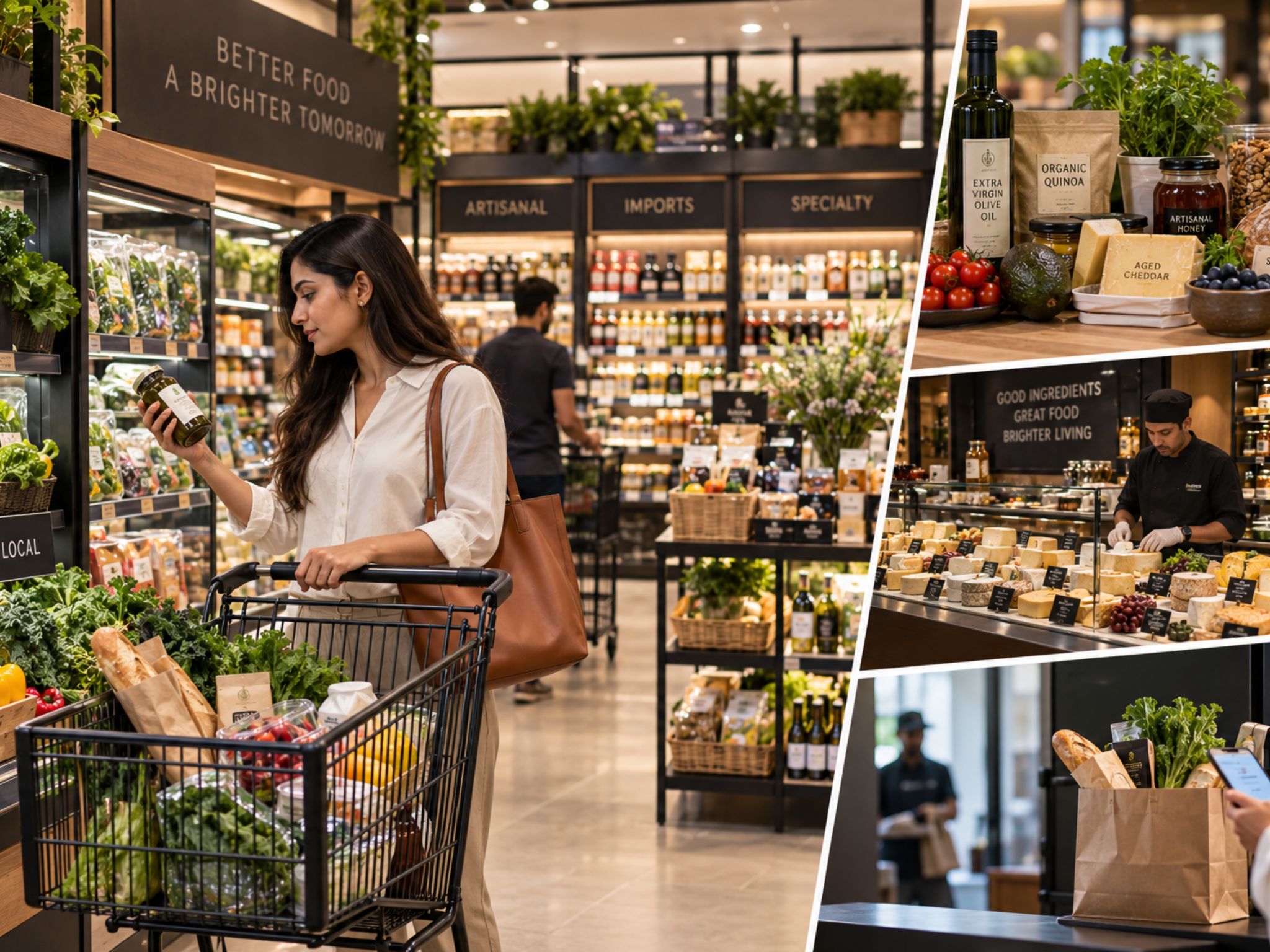
Rising disposable incomes, changing urban lifestyles and greater attention to ingredients are expanding demand for organic produce, clean-label foods, artisanal baked goods, specialty cheese, imported pantry products and preservative-free alternatives.
The opportunity appears compelling. Affluent consumers are demonstrating a greater willingness to pay for quality, convenience, provenance and differentiated products. Boutique grocery formats are emerging, established retailers are strengthening their premium assortments and quick-commerce platforms are making specialized products more accessible.
However, the commercial opportunity is more complex than the visible growth in premium consumption suggests.
Premium grocery retail is not simply conventional grocery retail with more expensive products. It requires a fundamentally different approach to catchment selection, assortment planning, sourcing, storage, quality assurance, merchandising and customer experience.
Speaking to Livemint, Ankur Bisen, Senior Partner at The Knowledge Company, described the gap between the category’s attractive surface-level opportunity and its more demanding operating reality:
“On the surface, it looks very enticing because you see it as aspirational middle class demand clusters. But if you scratch the surface and do the math, the story is much more nuanced. The problem statement has always had two problems. One is that the demand is fragmented. The second is execution; Indian retailers have not been very consistent in delivering a superior retail experience when it comes to premium food.”
Read the full Livemint feature: https://www.livemint.com/industry/retail/india-premium-grocery-retailers-11789281795950.html
An Attractive Market with a Difficult Business Model
The premium grocery opportunity is often viewed through the lens of India’s expanding affluent and aspirational consumer base.
But higher disposable income does not automatically translate into a dense, predictable market for premium grocery products.
Demand can remain fragmented across:
A household may pay a premium for organic vegetables but remain highly price-conscious about packaged staples. Another may regularly buy imported cheese and sauces but show little interest in premium fresh produce. A health-focused consumer may prioritize clean labels and protein products, while an experiential shopper may be more interested in artisanal bakery, confectionery or international cuisine.
These differences make the category difficult to address through a single premium-consumer definition.
Retailers must understand the specific missions they are serving. A premium grocery store built primarily for discovery operates differently from one designed around regular household replenishment. A destination gourmet store requires a different location and assortment strategy from a digitally led platform offering specialized products through rapid delivery.
Fragmented Demand Requires Catchment-Level Precision
Premium grocery demand is often concentrated in relatively small consumer clusters rather than evenly distributed across a city.
Two neighborhoods with similar income profiles may produce very different retail outcomes because of differences in household composition, food habits, international exposure, residential density and willingness to experiment.
This means traditional city-level market sizing may provide insufficient guidance for expansion decisions.
Retailers need to examine catchments through a more granular set of variables:
A premium grocery concept may perform strongly within one micro-market and struggle only a few kilometers away.
Expansion should therefore follow evidence of repeatable catchment economics rather than broad assumptions about a city’s purchasing power.
Premium Grocery Is an Assurance Business
Consumers buying premium food are not paying solely for a product. They are paying for a higher level of assurance.
That assurance can include:
Ankur explains why operational excellence is central to delivering this promise:
“When you are selling premium food, the consumer pays for a certain level of assurance and experience. That requires operational excellence in storage, supply management, quality assurance and consistency. The customer should get the same high standard every time.”
This is the central difference between premium positioning and a sustainable premium retail model.
A store may create an impressive visual environment and offer a differentiated assortment. But if fresh products are inconsistent, imported items are frequently unavailable or the same product varies in quality between visits, the premium promise is weakened.
The consumer does not separate front-end presentation from back-end execution. Both form part of the same experience.
The Assortment Challenge: Differentiation Without Excess Complexity
Premium grocery retailers need enough assortment breadth to create a sense of discovery. But excessive assortment can quickly become a commercial burden.
Many specialty products have:
A broad assortment may make a store look distinctive while simultaneously weakening inventory productivity.
The objective should not be to stock the largest possible number of premium products. It should be to create a curated range that serves clearly defined consumer missions.
These may include:
Each mission requires an appropriate balance of destination products, repeat-purchase staples and discovery-led merchandise.
Retailers also need a disciplined process for listing and delisting products. Novelty can attract trial, but continued shelf space should depend on consumer response, contribution margin, replenishment reliability and strategic relevance.
Freshness and Availability Must Coexist
Premium food presents a difficult operating trade-off.
Consumers expect freshness and consistent availability. But holding too much inventory increases the risk of spoilage, shrinkage and markdowns. Holding too little protects working capital but may result in frequent stockouts and a disappointing customer experience.
This tension is especially pronounced in categories such as:
The solution requires more than forecasting at the category level.
Retailers need SKU-level and store-level visibility into sales velocity, shelf life, replenishment frequency, seasonality and substitution patterns.
Smaller, more frequent replenishment cycles may be required for certain categories. Others may benefit from centralized preparation or regional distribution. Imported products need careful planning around longer lead times, minimum order quantities and currency exposure.
The commercial objective is not simply to reduce wastage. It is to optimize the relationship among availability, freshness, margin and working capital.
Supply-Chain Excellence Is the Real Differentiator
Premium grocery supply chains are more demanding than conventional packaged-food distribution.
Products may originate from multiple sources:
Each source may operate with different lead times, quality systems, packaging standards and minimum order quantities.
The retailer must turn this fragmented supply base into a consistent customer proposition.
Critical capabilities include:
Without these capabilities, the premium grocery model becomes vulnerable to inconsistency.
A retailer may command strong gross margins on certain products, but those margins can be eroded by spoilage, emergency procurement, slow-moving inventory and inefficient logistics.
Operational excellence is therefore not a support function. It is the economic foundation of the category.
Imported Products Need Strategic Discipline
Imported foods often play an important role in establishing the identity of a gourmet retailer. They communicate variety, international access and differentiation from mass grocery formats.
However, imported assortments can also create significant complexity.
Retailers must manage:
The presence of imported products should therefore follow a clear category role.
Some products may function as destination merchandise that draws consumers to the retailer. Others may strengthen the store’s credibility in a particular cuisine or consumption mission. But not every imported product deserves permanent inventory.
Retailers should evaluate whether a product delivers sufficient consumer value and commercial contribution to justify the associated working-capital and supply-chain complexity.
The rise of credible Indian premium and artisanal brands also gives retailers an opportunity to create distinctive assortments with shorter supply chains and stronger localization.
Experience Must Go Beyond Store Design
Premium grocery stores are often designed with sophisticated materials, curated displays and specialty counters. While these elements can support positioning, the experience cannot stop at aesthetics.
A genuinely premium retail experience includes:
Employees play an especially important role.
Consumers exploring unfamiliar products may need guidance on taste, preparation, storage or usage. Staff should be able to explain why a product is different and help the customer make an informed choice.
In premium grocery, service can convert uncertainty into purchase and initial trial into repeat consumption.
The retail environment should therefore function not only as a place to transact, but also as a platform for education, discovery and confidence.
The Role of Quick Commerce
Quick commerce is making premium and specialty products more accessible by reducing the effort required to locate and purchase them.
This creates both an opportunity and a challenge for high-end grocers.
Digital convenience can expand category penetration by serving immediate and top-up missions. It can also expose consumers to products beyond the assortment available at nearby stores.
However, quick commerce changes the basis of competition.
Consumers may compare:
Premium grocers cannot assume that store experience alone will protect them from digitally led competition.
At the same time, quick-commerce platforms face their own challenge: delivering the assurance associated with premium food when the consumer does not physically inspect the product before purchase.
For both store-based and digital retailers, trust must be supported through accurate product information, careful fulfillment, reliable freshness and responsive service recovery.
Building the Right Omnichannel Model
The most resilient premium grocery model may combine the strengths of physical and digital retail.
Physical stores support:
Digital channels support:
The challenge is to define the role of each channel without duplicating cost or creating inconsistent experiences.
Retailers should determine:
Omnichannel strategy should support customer missions and improve lifetime value. It should not become a costly attempt to offer every product through every channel.
Premiumization Does Not Eliminate Price Sensitivity
Affluent consumers may be willing to pay more, but they still evaluate value.
They can compare prices across stores and platforms, particularly for branded or standardized products. A product available widely cannot command a large premium simply because it is sold in an upscale environment.
Retailers need to distinguish between products where price transparency is high and those where curation, exclusivity, freshness or service can justify stronger margins.
A balanced pricing architecture may include:
This allows the retailer to preserve trust on comparable products while generating greater value from differentiated parts of the assortment.
Premium retail succeeds when the customer recognizes why a product or experience deserves a higher price.
Private Labels Can Strengthen the Model
Private labels can help premium grocers improve differentiation and margin control.
Potential opportunities include:
However, private label should not be treated simply as a margin tool.
The product must reinforce the retailer’s promise on quality, sourcing and trust. A weak private-label product can damage the credibility of the wider assortment.
Successful private labels require:
When executed well, private label can convert the retailer from an assortment aggregator into a brand with proprietary value.
Store Economics Remain the Ultimate Test
A premium grocery store may generate high average transaction values while still struggling to achieve sustainable profitability.
Management teams need to examine the complete economic model, including:
Certain departments may strengthen the store’s image without making a direct profit. Others may drive frequency but deliver lower margins. A smaller group may generate the contribution required to support the overall format.
The role of each category should therefore be explicit.
The key question is not simply whether consumers want premium products. It is whether the retailer can acquire, store, merchandise and replenish those products at an economically sustainable cost.
Strategic Priorities for Premium Grocery Retailers
The emerging market presents five important priorities.
Avoid broad definitions such as “affluent” or “aspirational.” Identify specific consumption missions, product priorities, purchase frequency and willingness to pay.
Use neighborhood-level demand evidence and operating economics to guide expansion rather than relying only on city-wide income or market-size estimates.
Supplier systems, storage infrastructure, quality assurance and replenishment processes should be capable of supporting the brand promise before store expansion accelerates.
Every product should have a defined role within the assortment. Discovery and differentiation must be balanced with inventory turns, shelf life and working-capital discipline.
Premium consumers may forgive occasional unavailability more readily than an unpredictable experience. Quality, freshness and service must remain reliable across visits and channels.
Strategic Transformation: How TKC Supports Premium Grocery Businesses
Succeeding in premium food retail requires alignment among market strategy, consumer understanding, category curation, supply-chain design and store execution.
The Knowledge Company (TKC) works with retail groups, grocery businesses, food brands, digital platforms and investors to build differentiated and commercially resilient growth models.
Market Assessment and Growth Strategy
Evaluating category potential, consumer segments, addressable demand, market attractiveness and expansion priorities.
Catchment and Network Planning
Identifying viable micro-markets, defining store roles and building evidence-led expansion roadmaps.
Consumer and Proposition Strategy
Clarifying target consumers, purchase missions, value propositions and the reasons customers should choose the format.
Assortment Architecture and Category Strategy
Designing category roles, price ladders, SKU portfolios, private-label opportunities and localization frameworks.
Supply-Chain and Cold-Chain Design
Strengthening sourcing, storage, replenishment, quality assurance, traceability and freshness management.
Store Operations and Experience
Developing repeatable operating standards that support service quality, product knowledge and consistent execution.
Omnichannel Strategy
Defining the roles of stores, e-commerce and rapid delivery within a sustainable customer and economic model.
Performance Improvement
Improving inventory productivity, shrinkage management, category contribution, store economics and execution discipline.
From Premium Products to a Premium Operating Model
India’s high-end grocery opportunity is real, but it should not be confused with an easy growth story.
The visible demand for clean labels, organic produce, specialty foods and global products represents only one part of the equation.
The more difficult task is building a business capable of serving fragmented demand consistently and profitably.
The strongest premium grocers will not rely only on affluent catchments, attractive stores or imported assortments. They will combine sharp consumer segmentation with disciplined curation, reliable sourcing, cold-chain precision, knowledgeable service and clear store economics.
In premium grocery, positioning may attract the first visit.
Operational excellence determines whether the customer returns.
Is your premium grocery or gourmet retail model designed for repeatable, profitable growth?
To discuss market strategy, assortment architecture, supply-chain design, omnichannel growth and store economics, connect with The Knowledge Company’s Retail and Consumer Goods Advisory team at vidya@tkc.in.
Read the full Livemint feature:
Get the strategy behind the retail headlines. Subscribe to TKC’s free newsletter: Subscribe to the TKC newsletter