


Sweet opportunity or bitter margin pressure?
The recent rise in sugar prices in India is more than a commodity-market story. The current movement appears to be the result of a combination of supply constraints, crop damage, tighter global availability, and seasonal demand rather than any single factor.
For India’s food-service industry, this is becoming a broader business challenge. Rising sugar prices could affect profitability across the ecosystem, from traditional sweet shops and bakeries to ice-cream businesses, dessert chains, caterers, beverage operators, and confectionery manufacturers.
What makes the situation particularly important is its timing. The increase is unfolding as India enters its biggest festive-consumption period, when demand for sweets, desserts, beverages, bakery products, and gifting rises sharply. For businesses that depend heavily on sugar, the coming months may become a test of pricing power, procurement planning, working-capital management, and margin discipline.
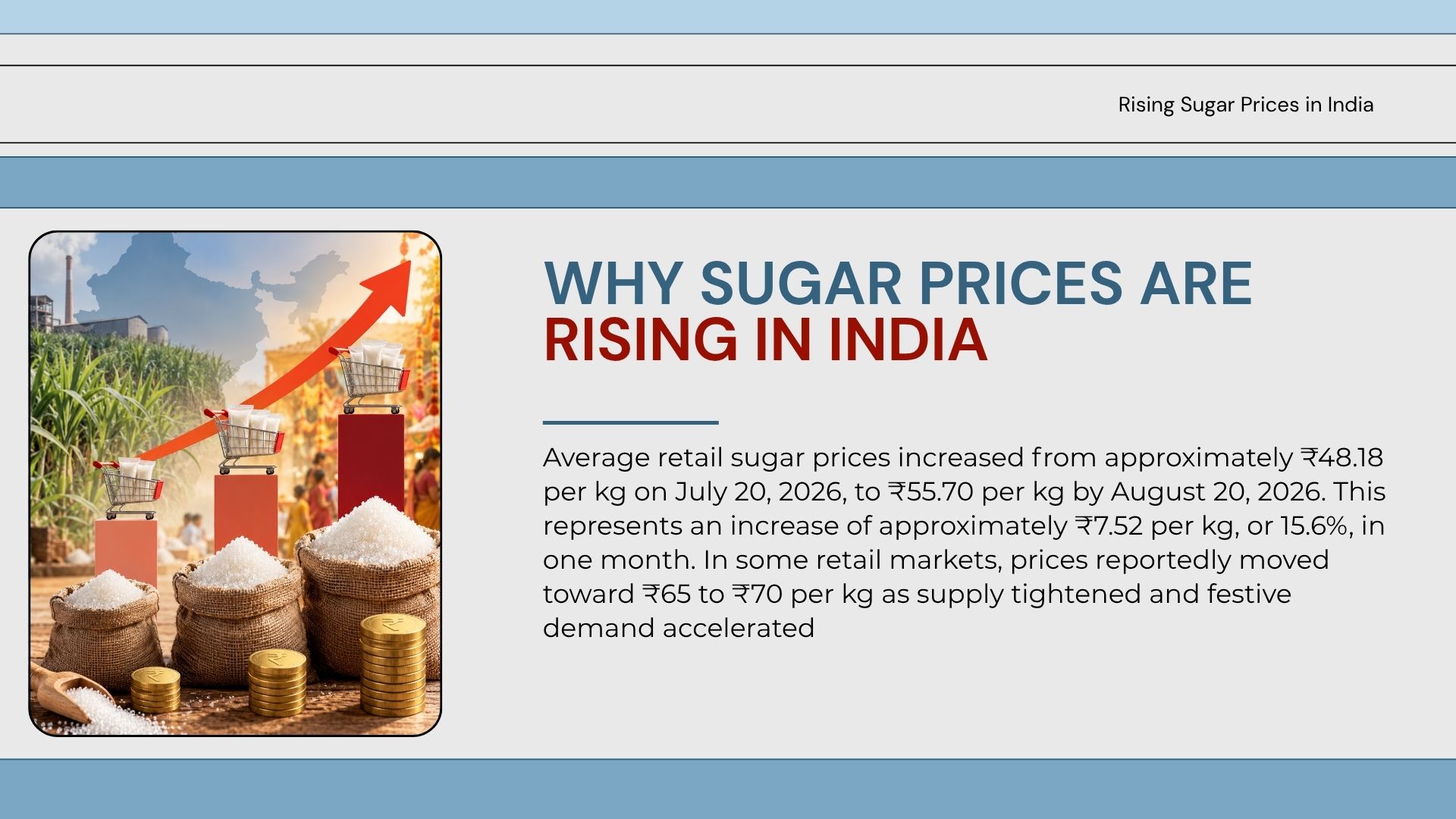 The increase is being driven by multiple factors rather than a single trigger.
Sugar production for the current season was estimated at approximately 306 lakh metric tonnes, or LMT, against an earlier estimate of 343 LMT from sugarcane-growing states. This represents a downward revision of nearly 11%. Crop damage caused by Red Rot disease, Top Borer infestation, excessive rainfall, and waterlogging in important sugar-producing regions has affected cane availability and sugar-recovery rates.
The sharp revision also raises a larger question about the robustness of production forecasting. As one of the world’s largest sugar-producing countries, India would benefit from a more transparent estimation framework that integrates actual crop yields, disease incidence, weather damage, cane availability, and recovery rates. More accurate and timely estimates would help policymakers, mills, bulk consumers, and food-service operators plan their responses earlier.
The global sugar market has also tightened. The projected global deficit for 2026-27 was estimated at approximately 33 LMT. International sugar prices increased from around $474 per tonne on June 30, 2026, to $552 per tonne by August 20, an increase of more than 16% in less than two months. These global pressures can affect domestic sentiment, procurement decisions, and expectations about future availability.
Contrary to a common assumption, higher sugar diversion toward ethanol does not appear to be the principal reason for the recent price increase. The share of sugar diverted for ethanol declined from approximately 12% in 2022-23 to around 9% in 2025-26. Nearly three-fourths of India’s ethanol production now comes from grains, particularly maize. The current increase is therefore more closely associated with lower production, crop disease, weather-related disruption, tighter global supplies, seasonal demand, and possible speculation or stockholding pressure.
 The policy environment nevertheless remains dynamic. Reports in early October 2026 indicated that the government was considering tighter restrictions on the diversion of sugarcane juice, syrup, and B-heavy molasses for ethanol during the 2026-27 supply year to prioritize domestic sugar availability. This does not alter the historical decline in the share diverted during 2025-26, but it underlines how closely food availability, farmer economics, mill performance, and fuel policy have become connected.
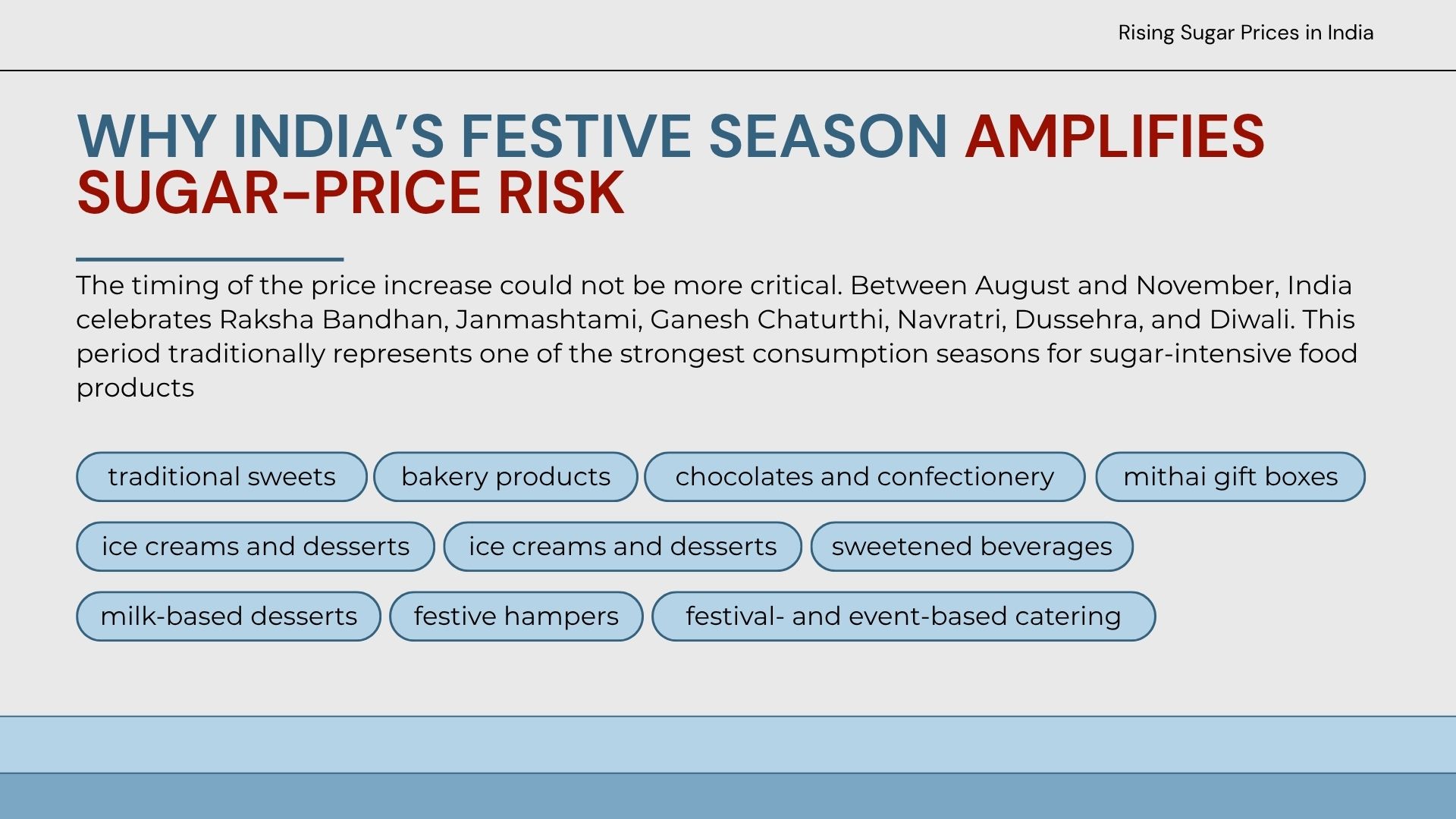 Unlike many other ingredient purchases, sugar consumption during the festive season is closely connected with cultural celebrations, hospitality, religious occasions, and gifting. This makes the August-to-November period one of the most commercially important windows for businesses operating across the food value chain.
Strong festive volumes may support revenue growth, but they can also magnify input-cost pressure. A business may sell more products and still experience margin compression if production costs rise faster than selling prices. Revenue growth, therefore, should not be confused with profitability.
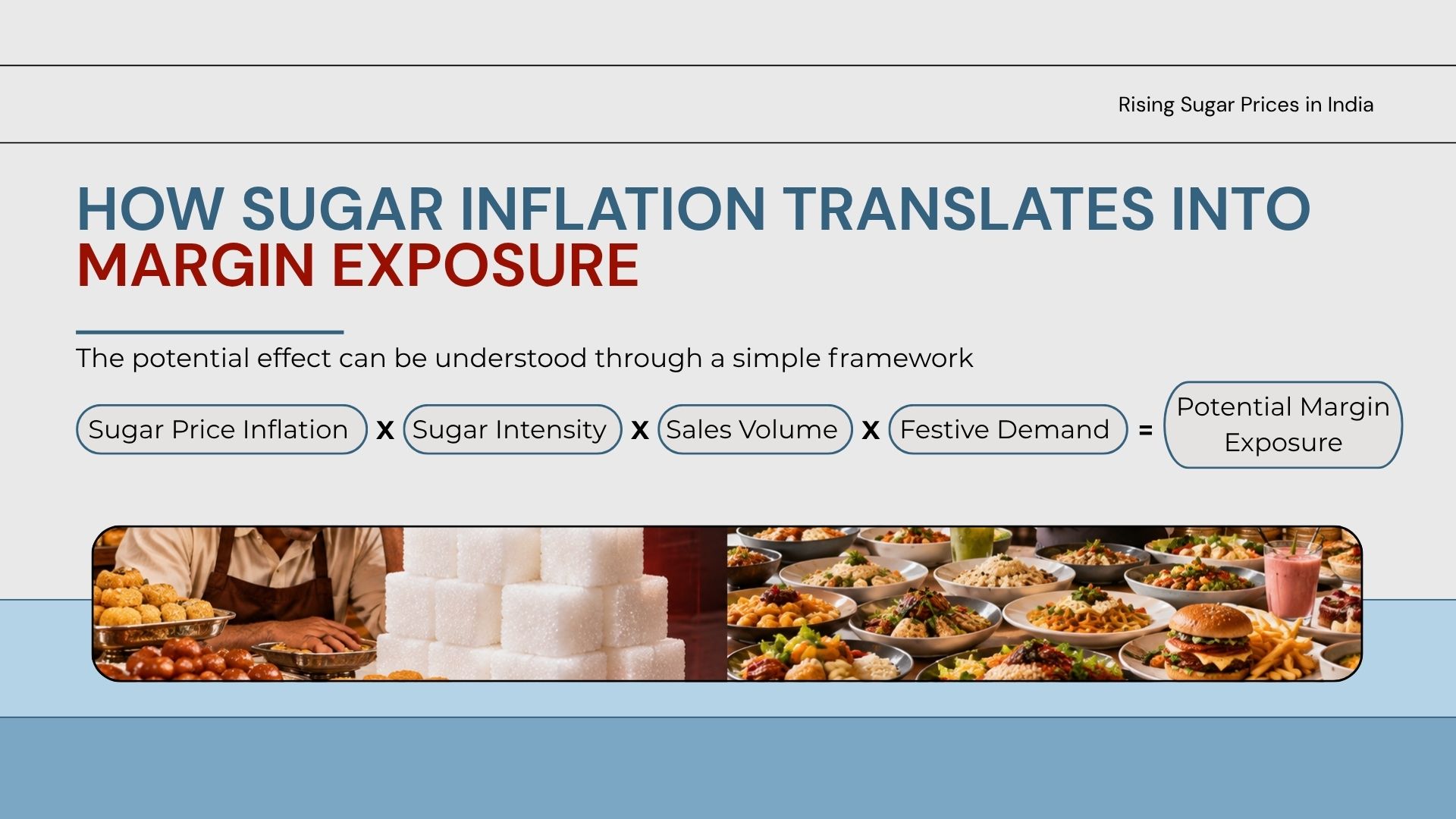 The framework highlights an important distinction. Sugar exposure is not necessarily proportional to the overall size of a restaurant, chain, or menu.
A business selling a small portfolio of highly sugar-intensive products can face greater exposure than a much larger operator with an extensive but relatively low-sugar menu. A traditional mithai store, for example, may be more vulnerable than a full-service restaurant with significantly higher total revenue.
The impact should therefore be assessed at the SKU level rather than only at the outlet or company level.
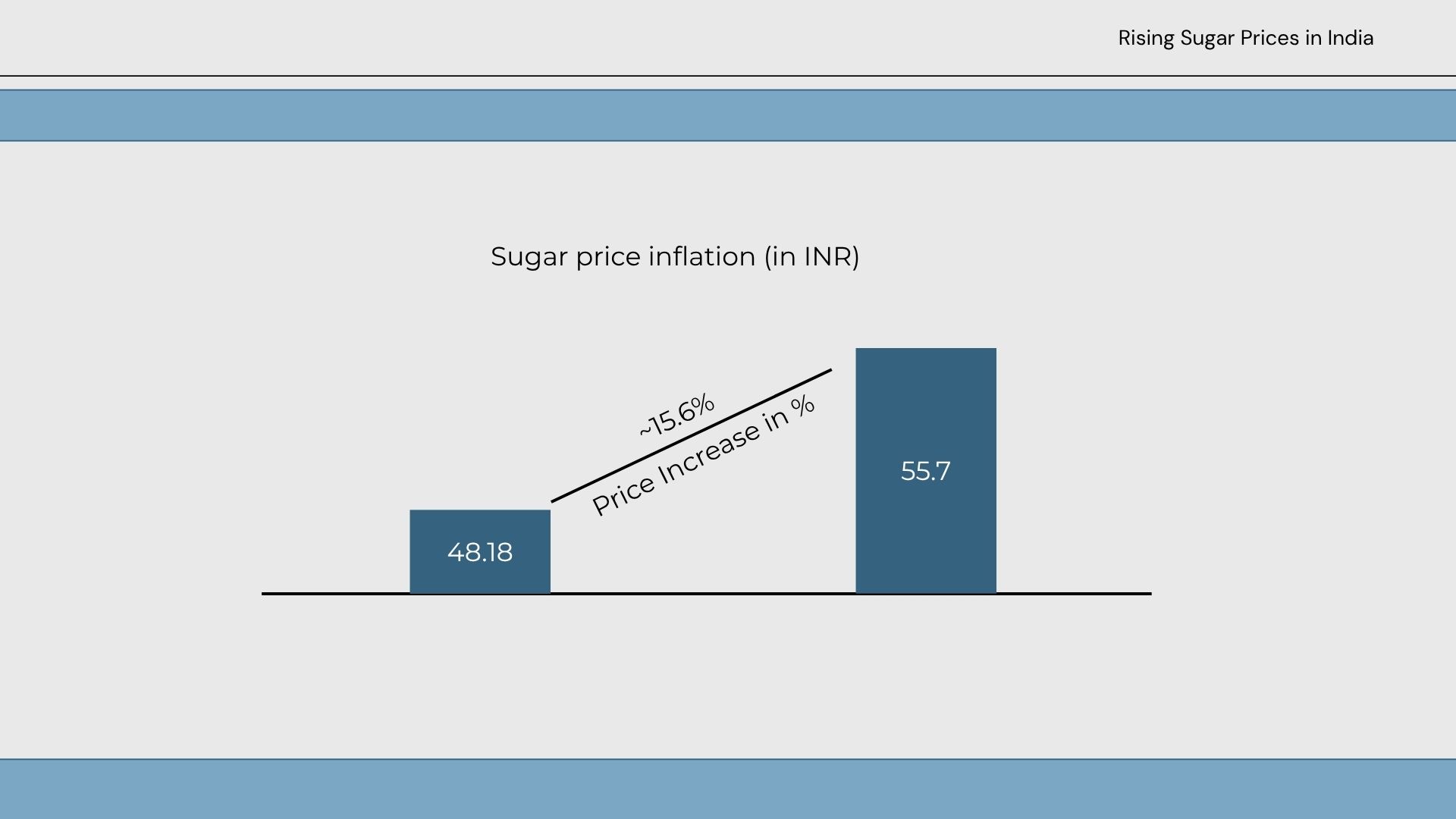
A 15.6% increase in sugar prices does not mean that the total cost of every finished product will increase by 15.6%. The actual effect depends on sugar’s share of the complete recipe cost. A syrup-based sweet may experience significantly greater pressure than a product in which dairy, flour, nuts, chocolate, oils, labor, energy, or packaging account for a larger share of cost.
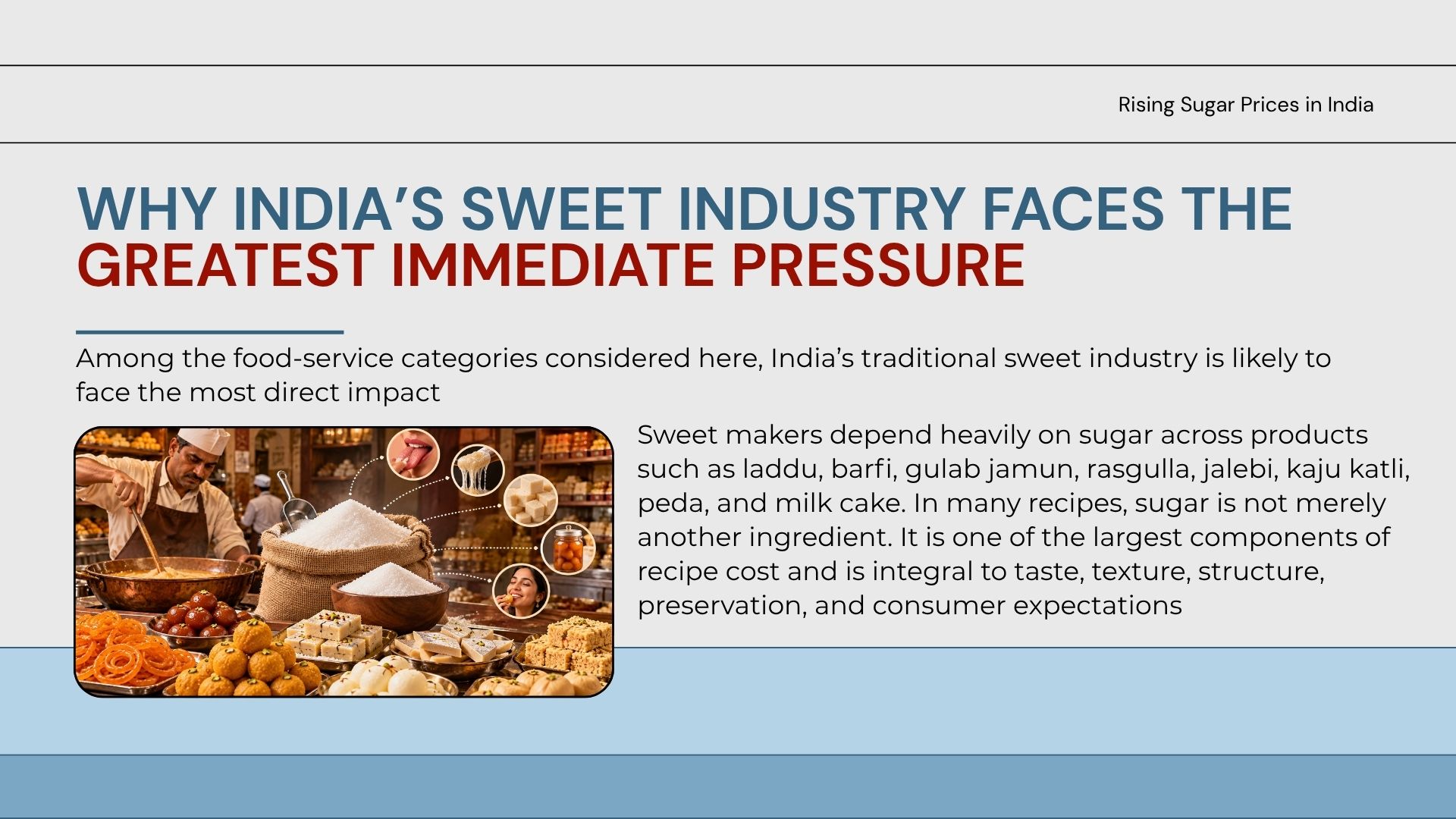 The challenge becomes more significant during festivals. Sweet businesses usually begin increasing production several weeks before Dussehra and Diwali. They may build stocks for expected retail demand, institutional orders, weddings, corporate gifting, and customized festive packs.
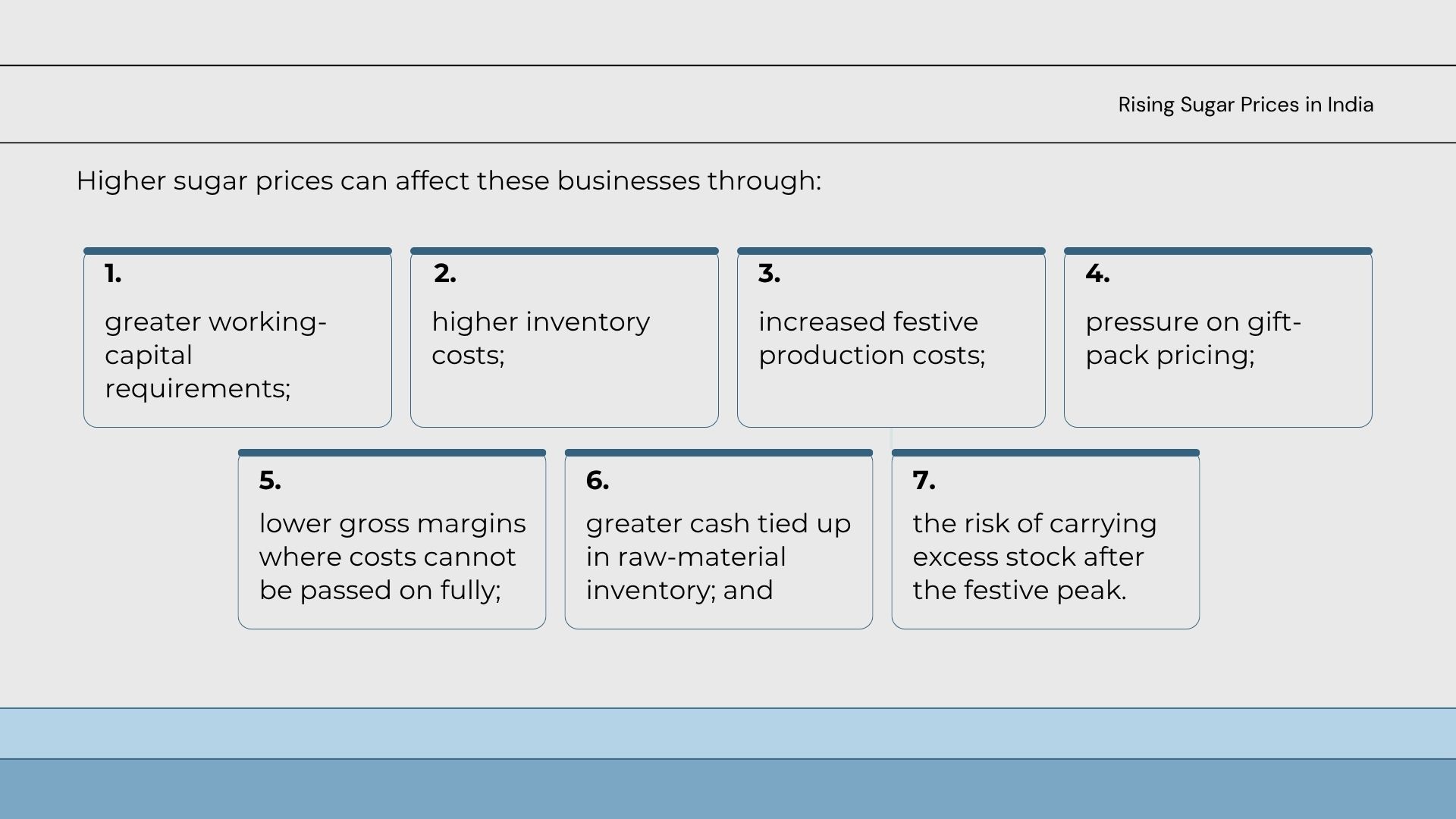 Large branded sweet chains may possess centralized procurement systems, annual or seasonal supply contracts, better demand visibility, and stronger negotiating leverage. Thousands of regional and local mithai shops, however, frequently operate with limited purchasing scale and pricing flexibility.
Passing the entire cost increase to consumers can be difficult, particularly in highly competitive local markets where multiple sweet shops offer comparable products. A sharp increase in festive-pack prices may also affect the perceived value of gifting.
Advance procurement can provide some protection from further price increases, but it is not risk-free. It raises working-capital and storage requirements and can expose businesses to excess inventory if festive demand is weaker than expected. Procurement decisions must therefore balance price protection, cash availability, storage capacity, and realistic sales forecasts.
India’s food-services industry is now a market exceeding ₹6 lakh crore under broader estimates, with organized formats continuing to expand. A 2026 Redseer assessment placed the market at approximately $90 billion and projected it to reach around $150 billion by 2030. Organized businesses were expected to grow faster than the unorganized market, but profitability remains a central challenge for many operators.
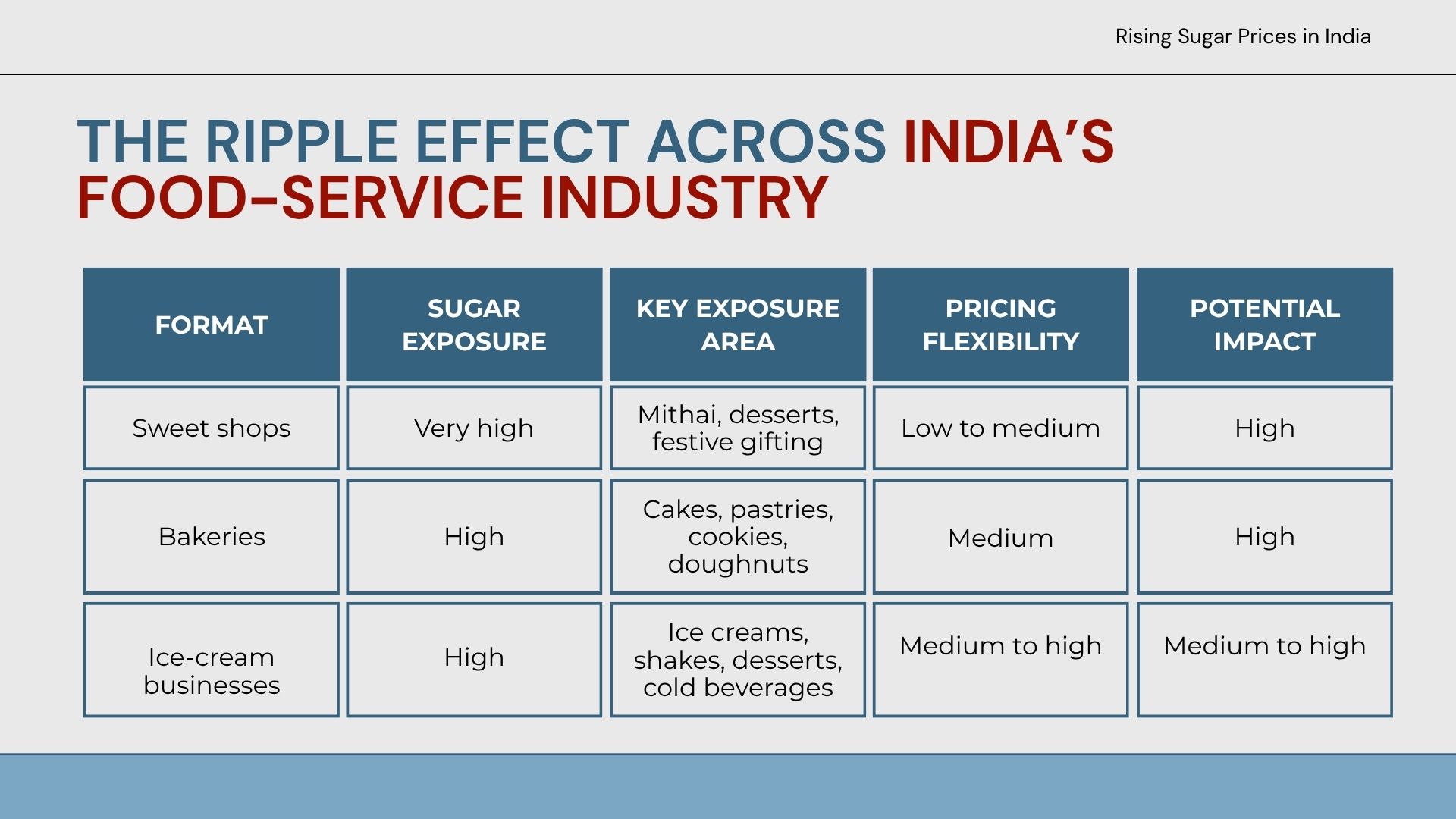
Sugar may represent only a modest share of total food cost for some businesses. Its effect, however, can vary considerably depending on the format, menu architecture, recipe composition, and ability to adjust prices.
Sugar exposure is not necessarily proportional to the size of the business. The formats above face higher risks of margin contraction because sugar influences a meaningful share of their product portfolios.
Pricing flexibility also varies within each format. A premium branded operator may have greater ability to introduce selective price increases than a neighborhood business competing principally on affordability. Even within one business, a signature product may possess greater pricing power than an entry-level or traffic-driving SKU.
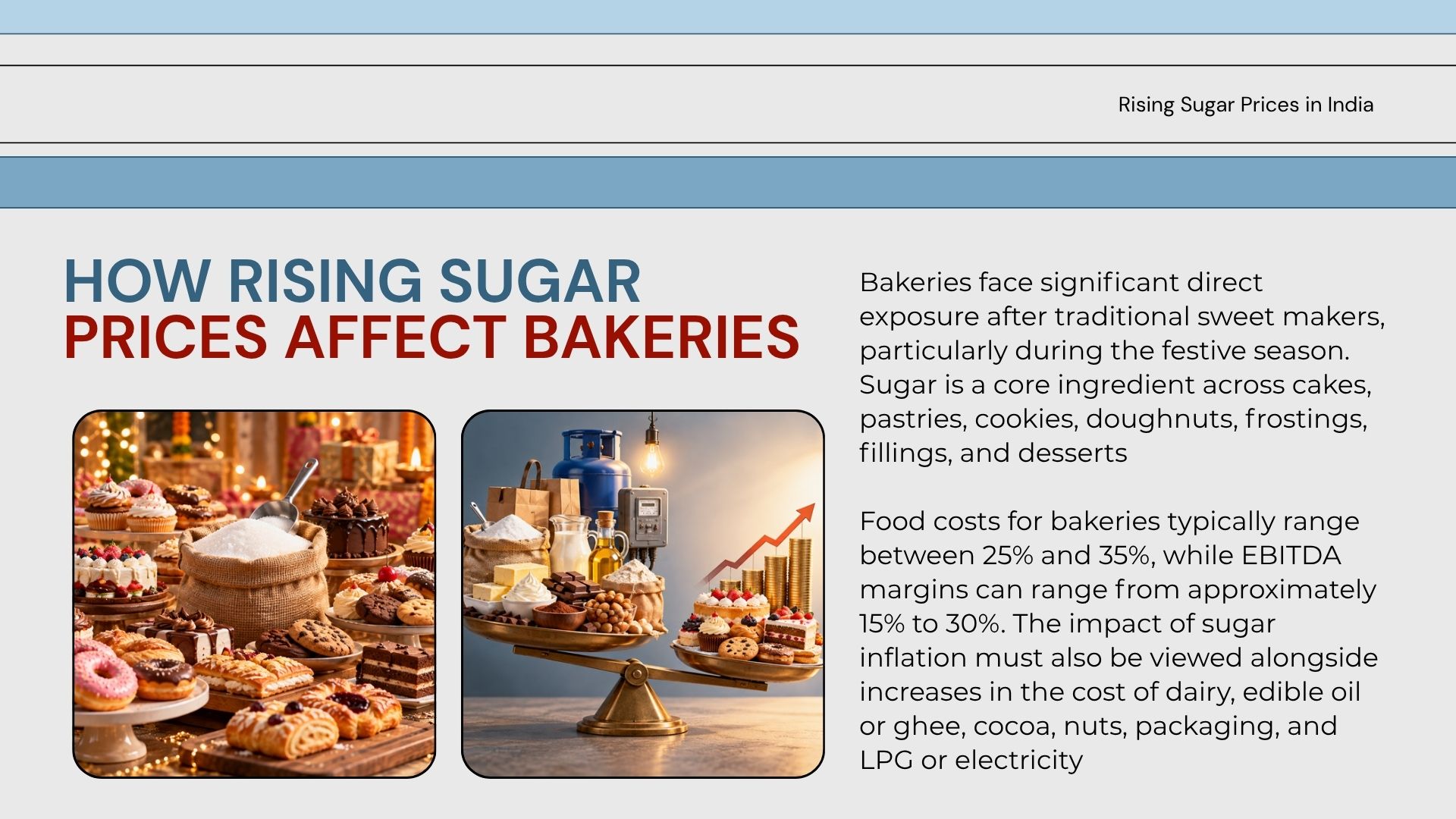 Because the available EBITDA pool can be relatively tight, sustained input inflation may directly compress margins where cost pass-through is limited. The pressure can be particularly severe for smaller standalone bakeries that lack procurement scale or strong consumer-brand differentiation.
Larger bakery businesses may be able to offset part of the effect through selective price increases of approximately 5% to 6%, pack-size optimization, targeted promotions, product-mix management, and stronger supplier negotiations. Smaller bakeries may have less capacity to absorb sustained cost increases without affecting profitability.
However, margin protection is not the same as passing every additional cost to consumers. A uniform price increase may preserve gross-margin arithmetic while weakening demand or making festive products less competitive.
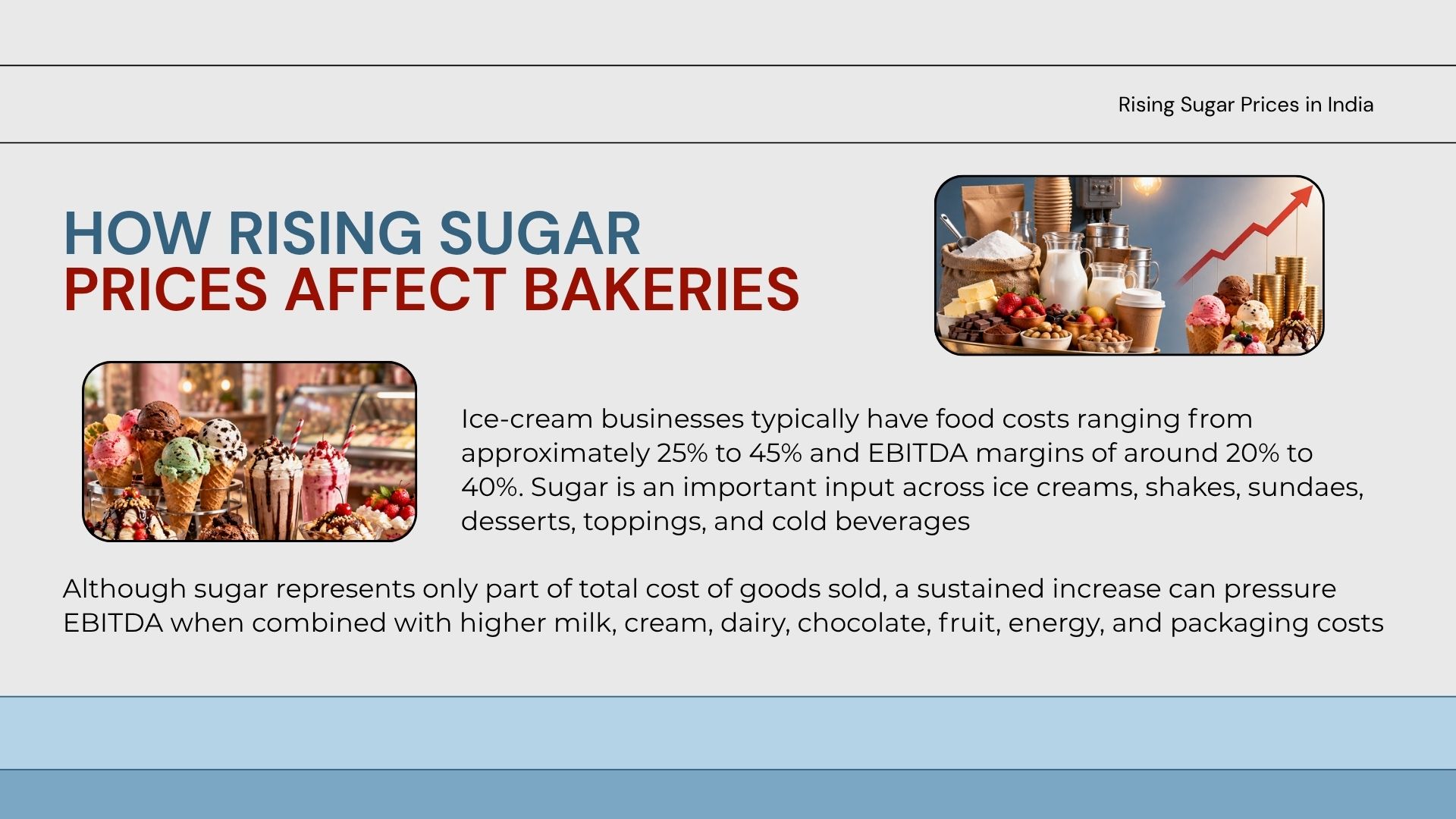 Scaled brands such as Baskin Robbins, Naturals, Giani’s, and Pabrai’s may be able to cushion part of the impact through procurement scale, supplier negotiations, centralized production, assortment management, and selective pricing. Smaller independent operators may face greater pressure because they typically purchase lower volumes and possess less negotiating leverage.
Ice-cream businesses may also have more pricing flexibility than traditional sweet shops because of premium flavors, add-ons, seasonal specials, bundling, and differentiated serving formats. But that flexibility should not be overestimated. Frequent or highly visible price increases can affect value perception, particularly for family purchases and entry-level products.
Operators should examine the profitability of complete consumer occasions rather than only individual scoops or servings. Bundles, toppings, beverages, take-home packs, and higher-margin add-ons may help improve the economics of each order.
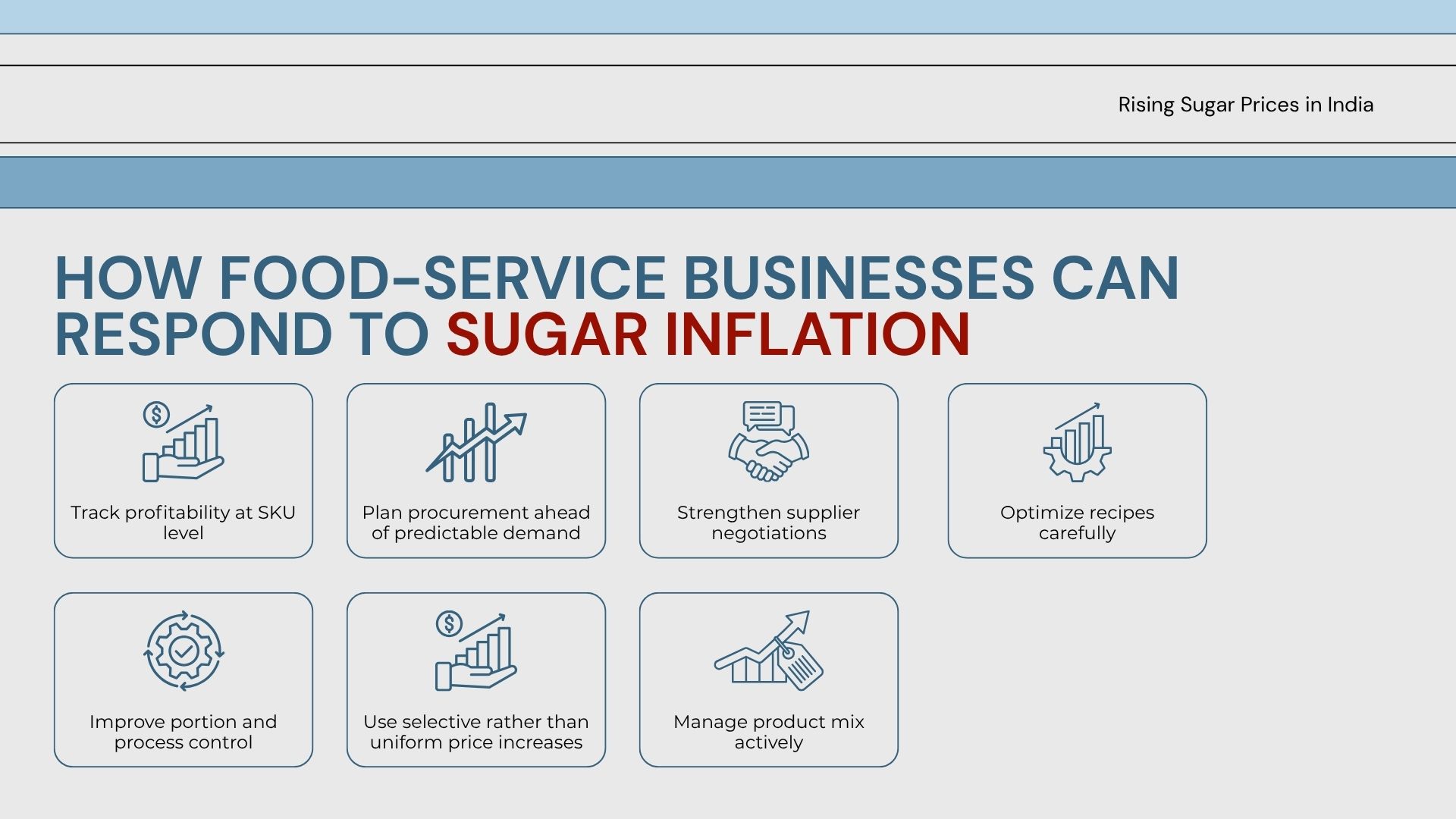
Food-service businesses should avoid depending solely on menu-wide price increases. The response should combine procurement, product economics, formulation, assortment, and pricing.
1. Track profitability at SKU level
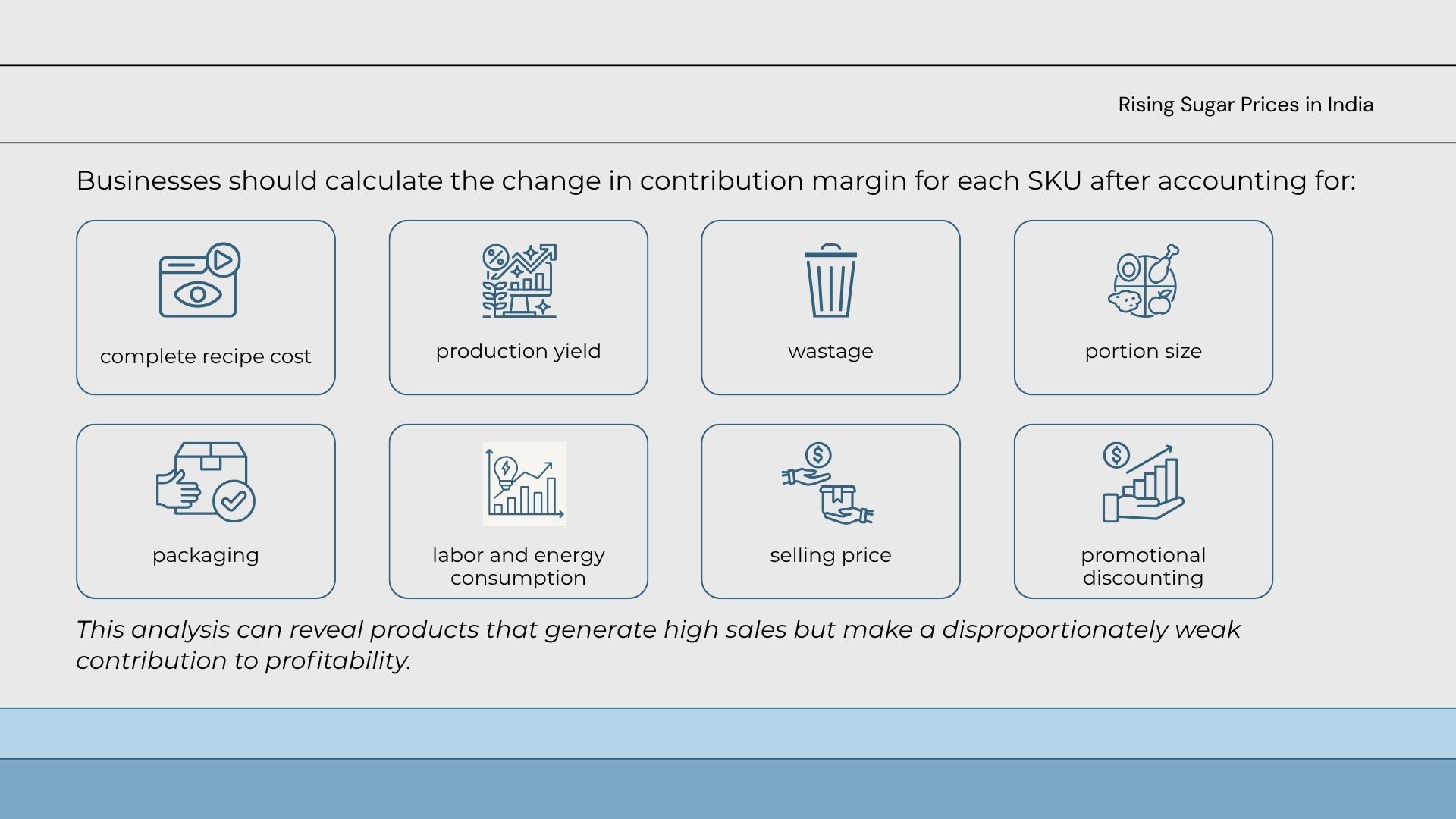
Businesses need to identify which products are most exposed to sugar inflation and which still generate adequate contribution margins. Costing should include ingredients, yields, wastage, labor, utilities, packaging, discounts, and channel commissions.
2. Plan procurement ahead of predictable demand
Advance procurement can reduce exposure to further price increases during the festive peak. However, purchase volumes should be tied to realistic, SKU-level demand forecasts to avoid tying up working capital or carrying excess stock after the season.
3. Strengthen supplier negotiations
Operators can explore seasonal or annual contracts, volume-linked discounts, staggered deliveries, consortium buying, and alternative approved suppliers. The objective should be to improve predictability as well as price.
4. Optimize recipes carefully
Partial substitution of sugar with lower-cost sweetening ingredients such as glucose syrup or liquid glucose may be technically feasible in selected products. Glucose syrup is widely used in confectionery and may offer a cost advantage over sucrose on a solids basis.
However, reformulation must remain technically and commercially disciplined. Alternative ingredients can affect sweetness, texture, crystallization, moisture retention, shelf life, flavor, labeling, and consumer acceptance. Any substitution should be supported by product trials, quality testing, regulatory review, and sensory evaluation.
A lower ingredient cost that weakens a signature product may create a greater loss in consumer trust and brand equity than the saving it delivers.
5. Improve portion and process control
Standardized recipes, calibrated equipment, staff training, and tighter production controls can reduce overportioning and wastage. Small improvements in yield can generate meaningful savings when applied across high festive volumes.
6. Use selective rather than uniform price increases
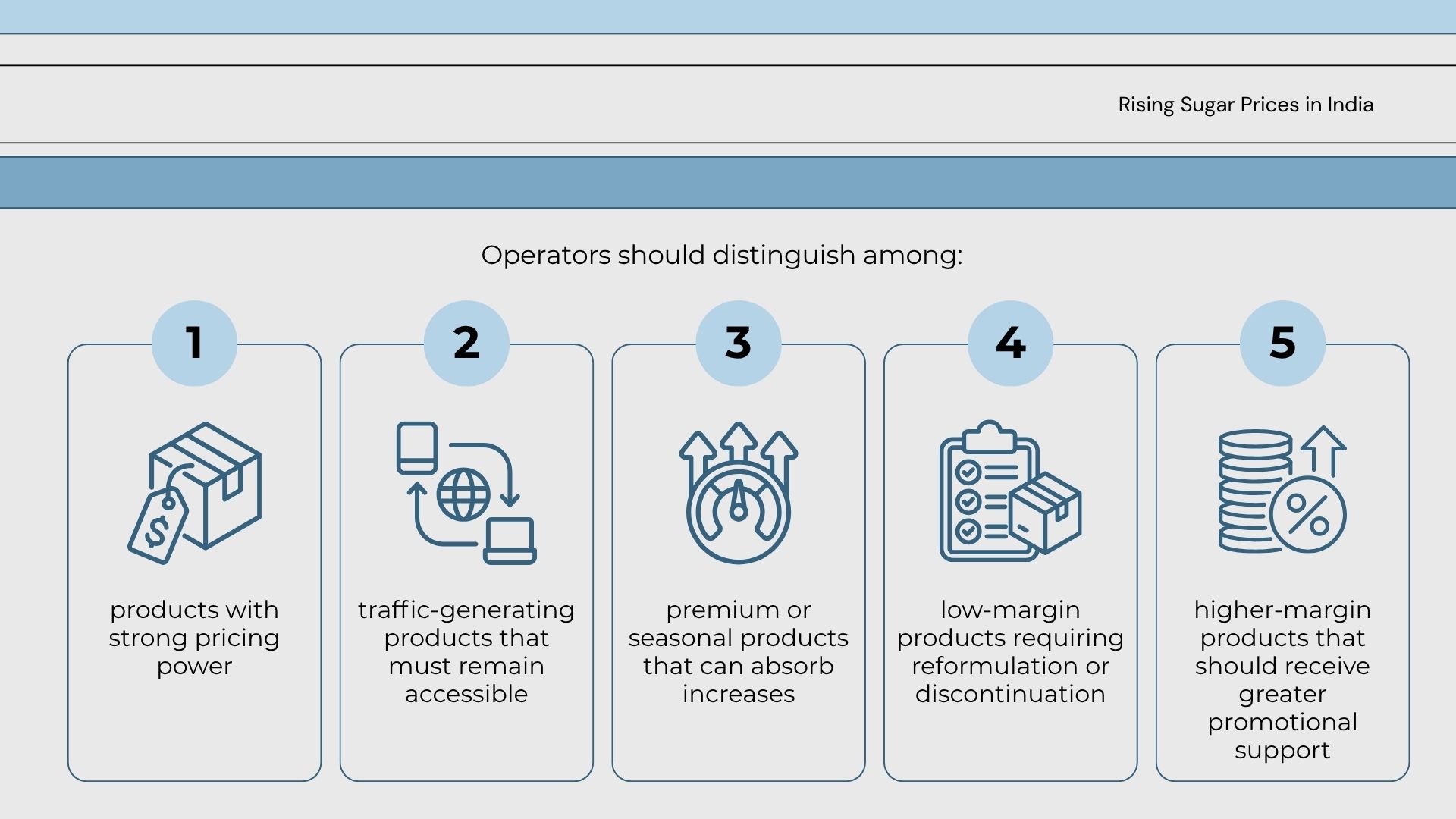
Businesses should identify SKUs with stronger pricing power rather than increasing every price by the same percentage. Premium festive packs, customized gifting, special flavors, and differentiated products may absorb increases more effectively than entry-level items.
7. Manage product mix actively
Greater promotional attention can be given to products with stronger margins and lower sugar intensity. Underperforming or structurally unprofitable SKUs may require reformulation, repositioning, smaller formats, or temporary removal.
The objective is not simply to recover additional costs. It is to protect product quality and consumer value while strengthening margin control.
Sweet shops, bakeries, and ice-cream businesses are likely to face greater near-term pressure because of their higher sugar intensity and broader exposure to input-cost inflation. For businesses operating with relatively tight EBITDA margins, even a modest increase in food costs can translate into noticeable margin compression where full cost pass-through is commercially difficult.
The festive season may support strong sales volumes, but it will also test businesses’ ability to balance pricing, procurement, working capital, product quality, and profitability. High volumes will not automatically produce better earnings if contribution margins weaken.
Operators that combine advance procurement, supplier negotiations, SKU-level cost management, disciplined reformulation, portion control, product-mix management, and selective pricing may be better positioned to protect margins without weakening the consumer proposition.
Ultimately, the issue extends beyond sugar. It highlights the need for greater resilience against commodity-price volatility across the food ecosystem.
Food-service businesses need systems that can identify cost movements early, translate them into SKU-level implications, and support timely decisions across procurement, menu design, pricing, promotions, and inventory.
The businesses that build these capabilities will be better equipped not only to manage the current increase in sugar prices, but also to respond to future volatility across dairy, edible oils, grains, cocoa, nuts, energy, packaging, and other critical inputs.
For strategic transformation, profitability improvement, procurement optimization, and performance improvement across the food-service ecosystem, contact The Knowledge Company at vidya@tkc.in.
Get the strategy behind the food-service and consumer-market headlines.
Subscribe to our free newsletter: https://lnkd.in/eh-_58pf