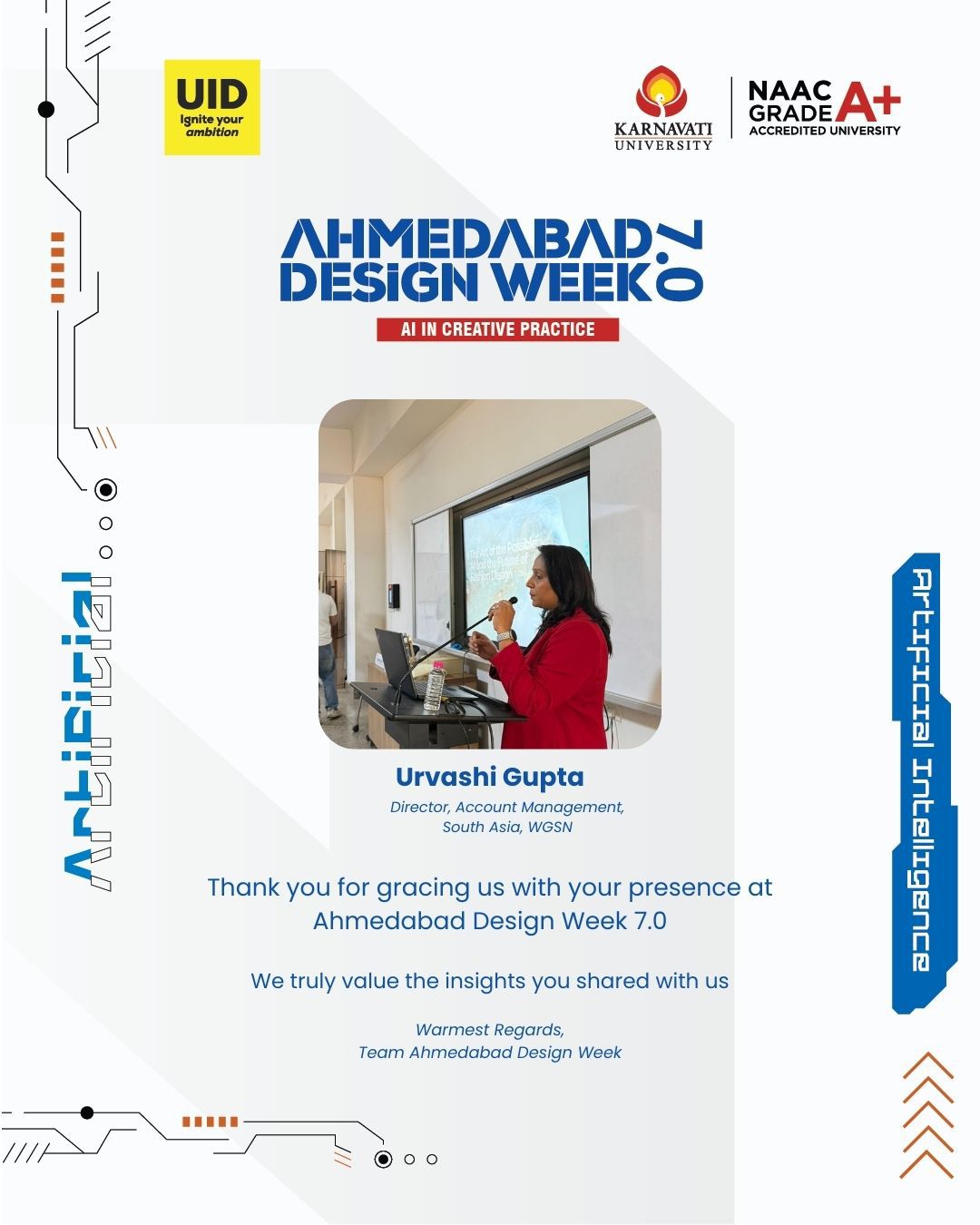
The Art of the Possible: AI and the Future of Fashion Design
When artificial intelligence meets human imagination, fashion design stops being just seasonal and starts becoming truly systemic. At Ahmedabad Design Week 7.0, TKC–WGSN joined this conversation through a special session by Urvashi Gupta, Director – Account Management, South Asia at
WGSN, representing TKC’s partnership with the world’s leading trend authority.
Context: Ahmedabad Design Week 7.0
Ahmedabad Design Week 7.0, hosted by Karnavati University, focused on the theme “AI in Creative Practice”, positioning AI as a collaborator rather than a replacement in design-led industries.
Over three days, the conclave brought together global leaders, educators, technologists and students to explore how AI is reshaping design, art, media, film, storytelling and communication.
As an official pre-summit event to the India–AI Impact Summit 2026, ADW 7.0 placed strong emphasis on ethical AI and human‑centric design, rooted in India‑specific contexts and data.
For TKC–WGSN, this platform was a natural extension of our work at the intersection of consumer insight, design futures and responsible innovation in
fashion and
retail.
TKC–WGSN at ADW: Session Overview
Urvashi’s talk, “The Art of the Possible: AI and the Future of Fashion Design – How artificial intelligence is reshaping creativity, materials, colour and consumer experience,” sat squarely within the festival’s core agenda of exploring AI in creative spaces.
Speaking to an audience of emerging designers, faculty and industry practitioners, she unpacked how AI is already embedded in global fashion workflows, from forecasting and concepting to assortments and experience design, while underlining that the human mind remains the compass, and AI the boundless ocean of possibilities.
Throughout the session, one idea kept surfacing: technology provides the tools; the human heart provides the soul. This balance framed every example and provocation shared with the audience.
How AI Is Reshaping Fashion Creativity
Urvashi began by reframing AI not as a single technology but as a spectrum of capabilities, from generative models and recommendation systems to computer vision and predictive analytics, each touching different stages of the creative process.
She highlighted four creative shifts:
From blank page to “better prompts”
Designers are no longer starting from zero; AI systems trained on global image and cultural data can generate moodboards, silhouettes and visual directions in seconds. The craft, however, lies in asking better questions, defining prompts that reflect brand DNA, local culture and business goals, which only humans can truly calibrate.
From trend following to scenario building
Using WGSN’s methodology, AI‑enabled workflows can simulate multiple futures, optimistic, conservative and disruptive, so that design and merchandising teams can prototype for different demand and climate realities before committing to production. This shifts the designer’s role from reacting to trends to designing for plausible futures.
From siloed inspiration to connected ecosystems
AI tools allow teams to connect inspiration across fashion, interiors, gaming, beauty and digital culture, revealing cross‑category patterns that might otherwise be missed. Designers can then translate these signals into cohesive collections that feel both globally relevant and locally resonant.
From intuition‑only to insight‑plus‑intuition
Intuition remains essential, but is increasingly supported by consumer and market data processed at scale, search patterns, social signals, sell‑through and environmental constraints, which AI can surface in real time. Designers are still the decision‑makers; AI simply broadens what they can see.
Materials and Colour: Designing with New Constraints
The conversation then moved to materials, colour and sustainability, where AI is accelerating both experimentation and responsibility.
Materials under climate pressure
With climate events already impacting production and supply chains, brands face pressure to reduce waste and move away from environmentally intensive materials. AI‑driven material libraries and simulation tools can test durability, performance and aesthetic impact virtually, before physical sampling, reducing both cost and environmental impact.
Colour as a dynamic system
Traditionally, colour stories were locked in early; today, AI allows for dynamic colour planning, using real‑time cultural and commercial signals to fine‑tune palettes by region, channel and consumer profile. Urvashi spoke about how WGSN’s colour forecasts increasingly combine human curation with data‑backed confidence levels, helping brands de‑risk bold choices without losing originality.
Ethics embedded in material decisions
The wider ADW 7.0 discourse on ethical AI and India‑specific data systems reinforced the need to consider local labour, ecology and cultural practices when designing material strategies. AI can flag risks and opportunities, but it is designers and business leaders who must set the guardrails.
Consumer Experience: From Personalisation to Participation
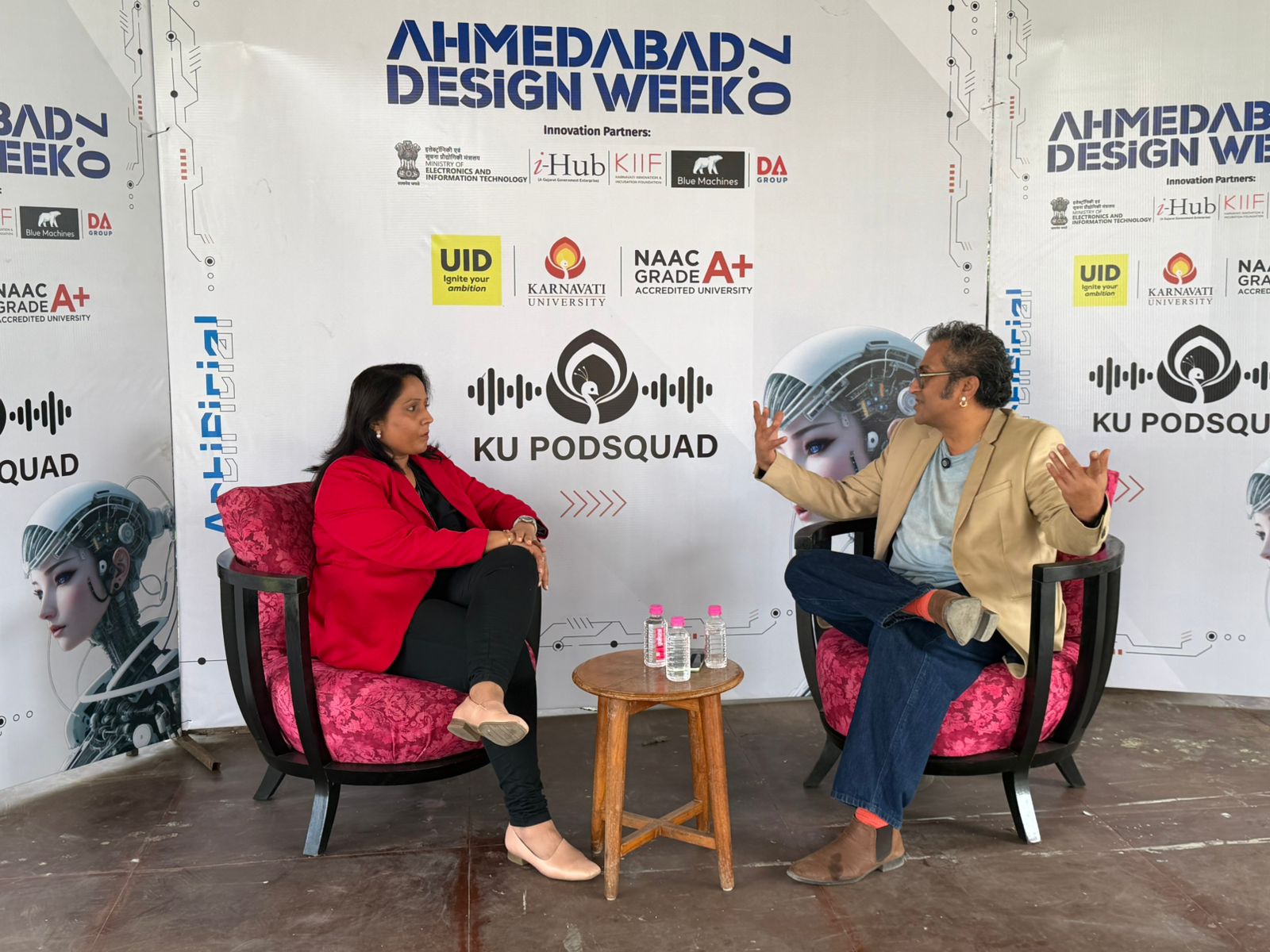
In the final part of the session, Urvashi examined how AI is changing how consumers discover, interact with and co‑create fashion.
Hyper‑personal discovery journeys
Recommendation engines now consider style preferences, price sensitivity, sustainability values and even regional festivals to surface more relevant products and content. For designers, this means thinking in systems—creating collections that can be re‑assembled and re‑told in endless ways for different micro‑segments.
Phygital experiences by design
Echoing broader retail conversations TKC has been leading, AI is enabling seamless phygital paths—visual search from a billboard, AI‑styling in‑store, virtual try‑ons and adaptive digital lookbooks. Design decisions today must imagine garments not only on the body, but on the feed, in the app and inside immersive environments.
Co‑creation and community
Generative tools allow consumers to tweak prints, colours or slogans while staying within brand‑defined frameworks, turning design into a shared act. Urvashi emphasised that successful brands will treat these communities as creative partners, not just audiences, using AI as the interface that makes participation fluid and scalable.
Human–Centric Guardrails: Ethics, Authorship and Education
Aligned with the overall messaging of ADW 7.0, the session stressed that responsible AI is non‑negotiable.
Key questions raised included:
How do we credit human and machine contributions fairly when AI‑generated elements enter a design?
What does “originality” mean when models are trained on vast cultural archives?
How can Indian data, crafts and communities be represented without being exploited, especially when global models are involved?
Speakers across the conclave, including academic and industry leaders, repeatedly called for AI‑literate, ethically grounded design education, so that the next generation of designers can both harness and question these tools.
Urvashi echoed this, noting that TKC–WGSN’s work with brands increasingly includes capability building, not just forecasting.
Impact on Students and the Design Community
For many students and early‑stage designers, this was a first structured look at how AI is already embedded across the fashion value chain—from inspiration and prototyping to merchandising and consumer engagement.
The session demystified AI, showing it not as a rival to creativity, but as a powerful amplifier when guided by clear intent, ethics and local context.
Organisers at Ahmedabad Design Week shared that such contributions help young designers seek their true potential and build a more resilient, forward‑looking design community, a sentiment reflected in their appreciation note to Urvashi.
For TKC–WGSN, these dialogues are essential in ensuring that the future of fashion in India is both technologically advanced and deeply human.
What This Means for TKC Clients and Partners
For TKC’s ecosystem of fashion, retail and lifestyle clients, ADW 7.0 reinforces several priorities:
Invest in AI‑ready creative workflows that blend human intuition with structured insight, rather than bolt‑on tools.
Treat materials, colour and experience as integrated levers shaped by climate realities, culture and consumer data.
Build ethical and human‑centric frameworks for AI adoption—governance, authorship norms, data practices and inclusion.
Partner with institutions and platforms that are actively shaping the discourse, such as Ahmedabad Design Week and IndiaAI’s Impact Summit ecosystem.
TKC–WGSN will continue to participate in and curate such forums, translating global foresight and AI innovation into actionable strategies for brands across India and beyond.
For speaking requests, workshops on AI‑enabled design, or custom foresight programs for your brand or campus, reach out to The Knowledge Company