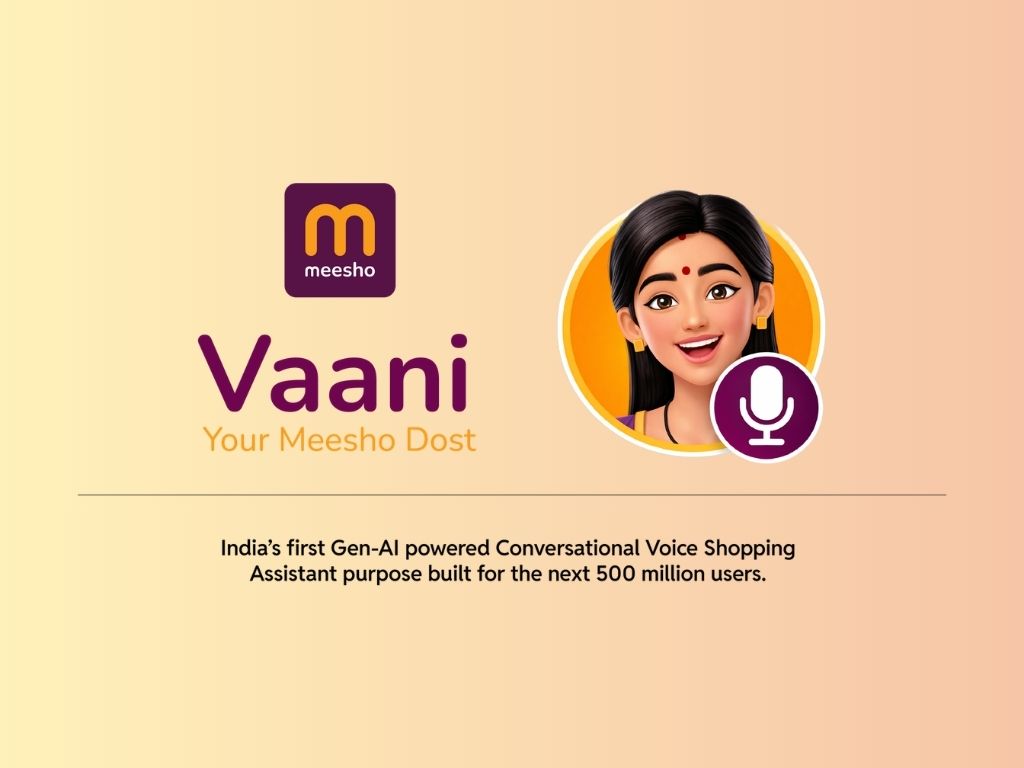
India’s e-commerce sector is facing a growth plateau. Platforms
are increasingly competing for a largely overlapping user base, and acquiring
new customers—especially from smaller towns—remains slow and expensive.
Compounding the issue is poor retention, with price-sensitive consumers
frequently switching apps based on the latest promotions.
To combat this, Meesho has rolled out a conversational
voice assistant named Vaani (the Hindi word for voice), aiming to
make online shopping more intuitive for users who prefer an offline-style,
conversational interaction.
In a recent feature for Mint, Ankur Bisen, Senior
Partner at The Knowledge Company (TKC), analyzed the strategic impact of
this rollout and the broader future of AI in retail.
Read the full analysis on the future of AI-driven e-commerce: https://pressreader.com/article/281835765234823
Expanding the Addressable Market
The transition to AI-powered chat assistants isn’t just a tech
upgrade; it is a critical bridge for digital inclusion. For many users in
“Bharat,” text-based search and complex app navigation act as severe
friction points.
“Such AI-led tools could act as an early enabler, especially for
users in tier-II and tier-III markets who may need assistance with language,
price comparison and navigation, helping expand the overall addressable market
for e-commerce,” noted Ankur Bisen.
By allowing users to speak naturally in their native language to
find products, Meesho is attempting to lower the barrier to entry, helping new
users become comfortable transacting online much faster.
The Adoption Curve: Still in Exploration
Despite the massive potential, the industry must temper its
immediate expectations. Bisen pointed out that adoption is still strictly in an
exploratory stage. Even highly tech-savvy urban users are continuing to
discover and test the actual utility of these use cases. The shift from
traditional “search bar” discovery to “chat assistant”
discovery will require a fundamental rewiring of consumer habits.
The Inevitable “Hygiene Factor”
Perhaps the most crucial strategic insight for retail brands is
the lifecycle of this technology as a competitive advantage. While early
adopters of conversational AI will undoubtedly see a spike in engagement, it
will not protect them from competition forever.
Bisen added that while AI assistants may initially drive
engagement, they are unlikely to remain a differentiator for long.
As more platforms adopt similar tools, these features could
quickly become a baseline expectation or “hygiene factor”, much like faster
delivery timelines did in the past.
Ultimately, as the technology becomes commoditized across Amazon,
Flipkart, Myntra, and others, the true differentiator will remain the core
retail fundamentals: product assortment, price point, and fulfillment
reliability.
Supporting E-commerce Strategy & Digital Transformation
The Knowledge Company’s Retail & Consumer Goods advisory
practice helps brands understand and leverage shifting consumer behaviors in
digital marketplaces.
- Tech & Digital
Go-to-Market: Advising
on integrating AI-led discovery tools into legacy digital storefronts.
- Tier-II & Tier-III
Consumer Insights: Mapping
the digital habits, language preferences, and friction points of
“Bharat” consumers to improve app retention.
- Competitive
Benchmarking: Analyzing
competitor moves in the AI-commerce space to ensure your platform meets
baseline “hygiene” expectations while identifying unique
long-term moats.
Is your e-commerce strategy relying on a tech feature that will
soon be a baseline expectation? Connect with TKC’s Transformation Practice to
build a sustainable competitive advantage in India’s crowded retail space.