

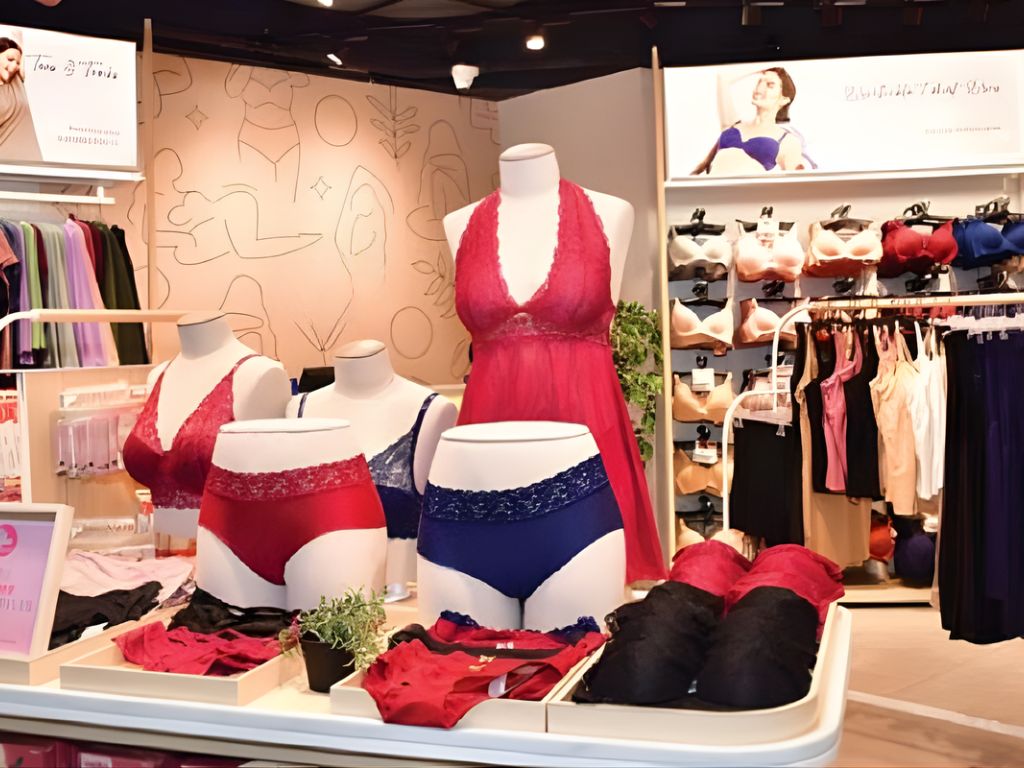
The Indian innerwear retail experience has undergone a revolution. What was once a hushed, often awkward transaction conducted in the back of a small shop has transformed into a confident, informed, and expressive act of personal choice.
Today, a consumer in a Tier-2 city can browse an endless digital aisle on their smartphone, consult a sophisticated online fit-calculator, and make a purchase guided not by a reticent shopkeeper, but by a trusted social media influencer discussing comfort, style, and body positivity in a candid Instagram Reel. This seismic shift from a hidden necessity to a celebrated lifestyle category is the engine behind one of the most dynamic segments in Indian apparel.
The Indian innerwear market presents a compelling growth narrative, projected to expand by nearly 11% from approximately $8.52 billion in FY 2024 to $9.43 billion in FY 2025 (The Knowledge Company estimates).
A strategic analysis of the market segments reveals that this growth is not uniform; instead, it is overwhelmingly dictated by the women’s innerwear category.
The women’s segment is not just the largest but the market’s primary anchor, valued at $5.39 billion for FY 2025 and accounting for a commanding 57% of the entire industry.
While the men’s segment provides a stable and significant contribution, growing from $2.38 billion to $2.62 billion, its scale is less than half that of its female counterpart.
This segmentation underscores a critical strategic imperative for any brand or investor seeking to capitalize on the market’s potential: a women-centric portfolio is no longer an option but a prerequisite for achieving scale.
Furthermore, the data highlights a noteworthy asymmetry in the kids’ category, where the girls’ segment ($1.04 billion) is nearly three times larger than the boys’ ($0.37 billion), suggesting distinct consumer purchasing behaviors and a significant opportunity for focused product innovation and premiumization.
For incumbents and new entrants alike, this data provides a clear roadmap, emphasizing that market leadership will be determined by the ability to win with the female consumer.
This explosive growth is not merely an economic phenomenon; it is the result of a profound cultural and consumer revolution. The industry’s future will be defined by brands that master the complex interplay of fabric innovation, digital-first community building, and an authentic commitment to inclusivity and wellness. As innerwear graduates from a functional commodity to a statement of personal identity, the brands that understand and champion this evolution are poised to lead the next chapter of Indian fashion.
Table 1: Indian Innerwear Market Snapshot (FY 2024-2025)
Metric | Value | Key Strategic Drivers |
Market Size (FY 2024) | $8.52 Billion | Rising disposable incomes, rapid urbanization, and a consumer shift towards branded and quality products. |
Projected Market Size (FY 2025) | $9.43 Billion | Continued e-commerce penetration, increasing fashion consciousness, and innovation in materials and comfort. |
Year-over-Year Growth Rate | ~10.7% | Strong digital adoption in Tier-2/3 cities, policy push, growing health & wellness focus, and the influence of social media on trends. |
Dominant & Driving Segment | Women’s Innerwear (~57% Share) | Outsized contribution from the women’s category, making a women-centric portfolio strategy a prerequisite for market leadership. |
At the heart of the innerwear industry’s recalibration is a new Indian consumer—one whose priorities, values, and purchasing behaviors have fundamentally changed.
This consumer is digitally native, globally aware, and increasingly introspective, demanding more from the first layer of clothing they wear each day than ever before.
The most significant evolution in the consumer mindset is the re-categorization of innerwear from a purely utilitarian item to an essential component of fashion and self-expression.
Driven by rising disposable incomes, increased media exposure, and the powerful influence of social media, innerwear is no longer just a basic necessity but a lifestyle product that reflects personal identity.
For a growing cohort of consumers, particularly Millennials and Gen Z, the choice of innerwear is a deliberate act of curating their personal style, demanding products that are not only functional but also align with their aesthetic sensibilities.
This has catalyzed a market-wide shift from being “price-sensitive” to “brand-sensitive,” where the brand’s story, values, and design language become as important as its price tag.
While style has gained prominence, comfort has unequivocally become the new luxury and the primary driver of purchasing decisions. The modern Indian consumer, navigating a diverse and often humid climate, is highly educated about fabric technology and actively seeks materials that offer superior performance.
This has fueled a mass migration away from traditional cotton towards advanced, functional fabrics like modal, bamboo, and microfibers, prized for their exceptional softness, breathability, and moisture-wicking capabilities.
Technological innovations that were once considered premium features are now standard expectations. Seamless construction, 3D knitting, anti-microbial treatments, and tag-free labels are no longer differentiators but prerequisites for brands aiming to compete in the modern market. This relentless pursuit of comfort is not an isolated trend in fashion.
It is deeply intertwined with the broader health and wellness movement sweeping across India. Consumers are not merely purchasing a “soft garment”; they are making a conscious investment in their physical well-being. This reframes innerwear as a foundational layer of self-care, where the physical comfort provided by an ergonomic, breathable garment contributes directly to mental peace and daily performance.
The rising demand for hypoallergenic and skin-friendly materials further solidifies this connection, effectively moving innerwear from the fashion closet into the wellness cabinet.
The conversation around innerwear is broadening to explicitly include intimate hygiene and sexual wellness, areas once shrouded in taboo. This is propelled by a significant cultural shift, particularly among younger demographics, where sexual health is being destigmatized and integrated into a holistic self-care routine.
The Indian sexual wellness market, projected to reach USD 2.5 Billion by 2033, is creating a powerful halo effect. As conversations around consent, pleasure, and reproductive health become more mainstream, driven by sex-positive content on social media, the stigma surrounding intimacy—and by extension, lingerie—is rapidly eroding.
Brands are responding proactively by incorporating features like anti-bacterial properties into fabrics and marketing products that actively promote intimate health, aligning themselves with this new consumer priority.
The global body positivity movement has found fertile ground in India, profoundly reshaping market expectations and challenging the unrealistic, often exclusionary, beauty standards historically perpetuated by the fashion industry.
Consumers are no longer passive recipients of marketing; they are actively demanding to see themselves represented and are vocal about the need for innerwear that caters to a diverse spectrum of body shapes and sizes.
This has compelled brands, both legacy and new-age, to radically rethink their approach to sizing and marketing. Offering inclusive size ranges, especially plus sizes, has become a commercial necessity, and featuring diverse models in campaigns is now a key strategy for building brand resonance.
For a new generation of D2C disruptors, this is not merely a reactive marketing tactic but the very foundation of their business model.
Brands like Tailor & Circus and Andcircus have built their identities around radical inclusivity, offering sizes up to 5XL or 6XL, creating gender-agnostic designs, and actively engaging with underrepresented communities.
This strategy goes beyond just expanding a product line; it fundamentally reshapes the brand’s value proposition. By actively seeking out ignored body types, working on custom orders, and, crucially, maintaining consistent pricing across all sizes, these brands are making a powerful statement that all bodies are valued equally.
This approach forges an intensely loyal community and creates a formidable competitive advantage against legacy players who may be perceived as slower or less authentic in their adoption of inclusive principles.
The Indian innerwear market is a theater of intense competition and structural transformation. As consumer demands evolve, the industry is being reshaped by powerful cross-currents: a widespread move towards premium products, a dynamic clash between established giants and agile startups, the geographic expansion into new urban centers, and a wave of strategic consolidation led by corporate behemoths.
A definitive trend across all consumer segments is the shift towards premiumization—a conscious decision to trade up from basic, unbranded innerwear to higher-quality, branded products that offer superior comfort, durability, and style.
This movement is fueled by the potent combination of rising disposable incomes and a growing aspiration among consumers to enhance their lifestyle and self-image through their purchases.
The men’s premium innerwear market provides a clear illustration of this trend, with projections showing it will nearly double from USD 768 Million in 2024 to USD 1.38 Billion by 2033.
This lucrative shift is not going unnoticed by legacy players in the mass market; companies like Lux Industries and Dollar Industries are actively implementing strategies to move up the value chain, launching premium sub-brands to capture higher margins and cater to this aspirational consumer.
The competitive landscape is characterized by a fascinating duel between entrenched incumbents and a new guard of digital-first disruptors.
The table highlights the market share distribution of India’s innerwear industry in 2024, based on publicly reported revenues of leading players and industry size estimates.
Overall, the organised players collectively represent only about 15–20% of the innerwear market, while the majority is still driven by price-sensitive, unbranded, and regionally distributed products.
This fragmentation not only highlights the growth potential for branded players but also explains the aggressive expansion strategies of both Indian incumbents and global entrants.
Rank | Company / brand | Revenue used (INR crore) | Market share (%) of India innerwear market | Source / note |
1 | Page Industries (Jockey / Speedo) | 5,169.5 | 5.69% | Page FY25 net sales ≈ ₹5,169.5 crore (reported net sales in company filings / equity research). |
2 | Lux Industries | 2,345.3 | 2.58% | Lux FY24 revenue ≈ ₹2,345.3 crore (company / financial reporting). |
3 | Dollar Industries | 1,715.8 | 1.89% | Dollar FY25 total income ≈ ₹1,715.8 crore (company disclosure / textile press). |
4 | Rupa & Company (incl. Bumchums, Macroman brands) | 1,241.8 | 1.37% | Rupa consolidated revenue ~ $0.14 bn TTM (company filings / investor doc) → ≈ ₹1,241.8 crore (converted). Rupa owns brands (e.g., Bumchums / Macroman) so some brand-level revenues are consolidated. |
5 | VIP Clothing Ltd (mass / kids innerwear sub-brands) | 183.3 | 0.20% | VIP investor presentation: revenue from operations ~ ₹183.3 crore (FY24 investor presentation). Smaller listed player. |
6 | Calvin Klein / International licensed players (India) | ~250 (estimate) | ~0.28% | Licensed sales in India (PVH/other licensees); exact India-innerwear numbers not publicly broken out — estimate for premium/licensed contribution. (Estimate only.) |
7 | Zivame (online lingerie / innerwear specialist) | ~200 (estimate) | ~0.22% | Zivame is an online specialist — FY filings show lower net sales than some market-data GMV estimates; I’ve used a conservative revenue estimate and flagged as estimate. (Estimate only.) |
8 | Amul Macho (mass brand) | ~150 (estimate) | ~0.17% | Amul Macho is a large mass-market brand but operated by a private/owning group — standalone financials not public; estimate. |
9 | Macroman (brand — part of Rupa) | (included in Rupa above) | — | Macroman is reported under Rupa (brand level numbers are not separately published). So it’s included inside Rupa’s figure. |
10 | Other organised + unorganised players (aggregate) | ~79,573.1 (residual) | ~87.6% | The large remainder reflects (a) many small & regional brands, (b) private label, (c) unorganised players, (d) non-branded commodity innerwear and (e) retail/modern-trade/licensee splits not attributed to the brands above. This is normal: branded organised players still make up a minority of the total India innerwear market. |
Table 2: Competitive Landscape – Legacy vs. D2C Disruptors
This table, “Competitive Landscape – Legacy vs. D2C Disruptors,” provides a snapshot of the Indian innerwear market by contrasting its established, traditional players with the new-age, digital-first brands.
Here is a synopsis of the themes:
In essence, the table illustrates a market in transition. It shows how established giants with deep market penetration are being challenged by nimble, innovative startups that are winning over the modern consumer through product differentiation and a direct digital connection.
Player | Primary Segment | Key USP | Distribution Model | Recent Financial Snapshot |
Page Industries (Jockey) | Premium | Brand Legacy, Unmatched Comfort & Fit, Strong Brand Recall | Offline-dominant, Expanding Omnichannel | Consistent Profitability; Net Profit of ₹729 Cr in FY25 |
Lux Industries | Mass, Mid-Premium | Affordability, Vast Distribution Network, Brand Trust | Offline-dominant | Revenues of ₹2,324 Cr, PAT of ₹130 Cr in FY25 |
Rupa & Co. | Mass, Mid-Premium | Deep Market Penetration, Value-for-Money Proposition | Offline-dominant | Total Assets of ₹1,511 Cr in FY25; facing profitability pressures |
Dollar Industries | Mass, Mid-Premium | Scale player with wide retail reach, expanding into athleisure | Offline-dominant | Holds ~15% market share in hosiery segment |
VIP Clothing | Value, Mid-Premium | Legacy brand with strong recall in men’s innerwear | Offline-dominant | Posted net profit of ₹2.22 Cr in last quarter |
Zivame | Mid-Premium, Premium | E-commerce Pioneer, Fit Expertise (Fitcode), Wide Assortment | D2C, Omnichannel (Fit Studios) | Acquired by Reliance; Reported sales decline to ₹193 Cr and widened loss in FY24 |
Clovia | Economy, Mid-Premium | Data-led Fast Fashion, Solution-based Products, Affordability | D2C, Expanding Offline Franchise | Acquired by Reliance for ₹950 Cr; focus on aggressive expansion |
XYXX | Premium | Fabric Innovation (TENCEL™ Modal), Modern & Bold Design Aesthetic | D2C, Omnichannel | Revenue surged to ₹131 Cr in FY24; backed by celebrity KL Rahul |
DaMENSCH | Premium | Tech-driven fabrics (‘Deo-Soft’), focus on functional innovation | D2C, Expanding Offline | Operating revenue reached ₹72.3 Cr in FY23 |
Bummer | Mid-Premium | Bold prints, sustainable MicroModal fabric, youth-focused | D2C | Revenue of ₹9.29 Cr in FY24, narrowing losses |
While metropolitan hubs remain crucial, the next chapter of growth for the innerwear industry is being written in India’s Tier-2 and Tier-3 cities.
Rapid urbanization in cities like Jaipur, Lucknow, Coimbatore, and Surat is creating a new class of consumers with rising disposable incomes and aspirational lifestyles.
The proliferation of organized retail, particularly large-scale shopping malls, and the deep penetration of e-commerce are unlocking this vast, previously untapped consumer base.
E-commerce platforms now report that a significant and growing portion of their sales originates from non-metro cities, demonstrating the immense potential of these emerging markets.
The innerwear market is entering a new phase of maturity, marked by significant consolidation. Reliance Retail’s strategic acquisitions of Zivame, Amante, and Clovia signal a major shift in the competitive dynamics.
This move signifies more than just a change in ownership for these D2C pioneers; it marks a pivotal moment in the industry’s evolution. The initial ‘gold rush’ phase of the D2C model, where agile startups could relatively easily enter the market and capture share by leveraging digital marketing, is maturing. The new game is about achieving massive scale, mastering complex supply chains, and building a formidable omnichannel presence—capabilities that a conglomerate like Reliance provides almost instantaneously.
This strategic shift forces the remaining independent D2C brands into a critical decision: either carve out a highly defensible, community-driven niche (as seen with brands focused on deep inclusivity) or seek their own strategic partnerships to compete on scale.
However, the path to synergy is not guaranteed. Zivame’s reported widening losses and declining sales in FY24, post-acquisition, adds a crucial layer of complexity. It suggests that integrating a nimble D2C culture into a massive corporate structure presents significant operational challenges, making the outcome of this consolidation wave a keenly watched development for the entire industry.
No single force has been more transformative to the innerwear retail landscape than the rise of the social media influencer. By turning a private product into a public conversation, influencers have not only reshaped marketing strategies but have also fundamentally altered consumer behavior and cultural norms surrounding intimate apparel.
To understand the impact of influencers, one must first recall the historical context of lingerie shopping in India. For decades, it was an experience fraught with taboo and discomfort, often involving hurried, discreet purchases with minimal information or choice. The advent of e-commerce provided the first crucial solution: privacy. However, it was the influencer who provided the next, arguably more powerful, layer: normalization and education. They took a product hidden in brown paper bags and brought it into the open, fostering conversations not just about style, but about comfort, correct fit, body confidence, and self-love.
In a market where consumer trust is paramount, influencers have become the new arbiters of credibility. Over 70% of Indian brands now strategically employ influencer marketing specifically to build consumer trust, a figure that is even higher in personal categories like beauty and innerwear. Their role extends far beyond simple product showcases.
They function as educators, demystifying complex topics that brands have historically struggled to communicate. For instance, influencers have been instrumental in teaching consumers about proper bra fitting—a critical issue, given that an estimated four out of five Indian women wear the wrong size—and providing practical advice on fabric care and product longevity, thereby empowering consumers to make more informed and satisfying purchases. By openly discussing and modeling innerwear in a relatable, non-sexualized context, they effectively break down long-standing cultural barriers and destigmatize the entire category.
Influencer marketing is the cornerstone of the modern D2C playbook. This symbiotic relationship allows digital-first brands to bypass the high costs and gatekeepers of traditional advertising and retail, enabling them to speak directly and authentically to highly targeted niche communities. The strategies employed have become increasingly sophisticated. While celebrity endorsements still hold value for mass reach, the focus has shifted towards micro- and nano-influencers, who often deliver higher engagement rates and are perceived as more authentic by their followers. Furthermore, brands are now strategically collaborating with regional influencers to penetrate the booming Tier-2 and Tier-3 markets, using local voices to build trust in new geographies.
Several brands have masterfully leveraged influencer marketing to build brand equity, educate consumers, and drive sales. An analysis of their campaigns reveals a clear shift from simple product placement to sophisticated, narrative-driven content.
Table 4: Influencer Campaign Analysis
Brand | Campaign Theme | Key Influencers/Type | Core Message/Strategy | Reported Impact/Metrics |
Triumph | “Cracking the Bra Code” | Fashion & Lifestyle Micro/Macro Influencers | Education & Empowerment: Focused on providing practical, valuable information (fit, care) to build authority and trust. | 5.9M+ organic views, high engagement (saves/shares), established brand as an expert. |
XYXX | “#MyComfortZone” / “Ultimate Undie-pendence” | Celebrity Ambassador (KL Rahul) | Redefining Masculinity: Shifted focus from traditional tropes to comfort, authenticity, and freedom from discomfort. | High-visibility campaigns sparking conversation about men’s innerwear beyond basic function. |
Zivame | “Museum of Boobs” | Body Positivity Influencers | Normalization & Inclusivity: Used creative, educational content to celebrate diverse body shapes and break taboos. | Strengthened community engagement and reinforced brand’s core mission of inclusivity. |
Clovia | Relatable & Humorous Content | Digital Creators, Celebrity Ambassador (Shraddha Kapoor) | Destigmatization through Humor: Used memes and funny reels to make lingerie conversations accessible and fun; mainstreamed with a celebrity face. | High social media engagement; successful transition to mass media to broaden reach. |
Despite its effectiveness, the influencer marketing landscape is not without its challenges. The very success of the model has led to new complexities.
Influencer fees are reportedly rising by 25-30% annually, while customer acquisition costs have also surged, putting pressure on marketing budgets.
More critically, audiences are becoming increasingly discerning and skeptical of overly polished or inauthentic sponsored content. The emergence of “de-influencers”—creators who gain popularity by critically reviewing products and calling out misleading marketing—poses a significant reputational risk for brands that prioritize reach over authenticity.
For brands, managing a diverse network of creators while ensuring brand safety, consistent messaging, and transparent communication has become a major operational hurdle that requires sophisticated management and a genuine commitment to the values they espouse.
While the outlook for the Indian innerwear market is overwhelmingly positive, the path to its projected USD 20 billion valuation is not without significant obstacles. Brands must navigate a complex regulatory environment, persistent supply chain inefficiencies, stiff competition from the unorganized sector, and the growing, often costly, demands of the conscious consumer.
The Goods and Services Tax (GST) framework underwent a significant overhaul in September 2025, a move aimed at simplifying the tax structure and addressing long-standing industry issues. The reform, dubbed “GST 2.0,” replaced the previous multi-slab system with two primary rates: 5% and 18%. For the innerwear and apparel industry, this had a mixed but largely positive impact.
A key change was the expansion of the 5% GST slab to cover all apparel priced up to ₹2,500 per item, a substantial increase from the previous ₹1,000 threshold. This made a vast range of mass-market and mid-range innerwear more affordable, as products in the ₹1,001-₹2,500 bracket saw their tax rate fall from 12% to 5%. This is expected to boost demand, particularly in price-sensitive Tier-2 and Tier-3 cities. Conversely, apparel priced above ₹2,500 was moved from the 12% slab to the 18% slab, making premium and luxury innerwear more expensive.
Crucially, the reform directly addressed the “inverted duty structure,” a major challenge where taxes on raw materials were higher than on finished goods. By reducing the GST on man-made fibres and yarns to align with cotton, the government created a “fibre-neutral” policy that was widely welcomed by the industry. This correction is expected to ease working capital blockages and improve supply chain efficiency.
Industry bodies like the Clothing Manufacturers Association of India (CMAI) lauded the changes, particularly the correction of the inverted duty structure and the expansion of the 5% slab.
However, they also expressed significant concern over the 18% rate for garments above ₹2,500, arguing that many essential items like woolen wear, traditional occasion wear, and artisan-made clothing fall into this category and are not luxury goods.
Despite the remarkable growth of branded players, a substantial portion of the Indian apparel market remains unorganized. Projections suggest that this informal sector will still account for around 55% of the total market in 2025.
In the women’s innerwear category, the dominance is even more pronounced, with unorganized players accounting for nearly 60% of the market by volume. This enduring presence poses a persistent challenge for organized brands, creating intense price competition and making it difficult to enforce standardization and scale operations, especially when penetrating deeper into price-sensitive rural and semi-urban markets.
Consumer demand for sustainable and ethically produced innerwear is undeniably on the rise. A growing segment of the market actively seeks products made from eco-friendly materials like organic cotton and bamboo, produced through transparent and responsible manufacturing processes. While this presents an opportunity for brands to differentiate themselves, it also introduces a significant strategic challenge.
This challenge can be understood as the “Sustainability-Price-Scale Trilemma.” While consumers increasingly voice a preference for sustainability, the broader market, particularly in the mass and mid-premium segments, remains highly price-sensitive.
Brands are therefore caught in a difficult balancing act. Implementing genuinely sustainable practices—from sourcing certified organic materials to ensuring ethical labor conditions—often increases production costs.
This can compromise a brand’s price competitiveness, which in turn can limit its ability to achieve mass-market scale. This creates a strategic tension that will be a defining feature of the industry’s next phase. Niche D2C brands can successfully build a loyal community around a strong sustainability ethos, as demonstrated by Tailor & Circus. However, for large-scale players aiming for broad market leadership, mastering the delicate balance between these three competing priorities—sustainability, accessible pricing, and scalable production—will be a formidable operational and strategic test.
The Indian innerwear industry has irrevocably shed its utilitarian past to emerge as a high-growth sector at the intersection of fashion, wellness, and personal identity. The journey from a functional commodity to a symbol of self-expression has been catalyzed by a new generation of digitally-empowered, globally-aware, and increasingly conscious consumers. They are demanding more than just a product; they are seeking comfort as a form of self-care, inclusivity as a reflection of their reality, and authenticity as a prerequisite for their loyalty.
The market’s trajectory towards a valuation of USD 20 billion by the early 2030s appears robust and well-supported by strong macroeconomic and cultural tailwinds. The brands poised to capture the lion’s share of this growth will be those that demonstrate mastery on multiple fronts.
They must continue to push the boundaries of product innovation, particularly in developing comfortable, functional, and sustainable materials. Simultaneously, they must excel at building authentic, community-centric marketing ecosystems, moving beyond transactional relationships to foster genuine connections with their audience.
The future of retail in this category is unequivocally omnichannel. The pure-play D2C model that sparked the initial disruption is now evolving. Success will require a seamless integration of digital convenience and physical experience. The “click-to-brick” strategy, pioneered by brands like Zivame with their ‘Fit Studios’, will become increasingly crucial.This hybrid approach offers the best of both worlds: the privacy and vast selection of online shopping, combined with the essential tactile experience and expert guidance that consumers still value, especially for a product as personal as innerwear.
Ultimately, the Indian innerwear industry is no longer just selling undergarments; it is selling confidence, comfort, and a sense of belonging. As cultural taboos continue to dissolve and consumer expectations for quality, transparency, and representation continue to rise, the brands that listen most closely and respond most authentically will not just win market share—they will define the very fabric of modern Indian fashion.
This article is an adapted version of a feature originally written by The Knowledge Company/WGSN exclusively for IMAGES Business of Fashion. For more such content, log on to www.imagesbof.in