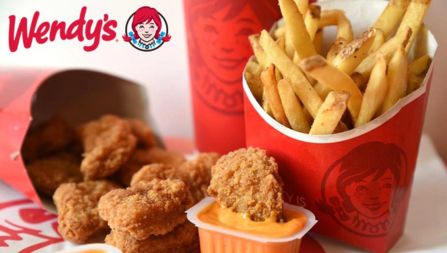
When global quick-service restaurant (QSR) major Wendy’s first entered the Indian market, it faced a steep uphill battle. Despite offering high-quality ingredients and a strong international brand recall, its initial footprint remained largely restricted.
A primary friction point was its entry-level pricing architecture: attempting to justify a higher price point in a market where established incumbents like McDonald’s had conditioned consumers to expect entry-level burgers at a fraction of that cost.
Fast forward to today, and Wendy’s is executing a major second push under its master franchisee, Rebel Foods. By leveraging a massive cloud kitchen network alongside new, high-visibility physical flagship outlets, the brand is targeting significant expansion.
However, as highlighted in a recent analysis by Financial Express, scaling in India’s hyper-competitive ₹15,000-plus crore organized burger market requires getting a fundamental strategic variable right: pricing.
Evaluating this market dynamic, Ankur Bisen, Senior Partner at The Knowledge Company (TKC), cuts straight to the core economic rule governing the mass foodservice sector.
The Myth of “Premium” in Mass QSR
In many consumer categories, brands can successfully carve out margin buffer by positioning better ingredients or superior craft as a “premium” alternative. In mass fast food, however, consumer behavior follows a much stricter economic logic.
“In the QSR business, you have to get your price right. There is nothing ‘premium’ in that space.”
— Ankur Bisen, Senior Partner, The Knowledge Company (TKC)
When consumers step into a QSR or open a food delivery app for a quick bite, the purchase intent is anchored in convenience, speed, and predictable affordability.
Attempting to market a core fast-food offering at a premium price creates an immediate barrier to initial trial, especially when competing against established players with deeply entrenched value menus.
Read the full “Second time lucky?” feature in Financial Express at: https://www.financialexpress.com/business/brandwagon/second-time-lucky/4296398/
The Playbook Shift: Cloud Kitchens to Omnichannel Presence
Wendy’s initial revival under Rebel Foods relied heavily on a delivery-first, cloud kitchen model. This allowed the brand to quickly expand its distribution across dozens of cities with minimal capital expenditure.
Yet, while cloud kitchens provide rapid delivery density, they rarely build standalone brand equity. To compete head-to-head with QSR titans, a purely digital footprint is insufficient.
To win long-term customer mindshare, QSR brands must transition from pure delivery pipelines to a balanced omnichannel strategy:
- Physical Anchors as Brand Billboards: Vibrant, experience-driven flagship stores build organic trial, cultural relevance, and community recall that digital listings cannot replicate.
- Delivery for Frequency: Once brand trust and menu familiarity are established offline, cloud kitchens serve as high-efficiency fulfillment nodes to drive order frequency.
- Menu Localization & Value Architecture: Aligning flavor profiles with local preferences while maintaining an accessible entry-level price point to convert first-time visitors into repeat buyers.
Strategic Takeaways for Foodservice Leaders
- Price Architecture is the Primary Moat: In mass QSR, your entry-level price point is your primary customer acquisition tool. Quality gets consumers to return, but price gets them through the door.
- Volume Over Margin Density: Trying to extract high margins on low-volume, “premium-priced” mass items leads to stagnation. Scale in QSR is driven by high-velocity turnover.
- Format Synergy: The future of foodservice is neither purely offline nor purely cloud-based; it belongs to operators who use physical outlets to create brand desire and digital networks to fulfill demand.
Refine Your QSR & Retail Strategy with TKC
The Knowledge Company’s Retail & Consumer Goods practice advises foodservice conglomerates, master franchisees, and emerging restaurant brands on market entry, route-to-market execution, and pricing design across India.
Is your pricing strategy built for mass volume or caught in the “premium” trap?
To evaluate your brand’s pricing architecture, channel mix, or physical expansion strategy with TKC’s advisory team, connect with us at vidya@tkc.in.