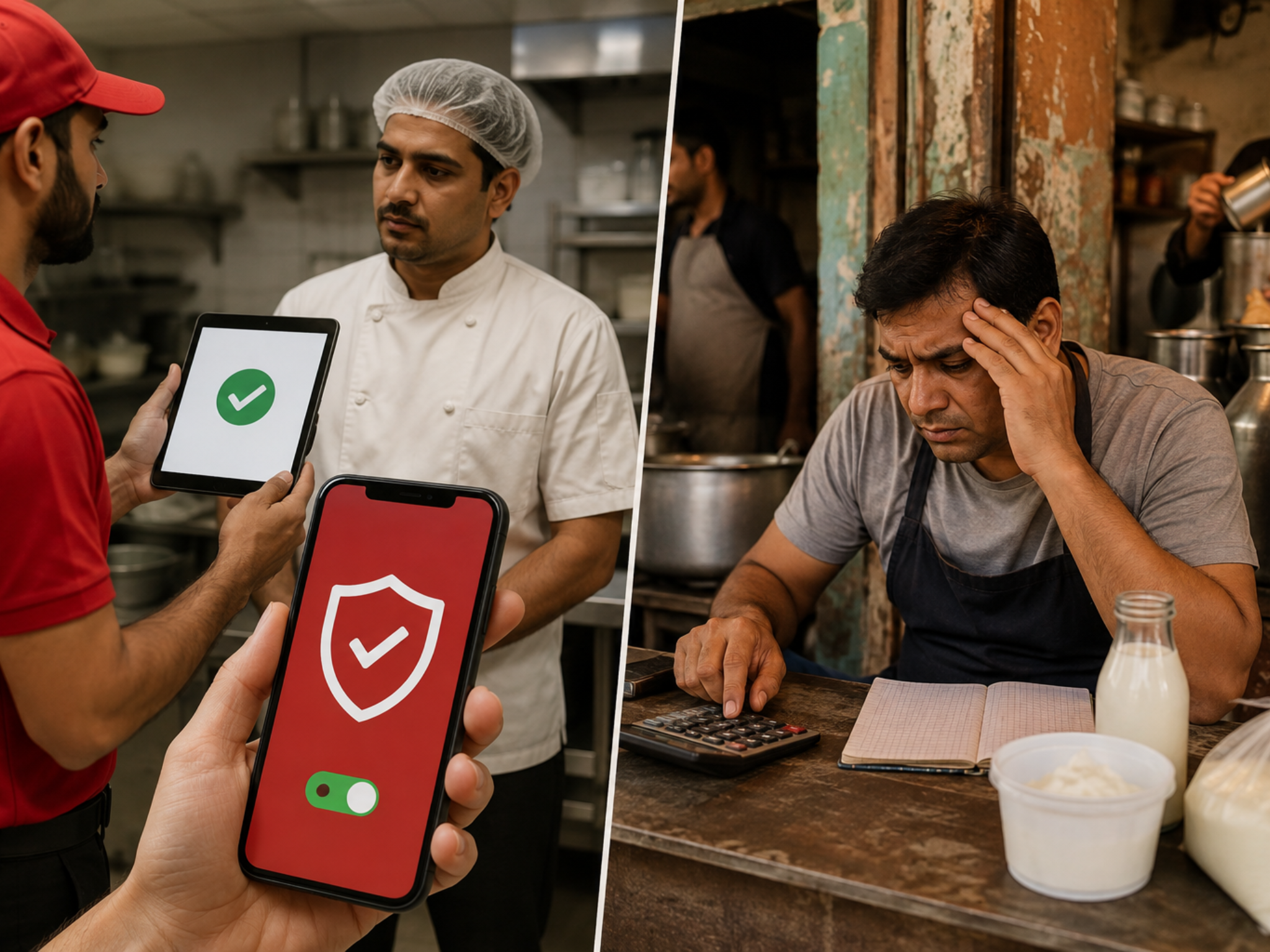
Food safety and ingredient transparency have taken center stage in India’s foodservice ecosystem. Following widespread regulatory crackdowns by state Food and Drug Administration (FDA) departments on food safety standards, leading delivery platform Zomato announced a blanket ban on analogue dairy dishes.
Under this policy, dishes using vegetable oil substitutes in place of natural milk fat, ghee, or cheese are being delisted, requiring restaurant partners to transition to pure dairy or face removal from the platform.
While the move aligns with growing consumer preference for clean labels and regulatory compliance, executing this shift exposes a major divide between organized chains and standalone restaurants.
Organized Resilience vs. Independent Cost Pressures
For national restaurant chains and organized Quick Service Restaurants (QSRs), compliance is straightforward. Protecting brand equity far outweighs the operational friction of updating listings or modifying ingredient sourcing.
However, the transition is significantly more complex for small, independent operators. Analyzing the structural challenges in The Times of India, Ravindra Yadav, Partner at The Knowledge Company (TKC), explains:
“Zomato’s zero-tolerance policy on analogue dairy is a welcome step, but the real test lies in implementation. Larger, organised players will comply quickly by pulling analogue-based dishes off their listings to protect their brand image. But for smaller, standalone restaurants the underlying economics haven’t changed.”
The Dilemma of Thin Margins and Aggregator Fees
Analogue dairy substitutes became popular among smaller eateries precisely because they lower raw material costs in high-volume, price-sensitive categories. Operating on thin gross margins while paying standard aggregator commissions makes an immediate switch to pure dairy a significant financial shock.
Yadav highlights the likely market responses from unorganized players:
“Thin margins clubbed with aggregator commission, and switching to pure dairy products adds further to cost pressure. For them, the likely response will be to increase the price of products and pass on the cost to the customers or will quietly continue to use analogue dairy while simply not declaring it as such.”
Without clear verification protocols across ingredient suppliers, platforms face an uphill task in ensuring ground-level compliance across thousands of kitchen partners.
Strategic Transformation: How TKC Empowers Foodservice & Restaurant Platforms
Navigating regulatory shifts while safeguarding store-level profitability requires disciplined supply chain management and menu engineering. The Knowledge Company (TKC) helps restaurant groups, foodservice operators, and cloud kitchens build sustainable operating models through specialized advisory:
- Menu Engineering & Ingredient Economics: Reformulating product portfolios to transition to clean-label, pure ingredients while defending gross contribution margins.
- Procurement & Supply Chain Optimization: Structuring bulk sourcing and direct-from-dairy contracts to mitigate commodity cost increases for food chains.
- Regulatory & Compliance Readiness: Helping food brands align operational practices with FDA standards and platform guidelines to protect brand image and prevent delisting risks.
- Pricing & Margin Defense Strategy: Implementing dynamic pricing and value architecture to absorb raw material inflation without losing footfall or order volumes.
Is your foodservice business built for regulatory compliance and sustainable unit economics?
To discuss menu engineering and store profitability with TKC’s advisory team, connect with us at vidya@tkc.in.
Get the strategy behind the retail headlines. Subscribe to our free newsletter: https://lnkd.in/eh-_58pf