Third Time Lucky? Arvind Singhal on Reliance's SIL vs. The Maggi-Yippee Duopoly
Third Time Lucky? Arvind Singhal on Reliance’s SIL vs. The Maggi-Yippee Duopoly
India’s instant noodles market is a fiercely guarded territory, valued at ₹18,000 crore and growing. For years, the duopoly of Nestlé’s Maggi (60% share) and ITC’s Sunfeast Yippee (25% share) has proven nearly impossible to penetrate.
In a recent Mint Explainer, Arvind Singhal, Founder of The Knowledge Company, weighs in on Reliance Consumer Products Ltd (RCPL)’s third attempt to crack this code by reviving the 75-year-old legacy label, SIL.
Why Previous Attempts Stalled
Reliance first tested the waters with SnacTac in 2021 and Independence in 2022. Both failed to gain meaningful traction. Arvind Singhal notes that these failures were rooted in a lack of cohesive brand identity:
“The earlier attempts didn’t work because they were essentially private-label launches without a clear branding or product strategy. When noodles are launched as a standalone category, it becomes very difficult to build shelf visibility and consumer recall.” — Arvind Singhal, Founder, The Knowledge Company
The “SIL” Difference: A Portfolio Play
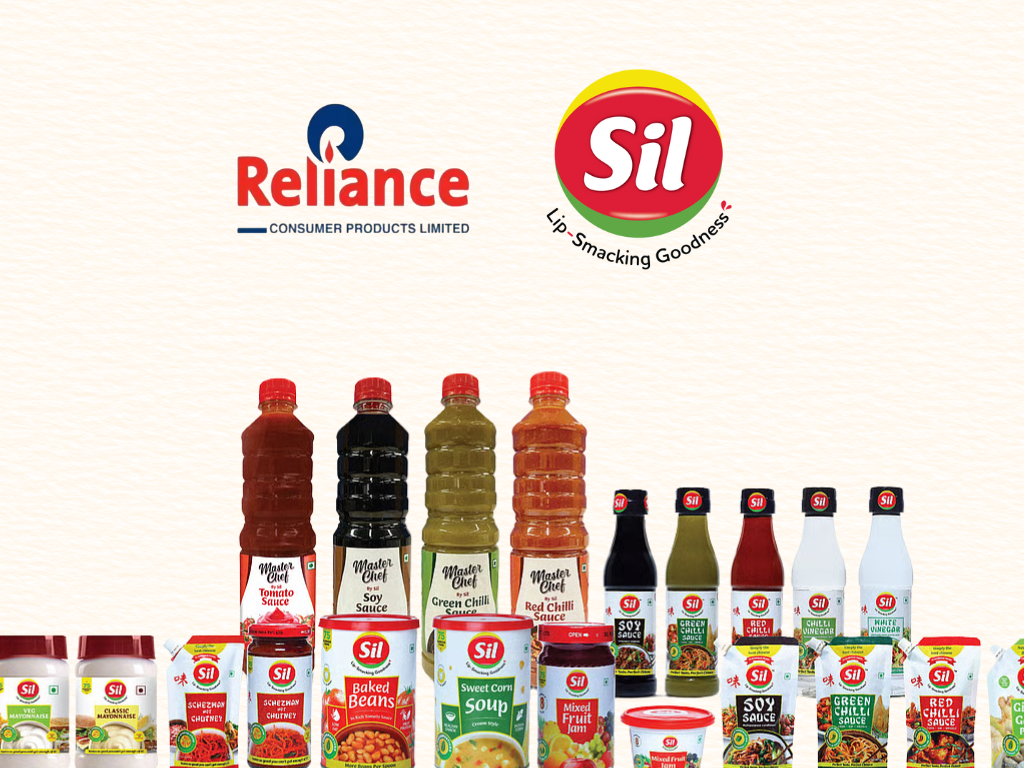
Unlike previous “stand-alone” categories, SIL is being positioned as RCPL’s flagship foods brand. This marks a shift from tactical launches to a portfolio-based strategy. By relaunching SIL across noodles, ketchups, jams, and sauces simultaneously, Reliance aims to create a “contiguous portfolio.”
The SIL Noodles Portfolio:
Masala: The mass-market staple.
Atta with Veggies: For the health-conscious consumer.
Korean K-Fire: Targeting the trending “K-wave” palate.
Chow-Chow: A regional favorite.
Structurally Different Strategy: Arvind Singhal highlights that shelf visibility improves significantly when multiple related products sit under the same brand. “This gives the strategy a better chance of success than Reliance’s earlier, fragmented launches,” he explains.
The ₹5 Pricing Lever vs. Decades of Trust
Reliance is pulling its most powerful lever: Pricing. By launching at a disruptive ₹5 entry point, SIL aims to undercut established rivals and capture value-conscious households.
However, as Singhal points out, Maggi’s dominance is built on more than just cost—it is built on decades of habit formation. Dislodging a brand that has become a “generic reference point” for an entire category requires more than just a low price; it requires sustained trust and emotional recall.
The Bottom Line
Noodles are a “gateway category.” Success here opens the doors to kirana stores and quick-commerce bundles for the rest of Reliance’s FMCG portfolio. With the Indian instant noodles market projected to reach $4.64 billion by 2030, the stakes have never been higher.
Arvind Singhal’s commentary reflects TKC’s role as a trusted partner for companies navigating the high-stakes Indian FMCG and retail landscape.
Portfolio Strategy: We help brands design contiguous product ranges that maximize shelf visibility.
Brand Revival: Expert guidance on transitioning legacy labels into modern flagship brands.
Competitive Benchmarking: Analyzing market leaders to identify gaps for disruptive entry.
Market Entry Strategy: Data-driven roadmaps for high-growth, high-competition categories.
Would you like us to help you evaluate your category expansion or portfolio strategy?Reach out to TKC for a detailed, forward-looking consulting session.