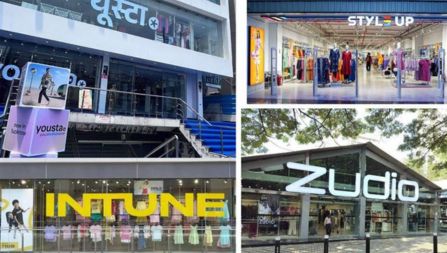
The narrative surrounding India’s consumer retail sector is currently dominated by a single metric: scale.
Driven by rising aspirations and digital connectivity in Tier II, III, and IV cities, domestic value retailers are executing aggressive expansion playbooks. The headlines are filled with stories of brands doubling their store counts, penetrating deep into regional micro-economies, and fiercely chasing high valuations.
However, as highlighted in a recent feature by Fortune India, this rapid physical expansion raises a fundamental strategic question. Are Indian retailers building enduring institutions, or are they simply playing a high-stakes valuation game?
Commenting on the structural maturity of India’s fast-growing retail formats, Arvind Singhal, Chairman of The Knowledge Company (TKC), offered a sobering perspective on what is missing from the current growth models.
The ALDI and Walmart Benchmark
When we look at the undisputed titans of global value retail, such as Walmart in the United States or ALDI in Germany, their foundational success was not simply a byproduct of opening stores faster than the competition. It was rooted in an obsession with the consumer proposition.
“Unlike Walmart in the U.S. or ALDI in Germany, which mastered retail through curated, high-quality choices and lasting consumer trust, most consumer-facing businesses in India, chasing scale and valuation aggressively, still have a long way to go,” Singhal noted in the Fortune India report.
The distinction here is critical. ALDI built its empire not on endless aisles of chaotic inventory, but on curation, a highly controlled, limited assortment of private labels that guaranteed consistent, high-quality standards at the lowest possible price. They engineered absolute consumer trust. Shoppers know exactly what they will get every single time.
READ THE ENTIRE ARTICLE AT: https://www.magzter.com/share/mag/3703/2438657/54?mg_pf=android_magzter&utm_ID=375135
The Danger of the “Valuation Trap”
In contrast, much of the modern Indian retail ecosystem is currently fueled by a different incentive structure. Driven by venture capital expectations and the pursuit of rapid market share, many consumer-facing businesses prioritize velocity over foundation.
- Growth Over Curation: In the rush to capture newly aspirational consumers in smaller towns, there is a tendency to flood stores with uncurated, lower-quality merchandise.
- Transaction Over Trust: The focus shifts heavily to footfall and same-store sales growth, often neglecting the deeper operational mechanics of consistent quality control and seamless customer experience.
- Vulnerability in Scale: A business built purely on geographical reach and low entry-level pricing remains highly vulnerable. If consumer loyalty is tied only to a ₹139 price tag, that customer will immediately abandon the brand the moment a competitor offers the same item for ₹129.
The Path Forward: From Land-Grab to Value Creation
For India’s value retail sector to mature, the growth paradigm must evolve. The initial land-grab phase, establishing a physical presence in underserved regional markets, has been largely successful. The next, much harder phase is institutionalization.
To build businesses that can withstand generational shifts and economic downturns, Indian retailers must pivot their operational focus. They must invest in deep supply chain visibility, enforce rigorous quality standards for private labels, and curate their assortments to reflect localized needs without compromising the baseline product integrity.
Ultimately, market valuations can fluctuate wildly based on macroeconomic trends, but lasting consumer trust acts as a permanent commercial moat.
Build Resilient Retail Models with TKC
The Knowledge Company’s Retail Advisory practice partners with ambitious consumer brands to bridge the gap between aggressive physical expansion and sustainable operational depth.
- Assortment & Private Label Strategy: We help retailers move from chaotic inventory to curated, high-margin private label portfolios that build brand equity.
- Operating Model Design: Assisting leadership teams in structuring resilient supply chains capable of delivering consistent quality across decentralized regional networks.
- Sustainable Growth Roadmaps: Aligning long-term corporate strategy with unit-level economics to ensure scale does not dilute consumer trust.
Are you building for the next quarter’s valuation, or the next decade’s consumer?
Connect with TKC’s Retail Advisory Team to refine your long-term growth architecture today.