


Indian consumers have become increasingly difficult to decode.
They are buying premium smartphones, spending more on travel and upgrading their beauty routines. At the same time, they continue to hunt aggressively for deals on everyday purchases.
Airports are full. Restaurants are busier. Premium products are being tried more openly. And yet, concerns around household finances keep surfacing in parallel.
Traditional consumer models struggle to explain this contradiction.
For years, businesses worked on a straightforward assumption: consumers spend what they earn. Income determined affordability, affordability drove demand, and demand fueled growth.
That relationship is becoming far more complex.
A growing share of consumption in India today is shaped not just by income, but by access to credit, digital ecosystems, instant fulfillment and constant exposure to aspirational lifestyles.
In many ways, India is entering an era of financialized consumption.
This is not simply an economic trend. It is changing how demand is created, accelerated and sustained.
And for consumer businesses, the implications are significant. Many organizations are still making decisions based on assumptions that belonged to a very different consumer landscape.
Four forces are reshaping consumer behavior
Across recent conversations with brands, retailers and business leaders, four shifts stand out repeatedly.
Perhaps the biggest change is that aspiration is no longer confined by geography.
A young consumer in Indore, Coimbatore or Guwahati now consumes the same content, follows many of the same creators and is exposed to many of the same brands as a consumer in Mumbai or Delhi.
Social media has effectively democratized aspiration.
Whether it is Korean beauty, premium streetwear, luxury travel or global fashion movements, consumers across India are participating in a shared culture of discovery and influence.
This partly explains why premium categories continue to show resilience across beauty, consumer electronics, travel and fashion.
Importantly, premiumization is no longer a metro phenomenon. Many brands are discovering that some of their fastest-growing premium consumers are emerging from Tier-2 and Tier-3 markets.
The implication is clear: demographic segmentation alone is no longer enough.
Two consumers with similar incomes may behave very differently, depending on the digital communities they participate in, the creators they follow and the aspirations they hold.
The expansion of consumer credit has played a meaningful role in India’s consumption story.
Credit cards, no-cost EMIs, Buy Now Pay Later offerings and increasingly seamless digital lending options have become a routine part of the purchase journey for millions of consumers.
For brands, the upside is obvious. Consumers can upgrade sooner, transact more frequently and access products that may previously have been out of reach.
But there is another side to this story.
Many businesses may be mistaking credit expansion for sustainable demand. When consumers can finance purchases more easily, growth can accelerate quickly — and just as quickly slow down if consumer confidence weakens or credit conditions tighten.
This does not suggest that credit-led consumption is inherently problematic. It means businesses need to understand the quality of their growth, not just its pace.
How much demand is being driven by genuine income expansion? How much is being enabled by easier access to credit? And how resilient is that demand likely to be over the long term?
These questions are becoming increasingly important to answer with honesty.
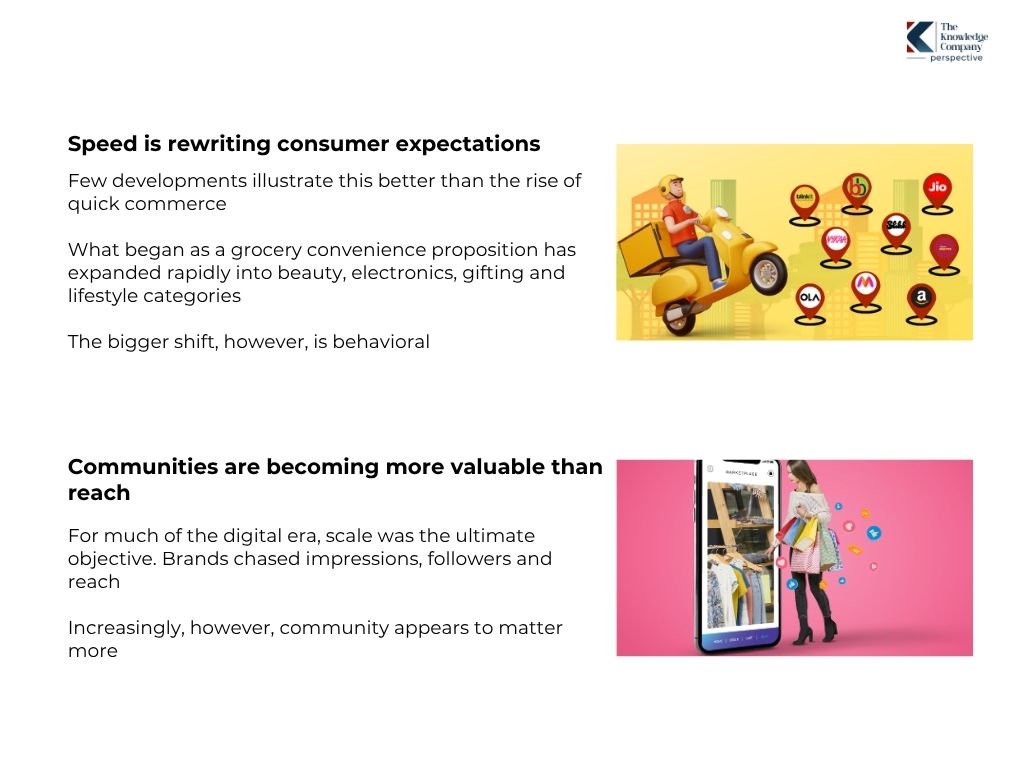
Few developments illustrate this better than the rise of quick commerce.
What began as a grocery convenience proposition has expanded rapidly into beauty, electronics, gifting and lifestyle categories.
The bigger shift, however, is behavioral.
Consumers are no longer comparing brands only against competitors within their own category. They are comparing every experience against the fastest and most seamless one available to them.
A customer who receives cosmetics in ten minutes inevitably starts questioning why another purchase takes a week. A shopper accustomed to real-time inventory visibility expects the same standard everywhere.
Convenience is quickly becoming a basic expectation rather than a competitive advantage.
This has implications far beyond last-mile delivery.
Traditional planning and merchandising cycles were built for a world in which consumer demand evolved gradually. Today’s demand cycles are significantly shorter — trends can emerge, peak and disappear within weeks, particularly among younger consumers.
Businesses operating with long planning horizons and inflexible supply chains may increasingly find themselves out of sync with the market.
For much of the digital era, scale was the ultimate objective. Brands chased impressions, followers and reach.
Increasingly, however, community appears to matter more.
Consumers now discover, validate and purchase products within highly connected ecosystems — through creators, enthusiast groups, private communities and peer recommendations.
This is reshaping customer acquisition economics.
As digital advertising costs continue to rise, many brands are finding that paid acquisition alone is becoming both expensive and unpredictable.
The brands creating lasting value are often those building stronger relationships with their customers, rather than simply acquiring more of them.
Community is no longer a marketing initiative. It is becoming a commercial asset.
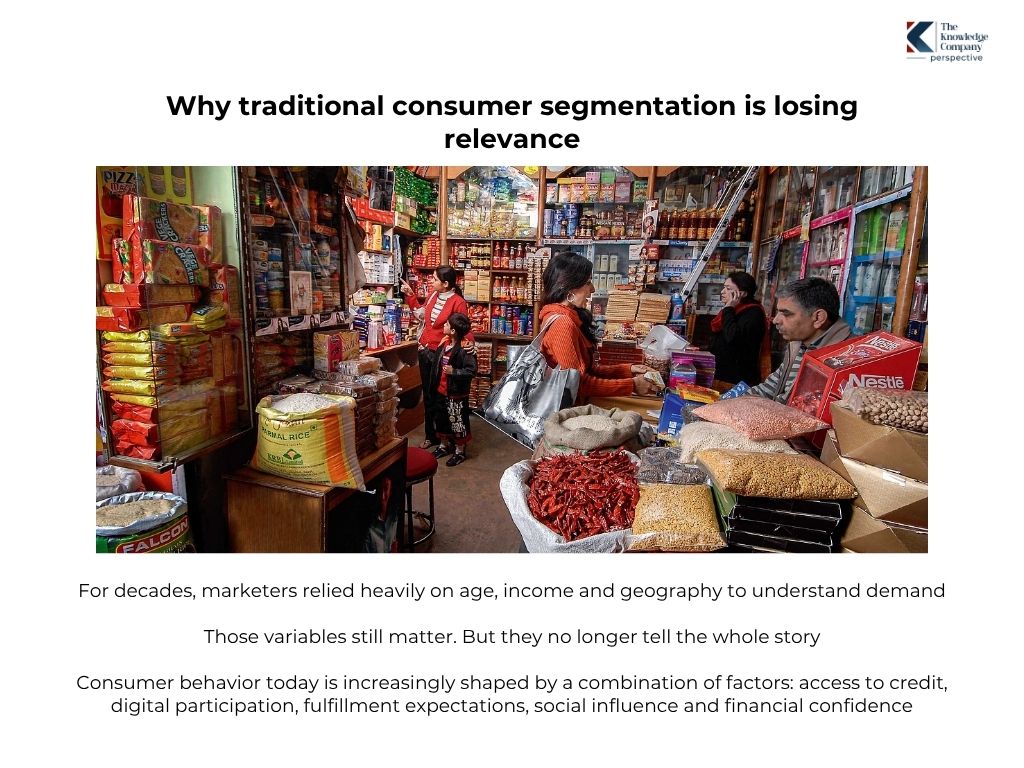
Why traditional consumer segmentation is losing relevance
For decades, marketers relied heavily on age, income and geography to understand demand.
Those variables still matter. But they no longer tell the whole story.
Consumer behavior today is increasingly shaped by a combination of factors: access to credit, digital participation, fulfillment expectations, social influence and financial confidence.
A consumer in Jaipur may exhibit remarkably similar purchasing behavior to someone in Bengaluru, despite significant differences in demographics or income.
Behavioral understanding is becoming just as important as demographic understanding.
This requires businesses to rethink not only marketing strategies, but also assortment planning, pricing, customer engagement and growth models.
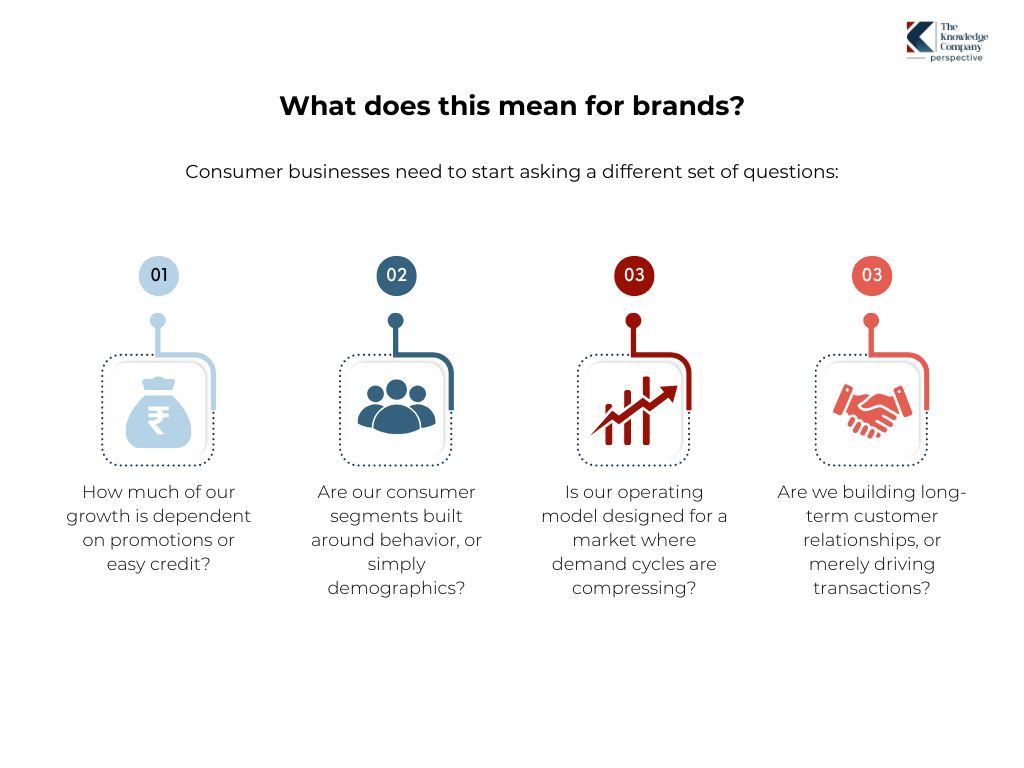
What does this mean for brands?
India remains one of the world’s most compelling consumer growth stories. Rising incomes, urbanization and digital adoption will continue to create significant opportunities across categories.
However, growth itself is becoming more complex.
Consumer businesses need to start asking a different set of questions:
The brands that succeed over the next decade are unlikely to be those with the biggest marketing budgets or the widest distribution.
They will be the brands that best understand the changing relationship between aspiration, access, affordability and speed.
Because in India’s new consumer economy, demand is increasingly being shaped long before a consumer reaches the checkout.
At TKC, we work with leadership teams to translate emerging consumer shifts into actionable growth strategies – helping businesses prepare for the next phase of consumer change.
If you are building for the next decade of Indian consumption, connect with us at vidya@tkc.in.