

AW26 Material Trends: From Fiber Innovation to Consumer Value
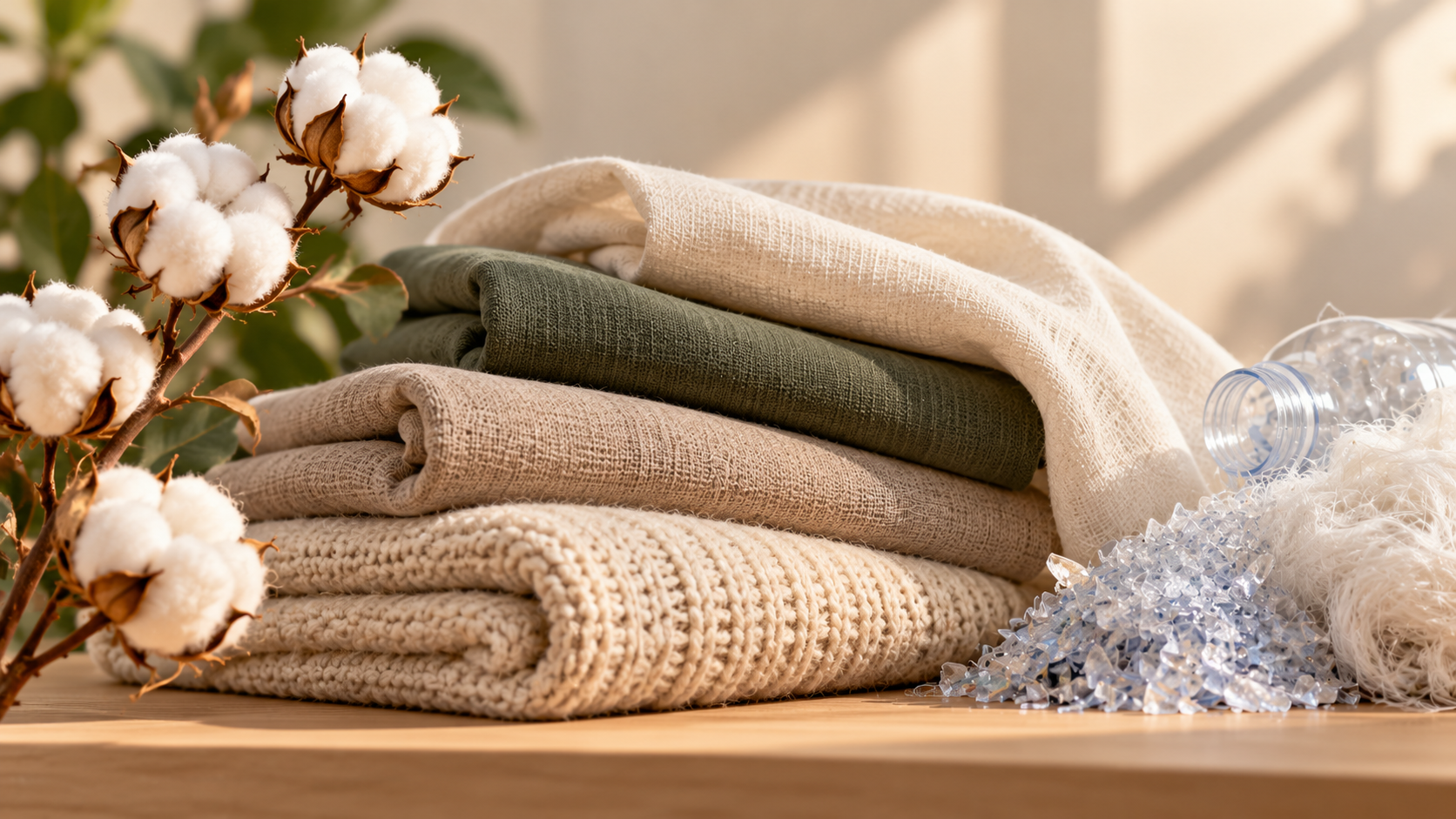
The Autumn/Winter 2026 material landscape is being shaped by two simultaneous pressures. Brands need more sustainable, traceable and resilient material choices, while consumers continue to demand comfort, performance, durability and value.
Natural fibers are gaining share globally, led by cotton, with linen and wool also benefiting from greater interest in comfort and lower-impact production. Recycled synthetics and regenerated cellulosics are moving further into mainstream assortments, although true textile-to-textile circularity remains limited.
In “Autumn Winter 2026 Materials: Natural Fibres Lead,” published by Fibre2Fashion, Puneet Dudeja, Partner at The Knowledge Company (TKC), identifies the commercial test that ultimately matters:
“Most consumers do not walk into a store asking for a specific fibre innovation. They are responding to what that material gives them: softness, warmth, stretch, drape, durability or easier care.”
The observation points to the central challenge facing fashion and textile businesses: technical innovation must be translated into a product benefit that consumers can recognize and value.
AW26 Material Innovation Is Being Led by the Industry
Many material shifts begin inside the value chain rather than with an explicit consumer request.
Brands, textile manufacturers and suppliers are responding to regulation, sustainability targets, resource pressure, input-cost inflation and supply-chain risk by introducing certified, recycled, traceable and performance-enhanced materials.
Consumers rarely use the same technical vocabulary.
A shopper may not enter a store asking for a particular regenerated cellulosic fiber or recycled blend. The shopper is more likely to evaluate whether the product feels comfortable, provides sufficient warmth, moves well, lasts longer or requires less effort to maintain.
The strongest AW26 material strategies therefore connect two languages: the technical language of fiber innovation and the everyday language of consumer value.
Consumer Benefit Must Lead the Material Story
A new material should not be selected only because it supports a sustainability claim or creates a new marketing narrative. It must strengthen the product itself.
Depending on the category, the benefit may include:
- Softer hand feel
- Better temperature regulation
- Improved stretch and movement
- Greater durability
- Lower weight
- Easier washing and care
- Better shape retention
- More versatile use across seasons
If the improvement cannot be felt, seen or understood, the technical advance may struggle to influence purchase or justify a higher price.
The material story should therefore begin with the problem being solved or the experience being improved. The technical explanation should provide evidence and credibility, rather than becoming the entire consumer proposition.
Sustainability Is Becoming a Baseline Expectation
Recycled and lower-impact materials are moving beyond niche capsules and into mainline collections, particularly among larger brands.
This does not mean consumers will always pay a premium for them.
Sustainability is increasingly becoming something consumers expect brands to address alongside design, quality, comfort and performance. It is moving closer to a baseline expectation than a standalone reason to purchase.
For brands, this has two implications.
First, better materials need to be integrated into core product ranges rather than isolated within limited sustainability collections.
Second, environmental improvements must coexist with the factors consumers already use to evaluate a product. A garment does not become commercially attractive simply because it contains recycled material. It still needs to look desirable, feel comfortable, perform reliably and offer credible value.
Natural-Fiber Costs Are Reshaping AW26 Product Architecture
Higher wool and natural-fiber costs are placing pressure on coats, tailoring and premium knitwear.
Consumers may not track raw-material inflation directly, but they experience its consequences through higher prices, lighter constructions, increased use of blends, fewer premium details and more selective assortments.
Brands cannot simply pass every cost increase to the consumer, particularly when discretionary spending remains under pressure.
This is forcing greater discipline in sourcing, design engineering and range planning. Product teams must decide where natural fibers create sufficient functional and perceived value to justify their cost, and where an alternative construction or blend can deliver a stronger commercial balance.
The objective should not simply be to increase natural-fiber content. It should be to use the right material in the products where consumers can genuinely recognize the difference.
Blends Need a Clear Consumer and Commercial Purpose
A well-designed blend should not automatically be viewed as a compromise.
Blends can improve durability, recovery, stretch, weight, care and affordability. They may also help brands manage raw-material volatility and support more consistent production.
However, the commercial purpose must remain clear.
A blend that reduces cost but weakens warmth, appearance, hand feel or longevity may undermine the product proposition. A blend that improves performance while protecting price accessibility can create stronger total value.
Material decisions should therefore be assessed through the complete product experience, not only through the bill of materials.
Material Strategy Must Reflect Regional Markets
Global material directions do not translate uniformly across markets.
Climate, price points, wardrobe habits, purchase occasions and seasonal timing differ significantly across Europe, North America, South Asia and China. A fabric weight or thermal construction that works in one market may have limited relevance in another.
Regional material planning should consider:
- Fabric weight and thermal performance
- Layering potential
- Local climate and seasonal duration
- Color application
- Price architecture
- Care requirements
- Wardrobe habits and occasions
- Product format and channel
In South Asia, for example, winter demand can differ considerably by geography. Consumers in one region may require functional outerwear, while those in warmer markets may respond better to breathable layers, lighter knitwear and transitional products.
The trend language may be increasingly global, but commercial execution must become more regional.
Unpredictable Weather Is Changing Seasonal Planning
Traditional Autumn/Winter planning assumes a relatively predictable transition into colder weather.
That assumption is becoming less reliable.
Consumers are increasingly willing to delay purchasing outerwear and knitwear until temperatures fall, a promotion appears or the product offers a sufficiently compelling value proposition. Demand may therefore arrive later and more suddenly than conventional seasonal calendars anticipate.
Brands are responding through tighter opening buys, faster replenishment and lower exposure to heavy seasonal inventory.
They are also placing greater emphasis on:
- Lighter materials
- Flexible layering
- Transitional products
- Weather-responsive merchandising
- Products that work across wider temperature ranges
This changes the definition of a successful winter product. The most commercially relevant item may not be the one built for the coldest conditions, but the one that remains useful across changing temperatures, occasions and environments.
Material Strategy Must Connect Design, Sourcing and Merchandising
Material decisions are often made across separate business functions.
Design teams may focus on aesthetics. Sourcing teams may prioritize cost and availability. Sustainability teams concentrate on compliance and impact. Merchandising teams focus on pricing, sales potential and inventory productivity.
AW26 requires these perspectives to be aligned earlier in the product-development cycle.
A commercially effective material brief should define:
- The consumer benefit the material must deliver
- The intended retail price and acceptable material cost
- The required appearance, hand feel and performance
- Supply risk and minimum order requirements
- Environmental and traceability standards
- Care requirements and expected product life
- The markets, climates and occasions the product must serve
Aligning these requirements before sampling can reduce late-stage redesign, cost escalation and material substitutions that weaken the original proposition.
The material should not be chosen in isolation and then forced into the commercial architecture. It should emerge from a shared understanding of the consumer, product, price point and market.
Pricing Architecture Will Determine Commercial Adoption
Material innovation is frequently introduced at premium price points because early production volumes are smaller and sourcing is more complex.
The risk is that the innovation remains confined to a narrow customer segment even when its benefits have wider relevance.
Brands should determine how the material will operate across the price architecture.
Hero products can demonstrate the fullest expression of the innovation and establish authority.
Core products can use a commercially balanced material blend or construction that delivers the most relevant benefits at greater scale.
Entry products can introduce one recognizable benefit without carrying the full technical specification or cost.
A clear good-better-best architecture helps consumers understand why price and performance differ. It also allows brands to maintain accessibility while preserving a credible reason to trade up.
Responsive Suppliers Will Create Greater Value
Shorter lead times, smaller opening commitments and faster replenishment are placing new demands on mills and manufacturers.
The most valuable suppliers will not simply be those offering the largest capacity or lowest quoted price. They will help brands improve responsiveness, material efficiency, quality and product performance.
Strategic supplier collaboration can include:
- Joint development of lighter or more efficient constructions
- Smaller testing quantities before scaled commitments
- Transparent costing and raw-material exposure
- Traceability and certification documentation
- Consistent quality across repeat orders
- Faster adjustments to color, weight or finish
- Contingency options when weather or demand changes
This requires a broader approach to supplier evaluation.
A vendor that is slightly more expensive but significantly more responsive may generate greater total value by reducing markdowns, missed demand, inventory exposure and late-stage product changes.
Merchandising Must Explain Material Benefits Simply
Consumers should not need a technical education to understand why a product is better.
Product pages, hangtags, in-store communication and sales teams should translate complex material attributes into a few relevant and credible benefits.
Instead of leading only with fiber terminology, brands should explain:
- How the product feels against the skin
- What conditions it is designed for
- How it supports movement or layering
- How long it is expected to retain its shape
- How it should be washed and cared for
- Why the chosen material improves everyday use
Technical evidence remains important, particularly for regulatory accuracy, sourcing transparency and sustainability credibility.
But the customer-facing message should begin with usefulness.
A Six-Part Commercial Test for AW26 Materials
Before approving a new fiber, fabric or blend, product teams should apply six tests.
- Desirability
Does the material make the product more attractive through color, texture, drape or silhouette?
- Usability
Does it improve comfort, warmth, movement, layering, durability or care?
- Affordability
Can the product reach its intended price point without weakening quality or margin?
- Scalability
Can suppliers reproduce the material consistently at the required volume and speed?
- Regional Relevance
Is the composition appropriate for the local climate, wardrobe habits and purchase occasions?
- Evidence
Can the brand substantiate its performance, sourcing and sustainability claims?
A material that passes all six tests is more likely to move from an innovation story into commercially meaningful volume.
Beyond AW26: Lighter Seasonality and Adaptive Wardrobes
The next phase of material strategy is likely to be shaped by lighter seasonality and more adaptive wardrobes.
Unpredictable weather makes rigid winter assortments less reliable. At the same time, increasingly fluid work and leisure routines are creating demand for products that perform across different settings.
Brands should monitor several connected signals:
- Lighter constructions that provide warmth without excessive weight
- Layering systems designed for fluctuating temperatures
- Materials that combine performance with recognizable comfort
- Localized color, fit and composition within global product platforms
- Products that transition across work, travel and leisure
These signals reinforce the central commercial principle behind the AW26 material story:
Innovation succeeds when it works within the consumer’s real life, not only within a technical specification or seasonal forecast.
#TKCPerspective: Five Priorities for Fashion and Textile Leaders
- Start with the Consumer Benefit
Define what the material improves before developing the technical narrative.
- Integrate Sustainability into Mainline Products
Better materials should increasingly become part of the product standard rather than remain limited to special capsules.
- Engineer Cost and Performance Together
Use blends, lighter constructions and alternative fibers where they improve affordability without weakening the proposition.
- Adapt Material Choices Regionally
Align composition, weight, care and pricing with local climate, wardrobe behavior and consumer expectations.
- Build More Responsive Seasonal Models
Reduce upfront inventory exposure and strengthen replenishment as weather and demand become less predictable.
How TKC Supports Fashion and Textile Businesses
The Knowledge Company works with fashion brands, textile manufacturers, retailers and investors to translate consumer, material and market shifts into commercially relevant strategies.
Consumer and Trend Intelligence
Identifying changing product expectations, material preferences and emerging demand signals.
Product and Assortment Strategy
Translating intelligence into range architecture, price points and seasonal planning.
Material and Sourcing Strategy
Evaluating fibers, suppliers and sourcing markets through performance, cost, risk and consumer relevance.
Demand Planning and Inventory Strategy
Reducing seasonal exposure through tighter opening commitments, more responsive replenishment and improved forecasting.
Market Localization
Adapting global product and material directions for regional climates, price points, occasions and consumer behavior.
From Fiber Innovation to Commercial Relevance
AW26 reflects a fashion industry seeking more responsible, expressive and technically capable materials.
But consumers do not experience a textile through its specification alone. They experience softness, warmth, movement, durability, appearance and care.
The commercial test is whether the innovation makes the product more desirable, useful and worth paying for.
Building a more responsive material, product or sourcing strategy?
Connect with TKC’s Trends and Fashion Intelligence team at vidya@tkc.in.
Read the complete original article:
Autumn Winter 2026 Materials: Natural Fibres Lead
Get the strategy behind the retail headlines. Subscribe to TKC’s free newsletter:
https://lnkd.in/eh-_58pf
Recent Posts

The Real Economics of Zero-Commission E-commerce


AW26 Material Trends: From Fiber Innovation to Consumer Value

Rebel Foods’ Growth Paradox: When Scale Becomes the Constraint